


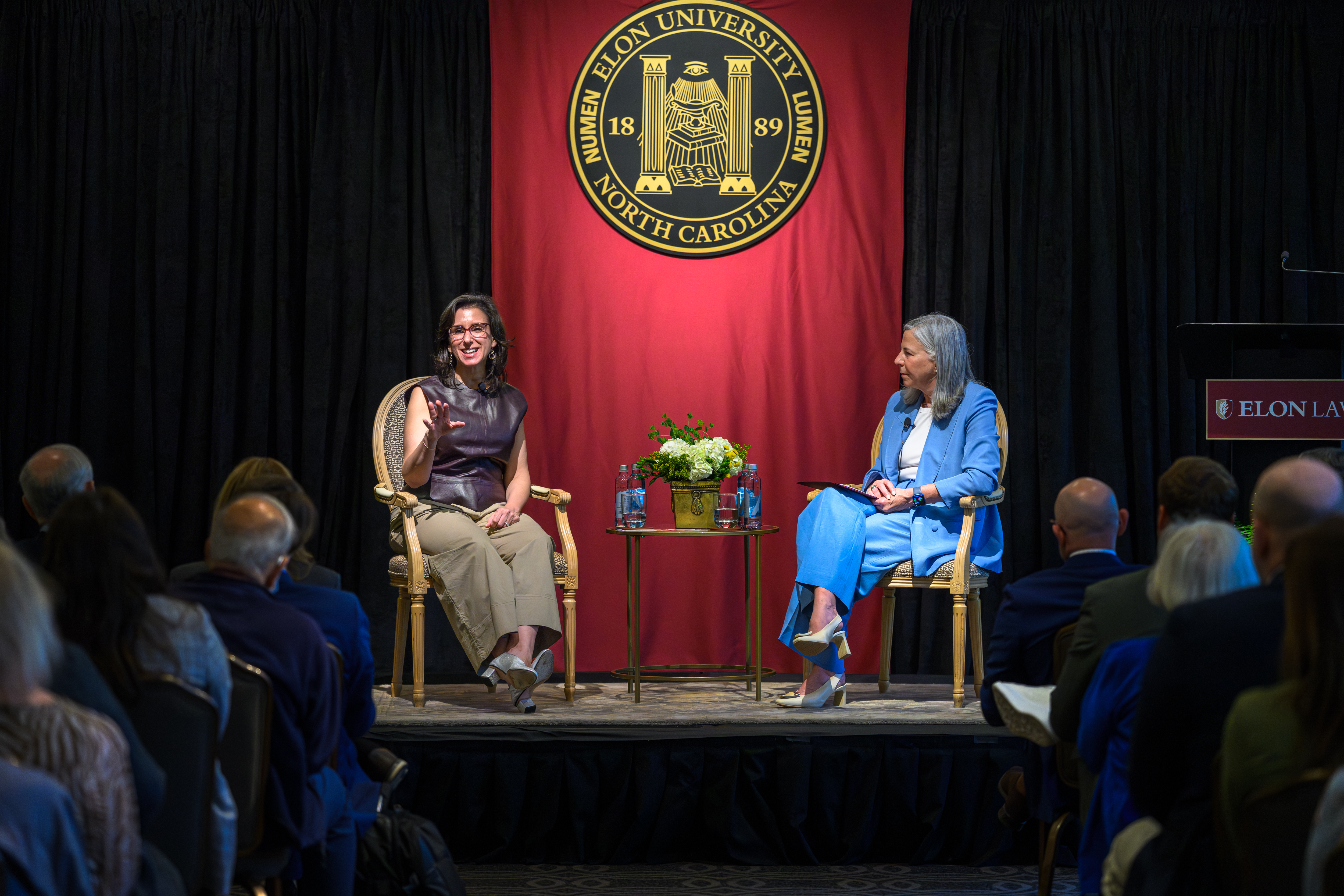
Jodi Kantor, a Pulitzer Prize-winning New York Times investigative journalist, discussed the Supreme Court’s “shadow docket,” institutional secrecy, judicial legitimacy and declining public trust during Elon University School of Law's Bryan Distinguished Leadership Lecture.
The legitimacy of the U.S. Supreme Court and the rule of law depend on transparency, accountability and public trust. All of those are increasingly under strain, said Pulitzer Prize-winning New York Times investigative journalist Jodi Kantor.
Speaking during Elon Law’s Joseph M. Bryan Distinguished Leadership Lecture on Wednesday, May 6, at Greensboro’s Proximity Hotel, Kantor discussed her reporting on the Supreme Court, including extensive behind-the-scenes investigations of the Court’s internal processes and the justices themselves.
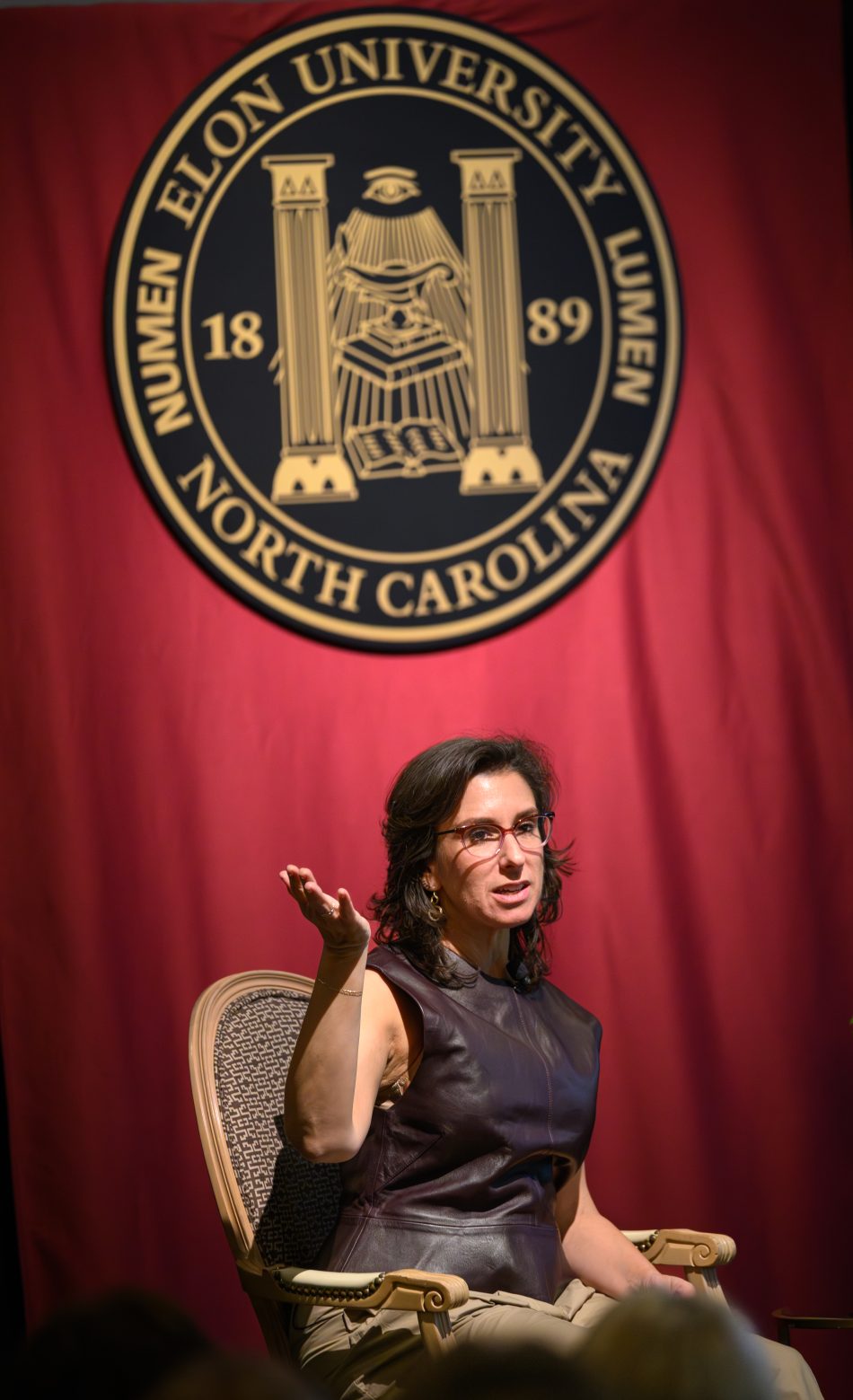
This spring, she and colleague Adam Liptak published a series of investigative articles examining the Supreme Court’s growing use of its emergency or “shadow docket,” through which consequential rulings are often issued rapidly and with limited explanation or legal reasoning. At a moment of declining trust in institutions and the judiciary itself, Kantor warned that the practice can bypass some of the traditional safeguards associated with judicial deliberation and further erode public confidence in the court.
“Judges write opinions as an act of transparency and humility and faith,” Kantor said. “An opinion says to the public: ‘You may disagree with this decision. It may put your brother in jail. It may mean the end of your business. But I want you to know that I’m being sincere, and that I diligently worked through the law to come to this conclusion.’”
Kantor’s lecture series appearance featured an extended conversation with Professor Catherine Ross Dunham, a charter member of Elon Law’s faculty whose scholarship focuses on civil procedure and complex litigation.
Kantor earned international recognition for her work with colleague Megan Twohey in exposing decades of sexual abuse allegations against Hollywood producer Harvey Weinstein. That reporting helped ignite the global #MeToo movement. Kantor and Twohey won the Pulitzer Prize for Public Service in 2018, and their work was later published in the bestselling book “She Said,” later adapted into an acclaimed film. Her other work has focused on technology and the modern workplace, leading to changes at companies like Amazon and Starbucks, and the Obamas’ life inside the White House. Most recently, she joined the New York Times’ Supreme Court team.
Investigating the Supreme Court
“Investigative journalism is about taking secrets that are in the public interest and putting them into sunlight,” Kantor said.
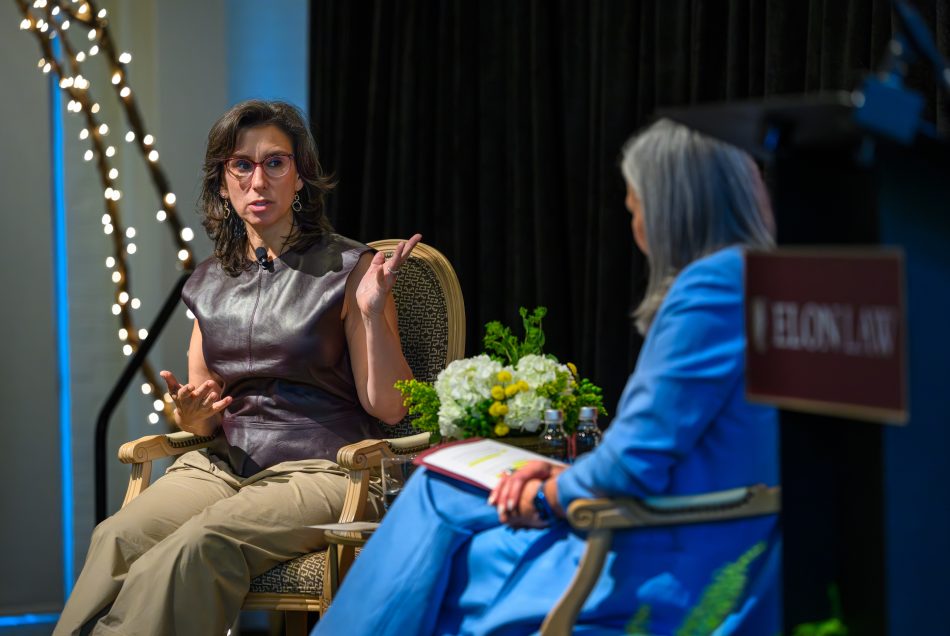
She described her reporting on the Court — in her words, “one of the most secretive institutions in American life” — as seeking to better understand how power operates within one of the nation’s least transparent institutions, including questions surrounding internal negotiations among justices, the role of clerks and the long-term effects of lifetime appointments.
“How much do they bargain with one another? What role do clerks play? How does power really flow?” Kantor asked. “What does it mean to hold power at that level for 20 or 30 years? How do people age in those jobs?”
At the same time, she acknowledged the tension between transparency and judicial independence, arguing that “judges need room to think, to deliberate, to change their minds.”
She emphasized that she isn’t interested in exposing pending Court decisions because that “would interfere with the judicial process.”
“I’m not trying to know everything about the Supreme Court,” she said. “But I still think there are important questions worth answering.”
Privacy, secrecy and institutional power
Kantor repeatedly turned to the distinction between privacy and secrecy — a theme connecting both her Weinstein reporting and her more recent investigations into the Supreme Court.
 “What I learned from the Weinstein investigation is that there’s a difference between privacy and secrecy,” Kantor said, referencing the nondisclosure agreements now required of Supreme Court staff and the stifling secrecy of settlement agreements in Weinstein’s case.
“Victims deserved privacy,” Kantor said of the Weinstein investigation. “But was the system benefiting from blanket secrecy that enabled predation? No. Legal culture is very invested in confidentiality, but confidentiality can run amok in ways that deprive the public of enough information to understand what is happening.”
She warned that excessive confidentiality inside powerful institutions — including courts, workplaces and corporations — can ultimately weaken public understanding and democratic trust.
“Journalism is one of democracy’s valves,” Kantor said. “I would rather us have rigorous coverage of the Supreme Court that leads to productive debate than a thousand other things, including the really disruptive political violence we’re seeing across the (political) spectrum.”
Resisting political caricatures
 The conversation explored the dangers of reducing Supreme Court justices to simplistic political caricatures. Kantor pointed to Justice Amy Coney Barrett as an example of a jurist who was immediately misunderstood by both the political right and left when she was appointed in October 2020.
Kantor described Barrett as “perhaps the most independent of the Republican-appointed justices,” adding that even some of Barrett’s ideological critics view her as intellectually serious and institutionally minded.
“She’s very conservative,” Kantor said, “but she has this independent streak. She wants to be trusted by a broad swath of Americans. She does not want to be pigeonholed.”
Starting a meaningful career
Kantor also reflected on questions of professional purpose and career-building, themes explored in her new book, “How to Start.” Drawing on her workplace reporting and conversations with students navigating political uncertainty, economic anxiety and rapid technological change, Kantor encouraged young professionals to identify their talents, develop a craft and identify a societal need their craft addresses.
When evaluating early-career opportunities, Kantor said she encourages young professionals to focus less on prestige and more on growth, mentorship and intellectual curiosity. Taking calculated risks to gain experience and further develop craft will pay off.
“Are you learning?” Kantor said. “And are you working for good people?”
Earlier in the day, Kantor met with Elon Law students, faculty and staff for a smaller discussion centered on identifying purpose and launching meaningful careers in a challenging time.

About Elon Law’s Distinguished Leadership Lecture Series
The Distinguished Leadership Lecture Series presented by The Joseph M. Bryan Foundation is an integral part of Elon Law’s commitment to learning, lawyering and leadership. Endowed through a generous gift from The Joseph M. Bryan Foundation of Greensboro, N.C., the series brings accomplished leaders from a variety of disciplines to Elon University to share their experiences and perspectives with students and faculty.