


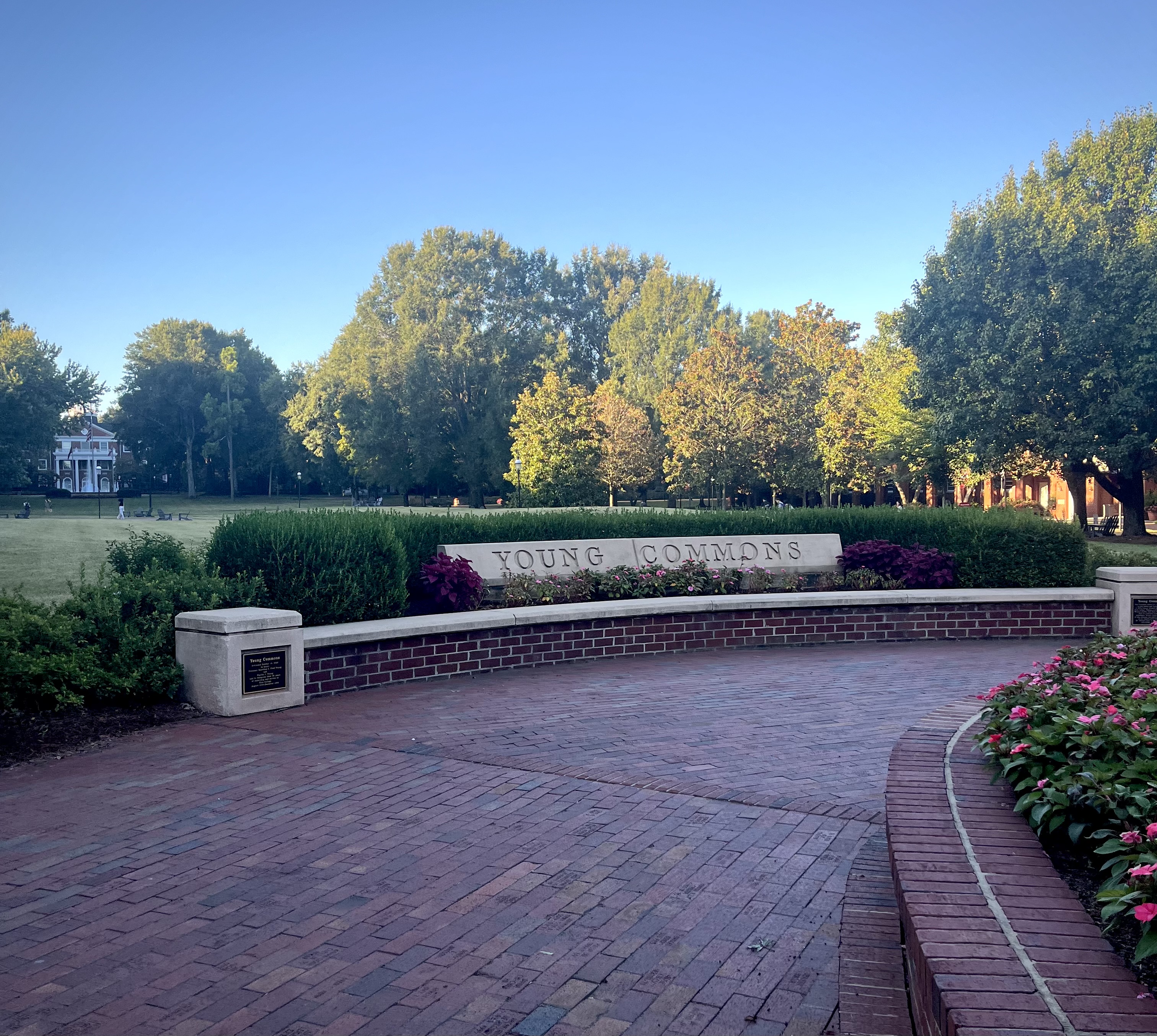
Daily sustainable actions that promote a culture of environmental stewardship are evident across campus as Elon makes conscious choices to foster a community committed to creating a more sustainable future.
It is hard to walk across campus and not see sustainable practices in action. Whether that be the recycling and landfill bins placed by most major buildings on campus or the electric fleet of utility vehicles, Elon’s commitment to sustainability makes student and staff participation easy.
At Elon, sustainability is an institution-wide effort that is part of the Boldly Elon strategic plan. As campus begins the 2026-27 academic year and welcomes the class of 2030, Elon University’s Office of Sustainability is excited to continue building campus’ culture of sustainability and environmental stewardship. Understanding the role each of us plays in campus sustainability first requires understanding what campus sustainability looks like. Elon has a variety of campus initiatives dedicated to sustainability, and launched an updated Sustainability Master Plan in 2025, both of which support Elon’s operational efforts.
When it comes to individual actions, the Office of Sustainability relies on student employees to foster community and build campus stewardship. Among these employees is a team of peer educators known as Eco-Reps. When asked about Elon sustainability, these students provided tips and tricks to better understand the campus culture of environmental stewardship.
Come to Office of Sustainability events (Talya Schube ’29, Eco-Rep for Colonnades Neighborhood)
The Office of Sustainability hosts a variety of events each month to engage students, faculty and staff in many forms of sustainability. With the help of student feedback, this looks like pop-ups in Irazú to explore alternative uses for old coffee grounds, or collaborations with the Astronomy Club to understand how spending time in nature stargazing can positively impact mental health. Specifically, at the start of the semester, the Office of Sustainability promotes events throughout campus to explore concepts of Earth Day Every Day: how daily actions of stewardship support campus sustainability initiatives. In addition to these events, student organizations such as Sierra Student Coalition offer opportunities to engage in local sustainability initiatives through hands-on volunteer work across North Carolina.
Walking is one of the most sustainable ways to get around campus (Gillian Prichard ’28, Eco-Rep for Historic Neighborhood)
While it seems simple, and likely something many are already doing, walking or biking around campus are measurable steps towards sustainability. During FY 2025, 14% of Elon’s gross greenhouse gas emissions were from student, faculty and staff commuting. Elon’s well-maintained paths make walking or biking accessible for community members to take small daily actions towards building campus’ culture of stewardship. The choice between walking or driving to class or a meeting may seem minute, but small individual actions can create large differences when communities commit to these actions together.
Take advantage of the dining halls (Sophia Barnes ’29, Eco-Rep for Loy Center Neighborhood)
Elon’s dining team, Harvest Table Culinary Group, is also hard at work to bring plant-forward meals and promote sustainable food consumption to students, faculty and staff alike. Whether through local produce, plant-based meals, or sustainable animal products, students are unconsciously supporting a greener campus. Swiping into a dining hall to enjoy a wide array of options, and possibly bringing some home in a green-to-go box, is a simple yet effective institutional measure in making campus more sustainable.
Utilize recycling bins in Moseley (Talya Schube ’29, Eco-Rep for Colonnades Neighborhood)
While traditional recycling bins can be found throughout campus, specialized recycling bins are located in Moseley Student Center, Belk Library and throughout campus to help dispose of non-traditional items. Whether that be thin plastic (think grocery store bags), electronics, or writing utensils, these specialized bins help Elon’s campus divert more materials away from the landfill. While these items cannot be recycled via single-stream bins, separating them allows Elon and external organizations to re-use these existing materials. Next time you find yourself in possession of something you wish you could recycle, be sure to check to see if Elon has a recycling bin for it first.
These are all small actions that many are already taking to help build a culture of care and environmental stewardship. Appreciating Elon’s beautiful campus by walking, properly disposing of our waste, or eating at one of our many dining locations on campus are simple ways to continue to build a strong culture of sustainability on campus. Sustainability relates to all majors, careers, passions and hobbies and can at times feel overwhelming. It is an important reminder to know that the simple things on campus add up, and that small actions at a community level result in a culture of care that continues to strengthen Elon’s commitment to sustainability.