


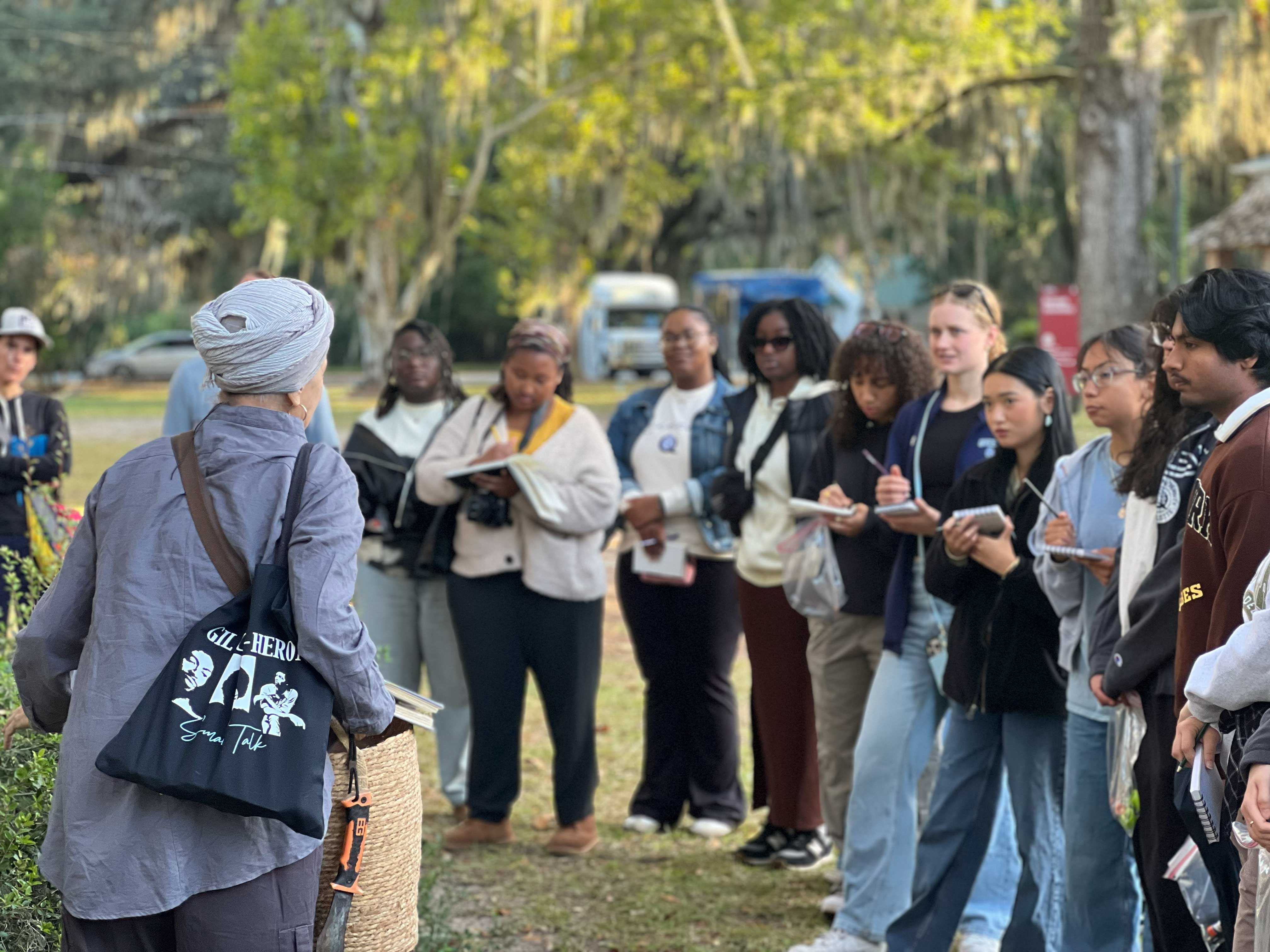
Queens University of Charlotte students explored Gullah Geechee history and culture while collaborating with the historic Penn Center to build an interactive digital visitor map.
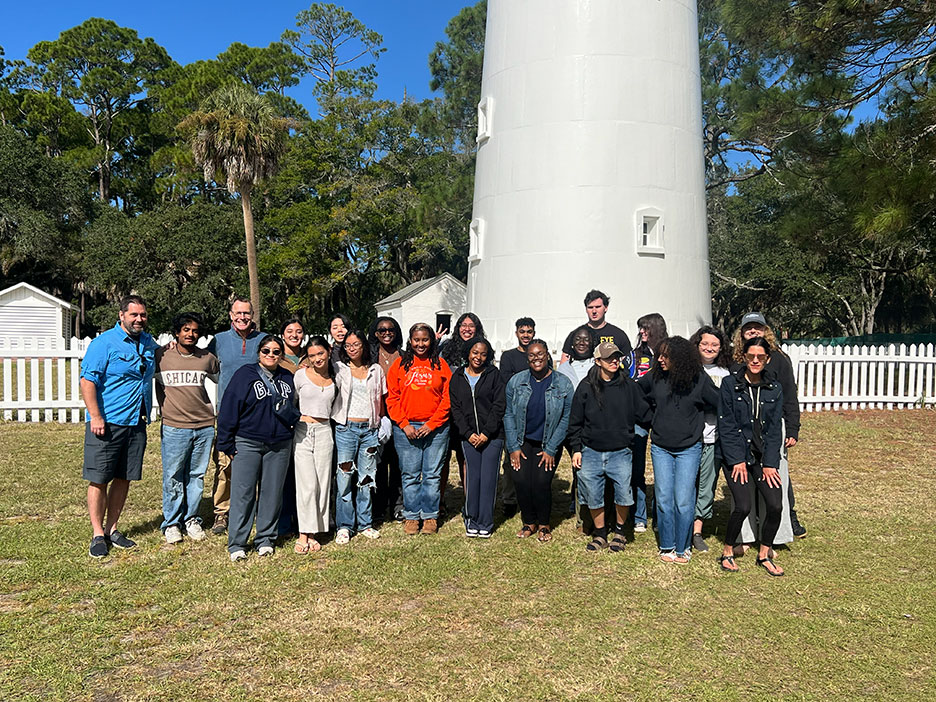
For the second consecutive year, Queens University of Charlotte students visited coastal landmarks of the South Carolina Lowcountry for a three-day immersive experience studying the history of the Gullah Geechee people.
Guided by faculty and staff from Belk Chapel, the History Department, and DICE, students blended interfaith pluralism, community engagement, and archival mapping as they explored how descendants of enslaved West Africans have preserved their language, traditions, and land stewardship from North Carolina to Florida.
Highlighting the value of these multidisciplinary efforts, Professor Barry Robinson described how collaborative academic partnerships enrich student learning.
“True learning happens when multidisciplinary education intersects with purposeful community,” Robinson said. “These cross-collaborations give students a front-row seat to different perspectives. Engaged in the service of community partners, this opens the door to powerful and purposeful growth.”
Students in Robinson’s applied historical geography course turned classroom theory into practice during the late October trip, partnering directly with the Penn Center to begin building a custom, interactive digital map. Founded on St. Helena Island in 1862 as one of the nation’s first schools for formerly enslaved West Africans, the Penn Center will use the completed tool to guide future visitors through its historic grounds.
For returning students, this new project marked a meaningful evolution in how they engaged with the site.
“Last year, we explored the region with a focus on religious pluralism,” said Sofia Bartholomew ’28, a Davies Fellow from Charlotte studying conservation biology, history and creative writing. “This year, we returned with the goal of building an interactive map for the Penn Center visitors.”
For Penn Center leaders, the students’ hands-on collaboration set the visit apart. “They did not just come to learn — they came to contribute,” said Kevin Holman, director of operations and creative services at the Penn Center. “We thank them for honoring this sacred place not just with their curiosity, but with their work.”
That collaborative work also deepened Bartholomew’s understanding of how these types of partnerships translate into real-world connection.
“Pluralism sounds to some people like it’s just about religion, but it’s really about learning how to work with different views and beliefs,” Bartholomew said. “Opportunities like this give students the full value of travel and cultural immersion within a few hours’ drive from Queens.”
After stopping at the Tuskegee Airmen Memorial in Walterboro, South Carolina, and touring the Reconstruction Era National Historical Park in Beaufort, the group crossed to St. Helena Island to stay at the historic Benezet House on Penn Center’s campus, a retreat site famous for hosting Martin Luther King Jr. and other Civil Rights leaders as they strategized and drafted historic speeches.
“Upon entering the Benezet House, we told the students, ‘Listen to the floorboards, they will speak to you,'” said Queens Chaplain Adrian Bird. “It was such a deeply valuable dimension of the trip.”
The trip continued at the Coffin Point Praise House and Cemetery before a campfire dinner at Morning Glory Homestead Farm on St. Helena Island. Owners Tony and Belinda Jones turned 12.4 acres of family land into a sustainable farm rooted in Gullah heritage, using organic farming and animal husbandry to host students for tours, traditional meals, and lessons in Lowcountry history and music.
“We try to welcome student groups as often as we can to share Gullah culture, our agricultural practices and local history they may not be aware of,” said Belinda Jones. “We are constantly researching our own families’ Gullah connections during the Civil War and Reconstruction era, and the more we uncover, the more we are able to share with the groups that visit.”
For Charlotte native Trinity Lewis ’26, a health science major, the group’s visit to the homestead offered an unforgettable lesson in self-sufficiency and connection to the land.
“The food they cooked came straight from what they’ve grown, and it was cool to actually witness it and eat it fresh from the ground,” Lewis said. “It felt so peaceful and freeing that I joked with one of my friends about one day retiring there.”
The itinerary balanced academic fieldwork with cultural immersion, including a medicinal plant walk, a paint workshop and sweetgrass basket-weaving session, and an authentic lunch featuring storytelling in the Gullah language by St. Helena Island native Natasha Robinson.
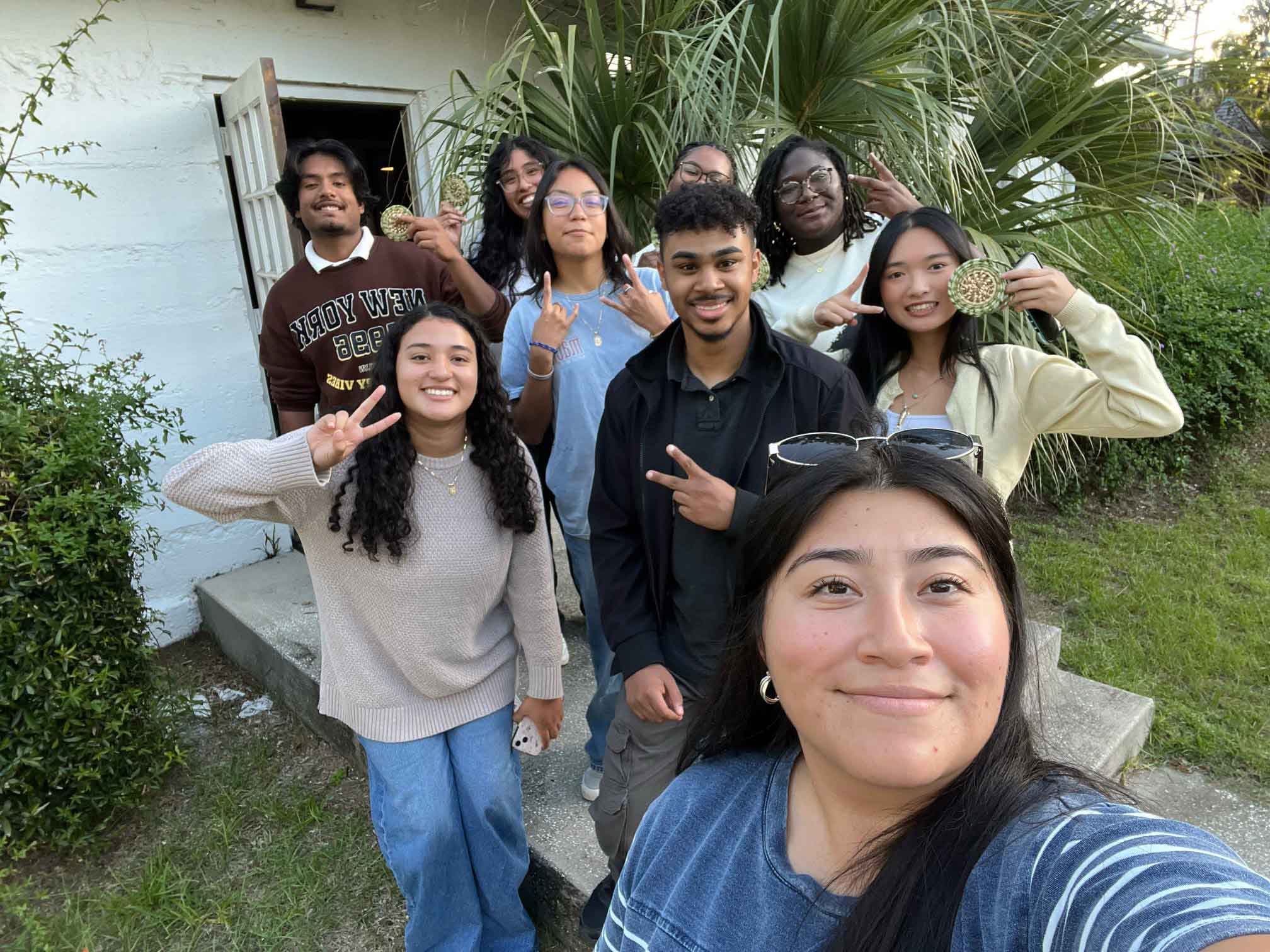
Having grown up watching “Gullah Gullah Island” and later studying the Gullah Geechee language in a psychology of language course at Queens, Lewis found that hearing the traditional dialect and singing hymns was reminiscent of her own Pentecostal upbringing, creating a powerful bridge to her heritage.
Reflecting on the journey, DICE Director Jo Mercado emphasized that stepping outside familiar identities allows students to view their own lives through a fresh lens.
“The beauty of being so immersed in education outside of our own identities helps us better understand our own lived experiences,” Mercado said.
Bird emphasized the reward of leading these experiential opportunities. “We’re in the business of creating transformative experiences, and while transformation is hard to capture in data, we see it happening,” Bird explained. “Seeing these moments through our students’ eyes shows us what sparks their passion and inspires us to carve out new pathways for them to explore in the future.”
For Robinson, confronting history in different communities equips students with the empathy needed to navigate diverse perspectives in Charlotte.
“Being informed about our shared future requires understanding our past,” Robinson said. “When you study where different perspectives originate, you learn how to engage with them in a healthy way.”
Campus leaders hope to return to the Lowcountry next year. “This collaboration is truly in the DNA of Queens,” said Bird. “We look for creative avenues and opportunities for transformative impact, creating spaces, trips, and experiences that entice students to lead with curiosity.”