


Page 123 of 316
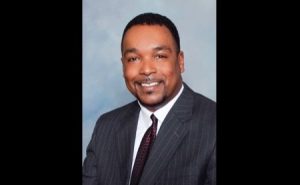
Elon Law student earns national spotlight for leadership
January 21, 2016
Elon Law student Gerard Truesdale is featured in the American Bar Association’s Student Lawyer magazine for creating and operating a nonprofit that provides high school students with life skills and pathways to higher education.
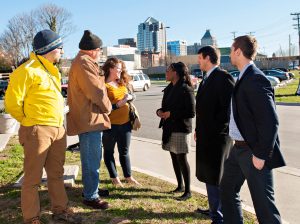
Elon Law students take on real-world problem solving
January 18, 2016
Elon Law’s second-year law students recently helped three nonprofit organizations with legal matters involving urban development, alternative transportation and organizational management.
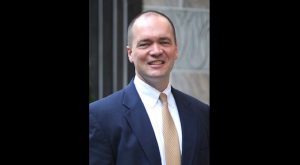
Scott Gaylord authors U.S. Supreme Court amicus brief
January 15, 2016
Elon Law Professor Scott Gaylord has authored a United States Supreme Court "friend of the court" brief opposing the contraceptive coverage mandate in the Affordable Care Act.

Elon Tax Clinic – Feb. 2 – April 5
January 14, 2016
From February 2 through April 15, Elon Law students will assist low- to moderate-income taxpayers, ages 50 and older, with their tax preparation at no cost, in partnership with AARP Foundation Tax-Aide.
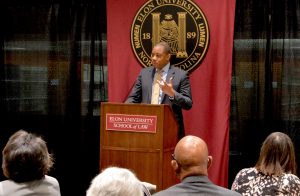
Mo Green at Elon Law: Education is the civil rights issue of our time
January 14, 2016
Delivering the keynote address at Elon Law’s eighth annual Dr. Martin Luther King, Jr. forum, Guilford County Schools Superintendent Maurice “Mo” Green urged greater engagement by communities and future lawyers to strengthen educational systems and expressed excitement about Elon Law’s role in Guilford County’s Say Yes to Education partnership.
A voice for children in the high courts
January 13, 2016
Elon Law’s newest clinic empowers law students to protect and promote the best interests of abused and neglected children while gaining valuable advocacy skills at the appellate level of the North Carolina court system.
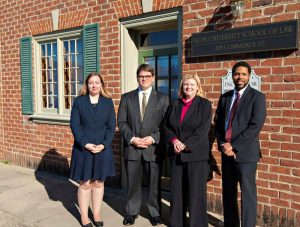
Elon Law announces new law practice incubator
January 12, 2016
Elon University School of Law has created the Elon Law Legal Incubator to support Elon Law graduates who wish to develop solo law practices and to create opportunities for lawyers to provide reduced-cost legal services for low-income residents of Guilford County.
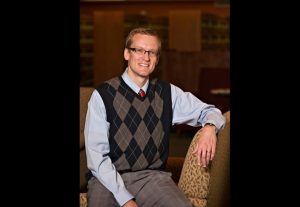
Elon Law scholar on machines as crime fighters
January 11, 2016
Elon Law Professor Michael Rich’s article “Machines as Crime Fighters—Are You Ready?” in the winter 2016 edition of the American Bar Association’s Criminal Justice magazine, examines legal and practical challenges to the automated prediction of criminals.