

Be trusted with the problem

Senior Projects in Elon Engineering Design (SPEED) is your engineering capstone. In your senior year, you’ll spend a full academic year with a small team of peers and a faculty adviser, working with a business, government agency or other professional partner on a problem they haven’t solved yet.

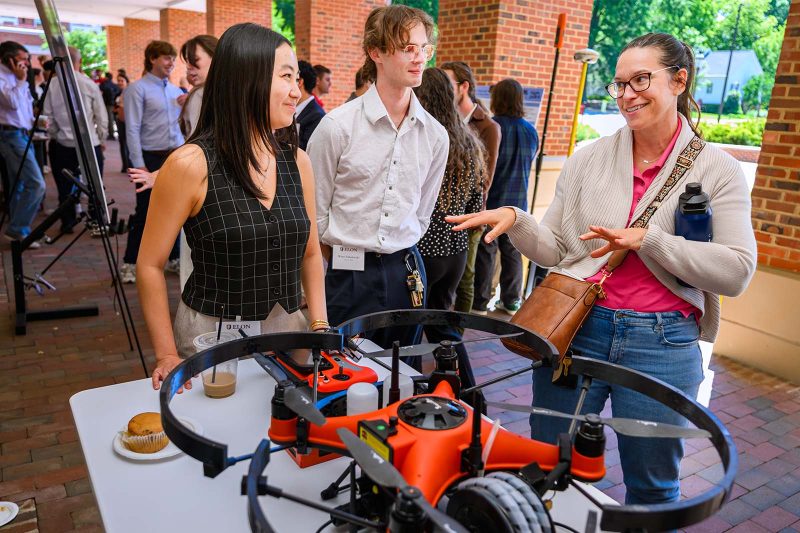
SPEED demonstrations at Innovation Hall on May 8, 2026

What you’ll do

  • Work with an external partner.
  • Develop a solution over a full academic year.
  • Build and test a working prototype.
  • Present your work to industry professionals.

The project begins with a brief in August and leads to a public presentation for partners and engineering professionals the following spring. You’ll break the project into pieces, meet weekly with your team and your partner’s technical staff, and move from early concepts to a working prototype. You’ll test ideas, hit dead ends and figure out how to engineer your way past them.
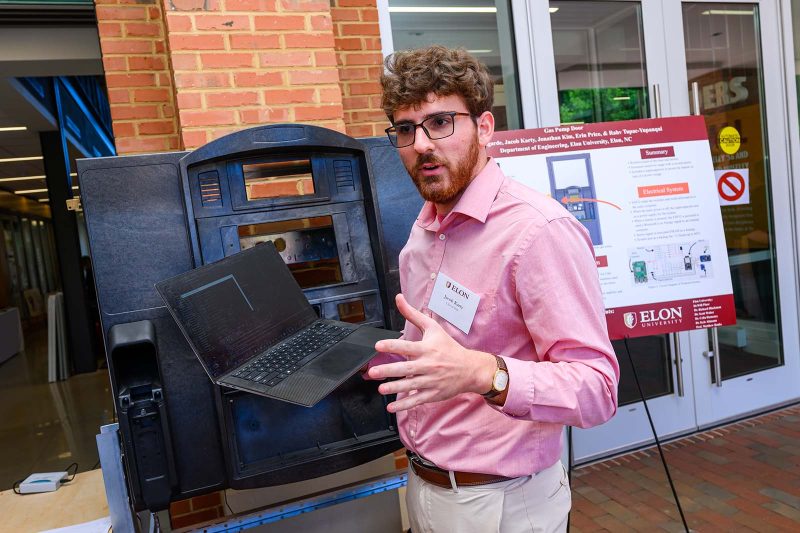
SPEED demonstrations at Innovation Hall on May 8, 2026

What makes SPEED different?

SPEED puts the skills you’ve developed over three years to work on a challenge that matters to a partner organization. Your team must define the problem, manage the timeline, test possible solutions and deliver work the partner can use. Technical ability matters, but so do communication, judgment and the ability to earn your partner’s confidence.

Recent SPEED projects

Past teams have tackled challenges across mechanical, electrical and materials engineering, working with partners from local nonprofits to national manufacturers.

Fuel pump security redesign

Partner: Gilbarco Veeder-Root

A team redesigned the security on gas station fuel pumps that had been broken into, adding a tamper sensor, a reinforced latch and a backup power component to protect data during outages.

Adaptive driving system redesign

Partner: Driver Rehabilitation Services

Students rebuilt a vehicle steering mechanism for drivers with limited arm strength, replacing a rotational motion that was difficult for some users to control with a straight-line pull.

Subsurface defect detection in semiconductor wafers

Partner: Wolfspeed

A team tested two optical inspection methods to catch subsurface damage in silicon carbide wafers before it became a manufacturing defect.

Water conservation weir design

Partner: Yazoo Mississippi Delta Water Management District

Students designed a weir, plus a design guide for future structures, to help address long-term groundwater decline in the Mississippi Delta.

Interested in sponsoring a project?

SPEED runs on partnerships with regional businesses and organizations that bring a real problem and a year of student engineering talent to solve it. If your organization has a challenge worth a team's attention, we'd like to hear from you.

Student Experience

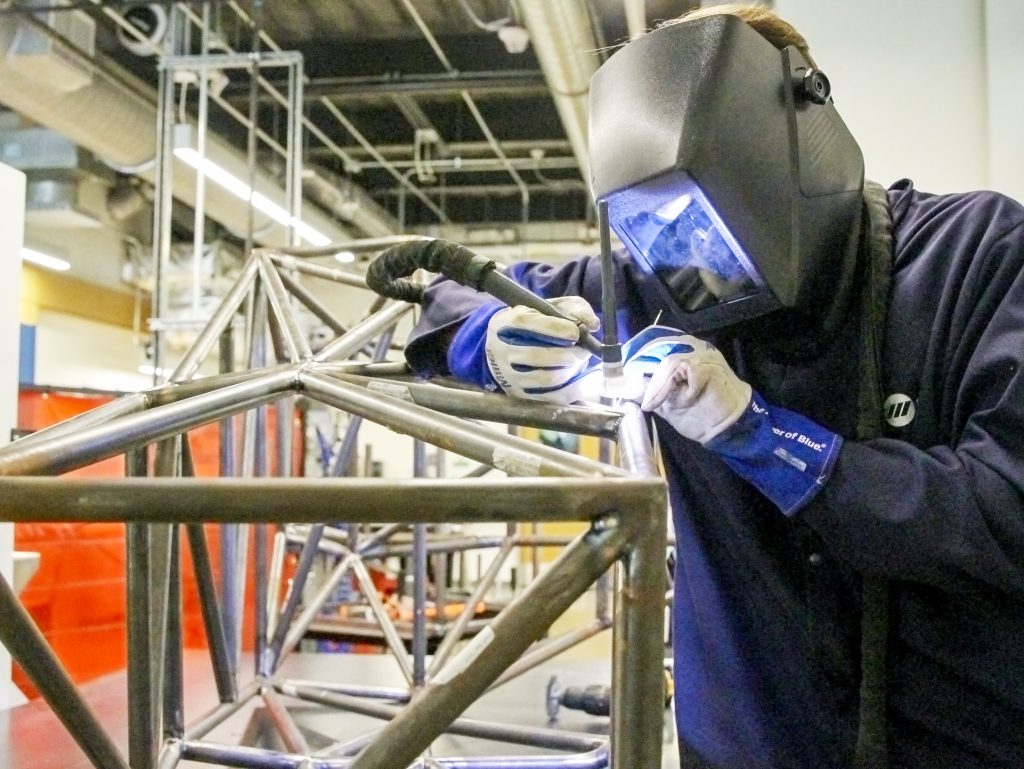
Elon Engineering alumni Jack O'Donnell welding in the Engineering workshop

When the design meets reality

Jack O’Donnell ’25

For Jack O’Donnell, SPEED meant taking engineering off the page and into the shop. As part of a senior design team, he worked on an electric-powered boat for a competition hosted by the American Society of Naval Engineers, putting ideas through the much less predictable process of actually building and testing them.

That process meant discovering what the team had overlooked, figuring out why something failed and engineering a way forward. It’s an experience at the heart of SPEED: work through a real challenge, turn concepts into something you can test, and learn how to respond when the first solution isn’t the final one.

For O’Donnell, those moments weren’t setbacks to the engineering process. They were the engineering process—and an important part of learning how to become an engineer.

Nothing you design is going to survive the first contact with whatever you’re doing. You’re always going to overlook something or something’s going to break, and you must figure out how to get around that.