


In his new book, out May 6, Elon University Professor of History Michael Matthews explores the romantic and sexual lives of Mexico City’s poor and working class during the rule of Porfirio Diaz.
Many books promise an “intimate” look into a subject, but Elon Professor of History Michael Matthews is taking that concept literally in his new book “Sex and Love in Porfirian Mexico City: A Social History of Working-Class Courtship,” published by the University Press of Florida.
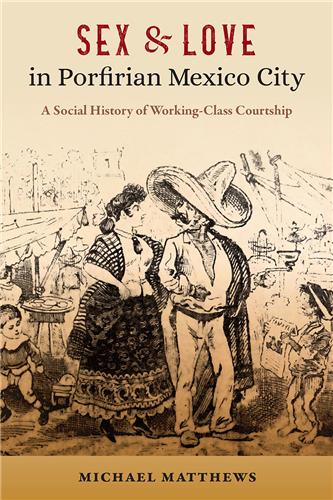
Matthews’ interest in the topic began while he was researching judicial cases to look at the worldviews and voice of 19th century Mexico’s common people. Few people left written records during that time, due to low literacy rates, so judicial sources are often the only sources that allow people to understand the lives of ordinary Mexicans.
“I came across judicial cases that were, essentially, elopement cases that provided a lot of information about common people’s romantic lives and courtship practice in 19th century Mexico,” said Matthews. “The more I looked into it, the more I was convinced that many of the assumptions about Mexican sexual culture, especially the idea of machismo, aggressive masculine behavior and female sexual subordination, did not match the life stories I was finding in the archives.”
Drawing upon these cases, Matthews offers a detailed examination of the romantic and sexual lives of Mexico City’s poor and working-class residents during the rule of Porfirio Díaz from 1876 to 1911. Matthews reconstructs the intimate experiences of everyday people navigating love, desire and societal expectations in a rapidly modernizing city.
“Matthews reconstructs a vibrant world of working-class Mexicans as they built their personal sexual relationships and negotiated state power,” writes historian James A. Garza, author of “The Imagined Underworld: Sex, Crime, and Vice in Porfirian Mexico City.” “Their stories are rich and reveal intimate motivations, offering a window into the formation of Mexico City’s unique working-class culture at the dawn of the twentieth century.”

Matthews argues that lower-class individuals had more liberated sexual lives than their wealthier counterparts, influenced by the city’s growth and cultural changes. The book delves into how urban expansion, industrialization and new forms of leisure influenced courtship and sexual practices among the lower classes.
Matthews, who joined Elon’s faculty in 2008, has taught Latin American and world history for over twenty years. He is also the author of “The Civilizing Machine: A Cultural History of Mexican Railroads, 1876–1910,” and the co-editor of “Mexico in Verse: A History of Music, Rhyme, and Power.” His research interests arose from his upbringing around the world, including in Canada, Peru and Spain. Matthews earned a doctorate in history from the University of Arizona.
“History is best understood when explored from the bottom-up; that is, looking at the contributions of ordinary people as historical agents. In this case, I want people to see how the working classes were important historical agents in the formation of modern sensibilities about love, courtship and sex,” said Matthews.
“Sex and Love in Porfirian Mexico City” is available May 6 in paperback and hardcover through the University Press of Florida and major booksellers. Read an excerpt from the book online now.