


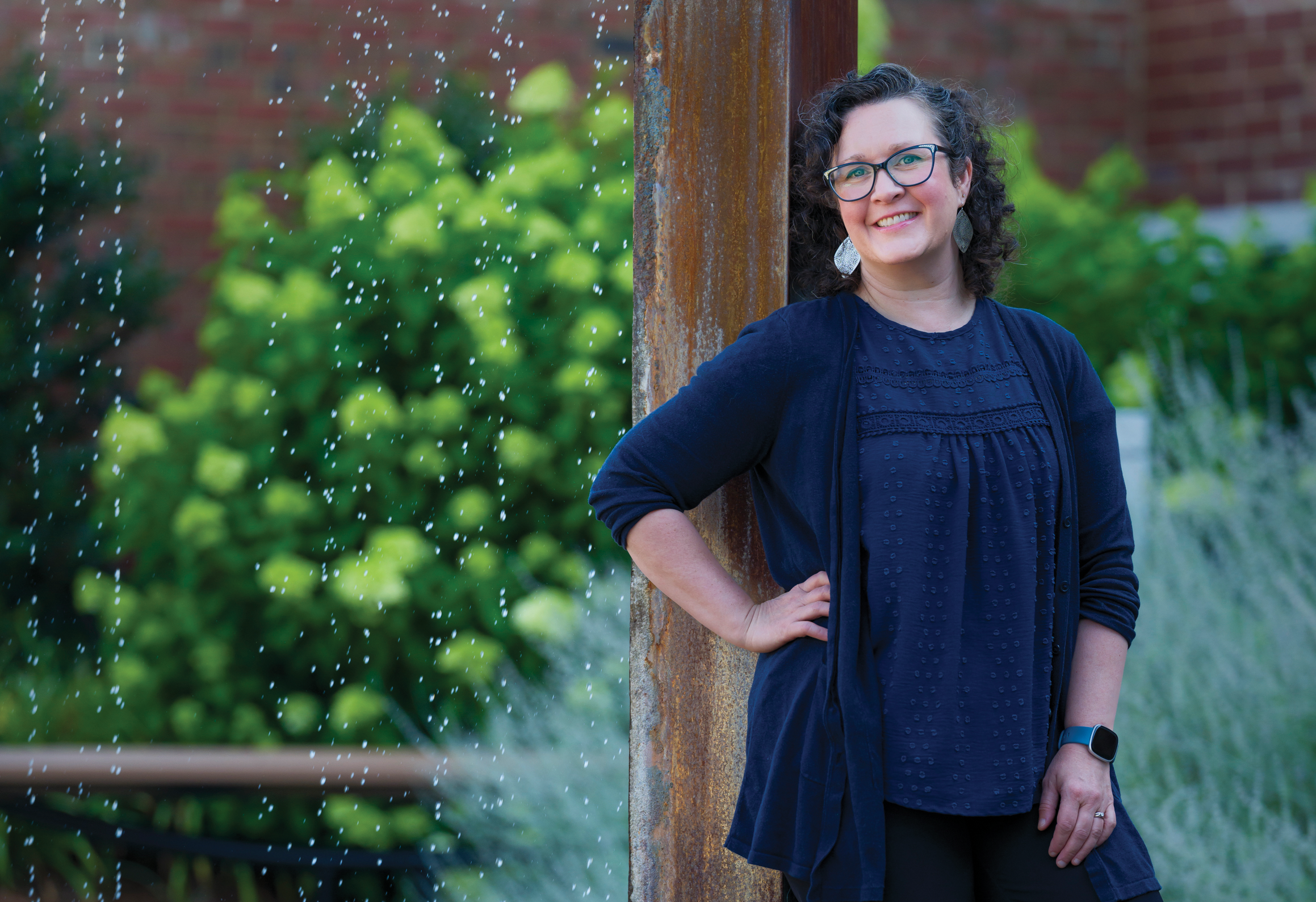
Associate Professor of Physical Therapy Education Melissa Scales found a calling to help people move, heal and be seen.
Melissa Scales’ journey into physical therapy wasn’t linear — it was lived, personal and rooted in love. Her father’s diagnosis with amyotrophic lateral sclerosis, better known as Lou Gehrig’s disease, a fatal neurodegenerative disease, shifted the trajectory of her life.
After her father’s diagnosis, Scales immersed herself in dance and became captivated by the power of movement. She soon found a deeper calling to help people move, heal and be seen. “I went to graduate school and got my doctorate in physical therapy after that defining moment with my dad,” says Scales, an associate professor of physical therapy education. “I became a teacher because of him.”
Scales’ transition from the performing arts to a career helping others to heal was also influenced by her mother, an occupational therapist who modeled compassion in action. Her dance background instilled a deep appreciation for movement and the human body. Today she sees herself as more than a physical therapist — she’s an educator, mentor and advocate for inclusive practice.
In the classroom, Scales is intentional about identity. That starts with something as simple as names. “I use last names with my students because it’s about mutual respect,” she explains. “Names carry history, and they matter.”
Whether mentoring students, speaking with patients or advocating for equity, she leads with empathy and encourages deeper understanding and connection. “We will be much better physical therapists and humans if we acknowledge that we bring different things to the table,” Scales says.
Scales’ work is not just about helping students pass exams or patients recover physically; it’s about shaping a more inclusive and communicative health care environment. She strives to leave a legacy marked by empathy, respect and a commitment to lifting underrepresented voices. Her influence is felt not only in her students’ professional growth but also in the broader institutional practices she has helped shape. She creates space where asking questions is valued. Her involvement in institutional diversity committees also reflects her belief that lasting change requires deliberate, sustained effort.
“It’s about making sure people feel seen and valued,” she says. “It starts by listening — and that’s my superpower.”