


The journalism major turned a remote internship with the Smithsonian’s National Museum of American History into a transformative professional experience, diving into editorial projects and building connections across the institution.
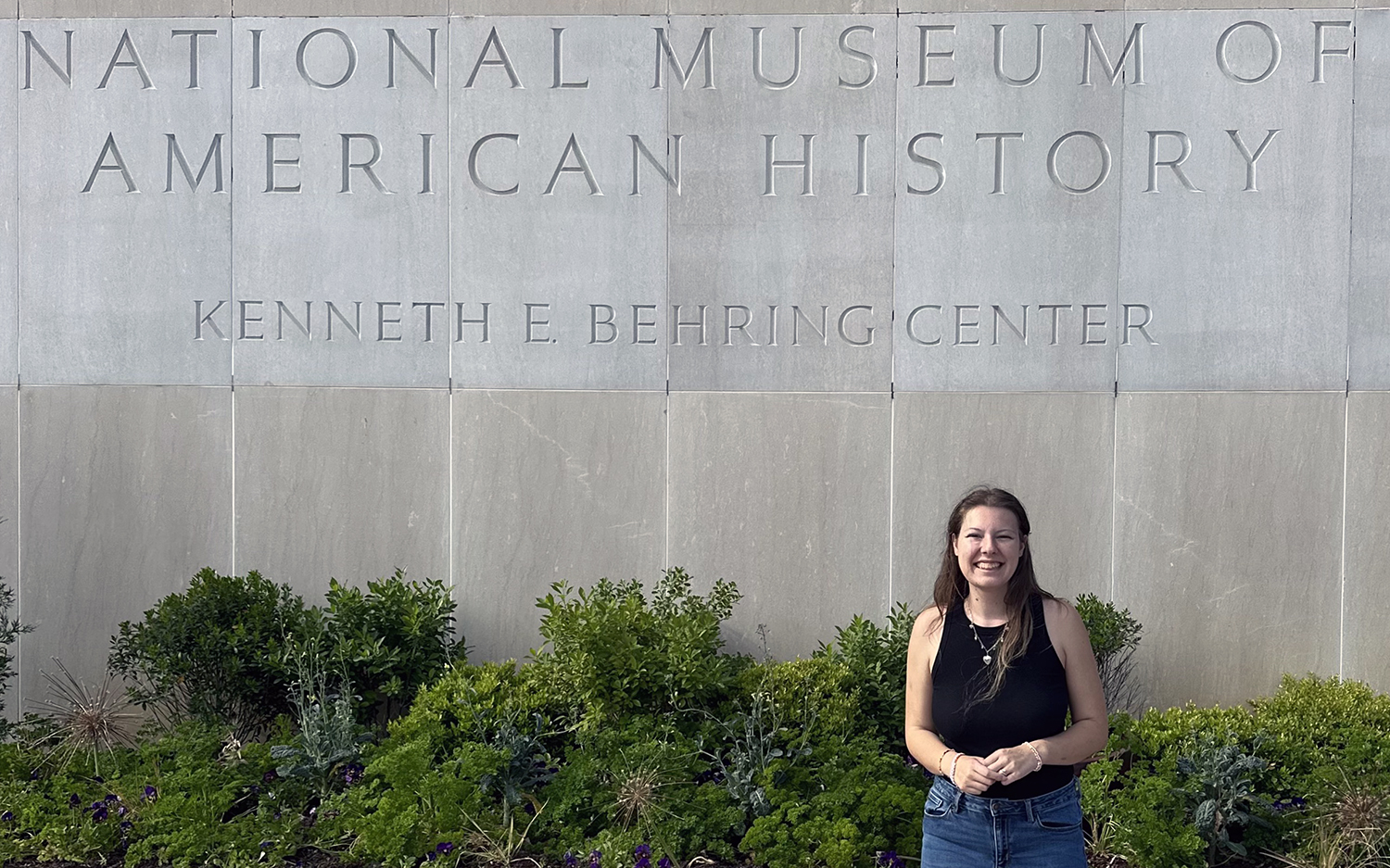
When Sarah T. Moore ’26 accepted a summer internship with the Smithsonian’s National Museum of American History (NMAH), she knew one thing for certain: if the experience was going to be remote, she was going to make the most of it. From her laptop in Charlotte, Moore dove into editorial projects, joined committees, and sought out connections that ensured her internship would be as engaging and fulfilling as if she had spent the summer in Washington, D.C.
“I was determined to be as connected and involved as I could be for a remote intern,” Moore said. That determination defined her internship experience, pushing her to participate in projects far beyond her primary editorial role.
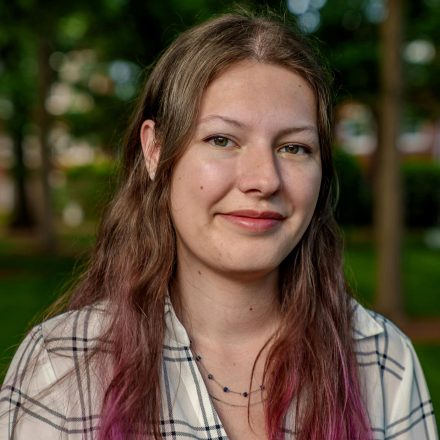
As an Editorial Services intern, Moore immersed herself in the museum’s public-facing work – writing and refining text for exhibitions, newsletters, promotional materials, and accessibility initiatives. She contributed to more than 150 pieces of exhibition text and worked on 25 separate projects, each with unique editorial needs. The range of assignments gave her a crash course in the precision and creativity required for museum communication. From captioning and alt text to exhibition signage, she learned that editing was about more than grammar – it was about making history accessible and engaging to broad audiences.
She also sought ways to build community. Moore joined the museum’s newsletter and social committees, collaborating with fellow interns to highlight their projects in a newsletter distributed to NMAH staff, volunteers, and Fellows. She also logged into professional development workshops hosted by the Smithsonian’s Office of Academic Appointments and Internships, where she connected with students interning across the institution. These opportunities gave her a sense of belonging, even while working hundreds of miles away.
During the final week of her internship, Moore traveled to Washington, D.C., where she connected with colleagues in person, toured the museum, and worked from the Editorial Services office. The chance to step behind the scenes of the institution she had come to know remotely brought her summer experience full circle.
Equally valuable as the projects she completed were the relationships she built. Meeting professional editors, hearing their career stories, and benefiting from their mentorship left a lasting impression. “Getting to meet other editors was incredible,” Moore said. “The staff at NMAH were welcoming, and I enjoyed learning more about everyone’s career paths.”
Her curiosity extended beyond editing. Reviewing exhibition texts exposed her to a wide range of U.S. history topics, a rewarding element of the work. “Since most of the projects were educational, I got to learn a lot about different U.S. history topics,” she said. “I am someone who is really driven by curiosity and storytelling, so this aspect made the work even more fulfilling.”
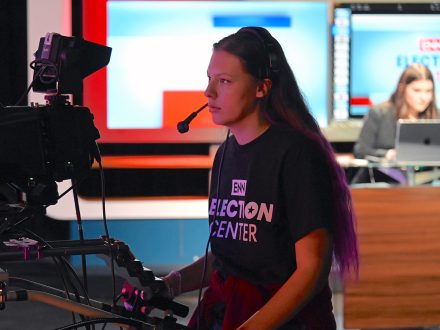
Moore credits her coursework at Elon with preparing her for the Smithsonian experience. Classes like Multiplatform News Editing, Media Law and Ethics, and Introduction to Museum Studies provided the foundation she drew on throughout the summer. At times, she even pulled out old notes to guide her through assignments. The lessons she gained also reshaped how she approaches her role as managing editor of The Pendulum, Elon’s student-run newspaper.
“This experience fundamentally changed the way I approach editing,” she said.
Looking back, Moore is eager to share advice with other students hoping to land similar internships. Her first suggestion is simple: apply, even if an opportunity feels out of reach.
She recalled nearly skipping both the Smithsonian application and an earlier National Geographic application because she doubted her chances. While she did not get the NatGeo position, the interview process sharpened her skills and gave her confidence moving forward. She encourages others to view internships as learning opportunities rather than proof of expertise.
“If you’re the ideal candidate based on the job listing, how much can you learn in that experience? Moore asked.
The Elon senior also urges students to show adaptability and a willingness to grow. While she was confident in her copyediting skills, she had never worked with the Chicago Manual of Style before arriving at NMAH. By highlighting her ability to adapt to different style guides, she showed the editorial team she was ready to learn. Practical preparation also matters, she added – keep portfolios updated and request recommendation letters early.
For Moore, her internship reaffirmed her career goals. Being an editor at a museum remains her dream job, but she knows her post-graduation path may be broader at first. Still, her summer at the Smithsonian convinced her she is on the right path.