


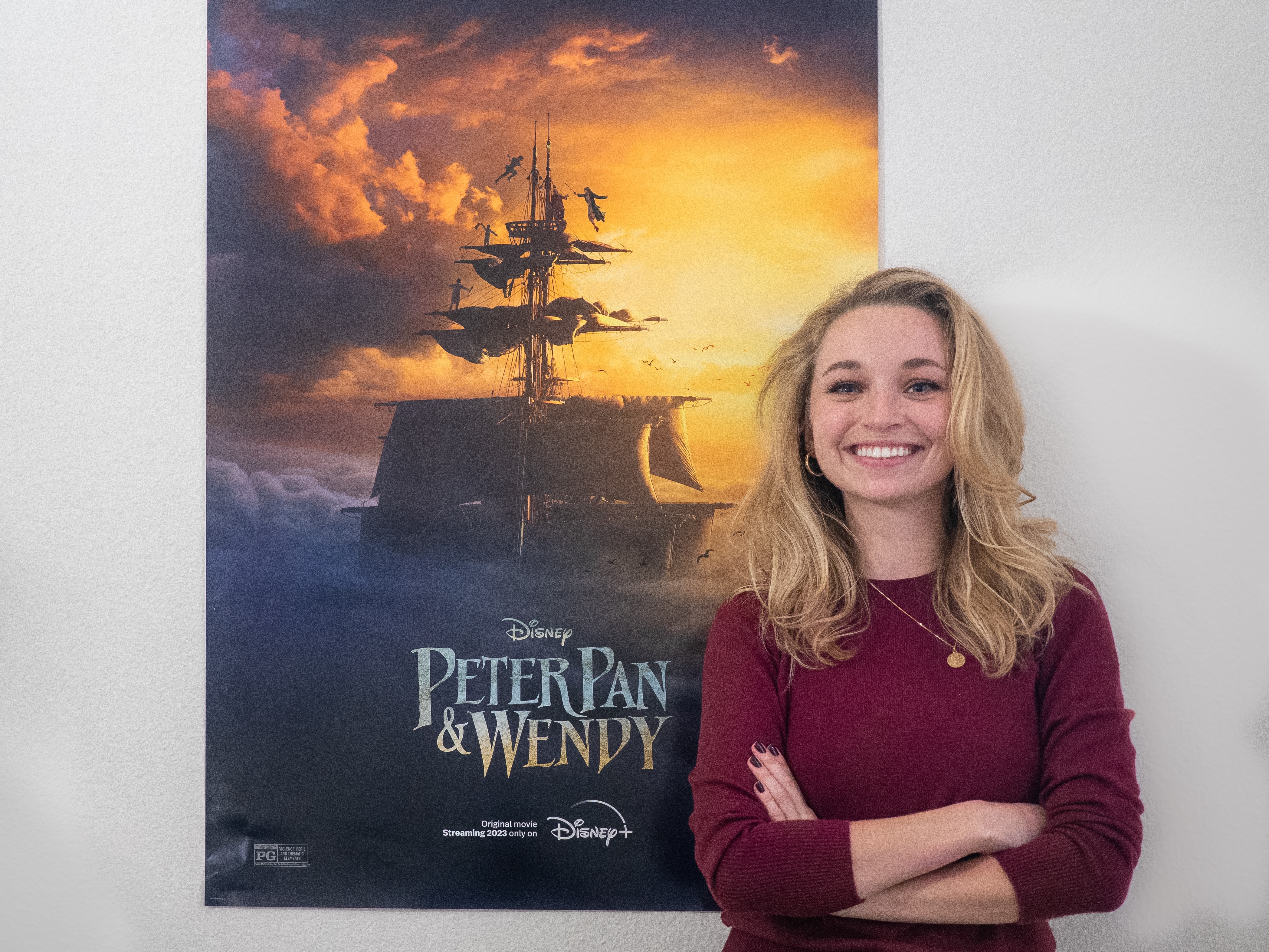
Guided by curiosity and a passion for storytelling, Lillian Engel ’19 turned her love of editing at Elon into a thriving Hollywood career. From campus projects to major films like "Extraction" and "Joker: Folie à Deux," she embodies the power of hands-on learning, persistence and community.
The first time Lillian Engel ’19 stepped into Elon University’s School of Communications, her attention went straight to the editing suites, not the cameras or soundstages.
“Something about seeing those editing rooms was just really intriguing,” she says. “By the time I arrived at Elon, I knew I wanted to be a cinema major. Specifically, within that, I had become interested in becoming an editor.”
That curiosity has since guided Engel through the cutting rooms of major studio projects, from “Extraction” on Netflix to “Joker: Folie à Deux” with Warner Bros. Today, she lives in Los Angeles, cutting out her place in Hollywood’s fast-moving post-production world, one frame at a time.
Growing up in Connecticut, Engel didn’t initially know that cinema and television could be a field of study. But after visiting Elon, she was drawn to the university’s approach.
“I’m a very hands-on person, other schools I visited talked about doing theory for the first few years,” she said. “At Elon, they encouraged filmmaking from day one.
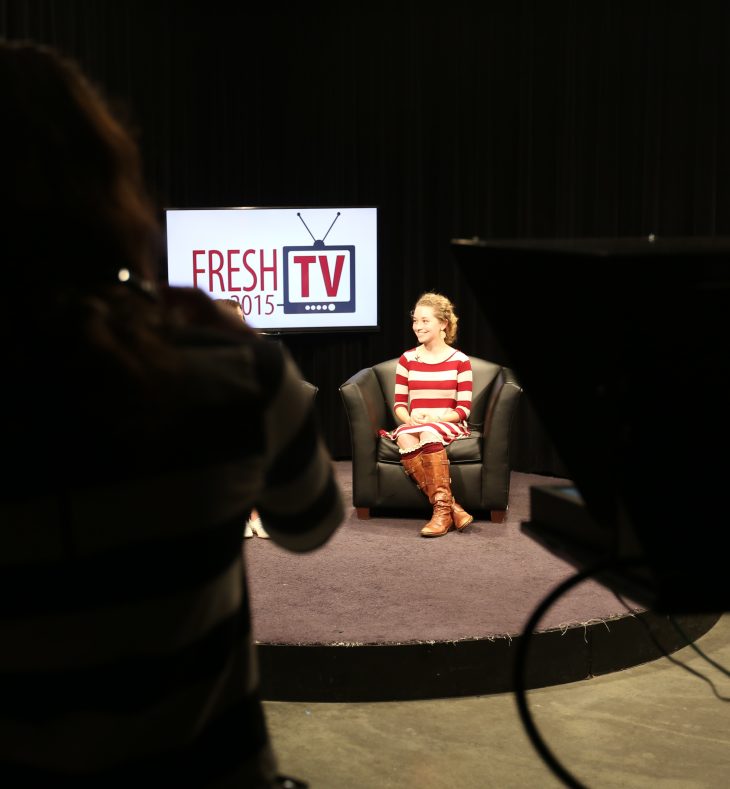
That approach gave Engel a creative outlet and community. She joined Cinelon Productions, the student-run film organization, where she eventually served as a writing executive.
“Editing is part technical and part storytelling,” she says, “Knowing how to tell a story, and being able to teach that, is integral to what I do. You need a big-picture understanding so you’re not just putting shots together.”
By the time she graduated, her professors knew exactly where her passion was. “If we were doing a project, they knew I wanted to be the editor,” Engel says. “They let me tailor my time at Elon toward that focus.”
Engel credits several Elon faculty members for helping her build that focus. Cinema & Television Arts faculty Nicole Triche and Youssef Osman, she says, helped refine her technical skills and explore new editing software. Director of Student Engagement and Special Projects and Assistant Professor of Journalism Colin Donohue, who served as her academic advisor, provided constant encouragement.
“He was always championing me toward my goals and helping me figure out where to position myself,” she said.
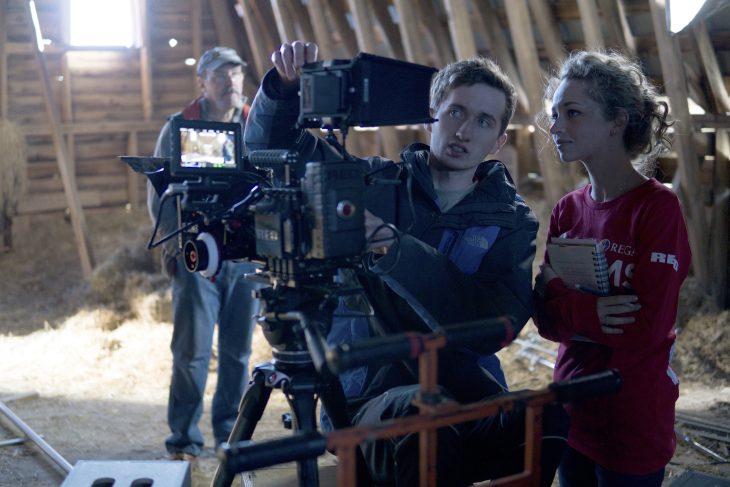
Donohue recalls her as “one of the finest students I’ve had in 18 years.”
“Lillian exhibited tremendous leadership and empathy. She was thoughtful, creative and curious — the kind of student who inspired everyone around her to be better,” he said.
That drive carried her beyond campus. Engel interned in both New York and Los Angeles, gaining early exposure to production and post-production environments. She also studied abroad in Paris through Elon’s French program, an experience that deepened her love of global storytelling.
In 2018, she nearly missed the deadline for the American Cinema Editors’ (ACE) Student Editing Competition, but managed to submit her entry just in time. A few months later, she received an email that changed her path — she was named a finalist and invited to the ACE Eddie Awards in Beverly Hills. “It was surreal,” she says. “I was meeting people whose names I’d only ever seen in movie credits.”
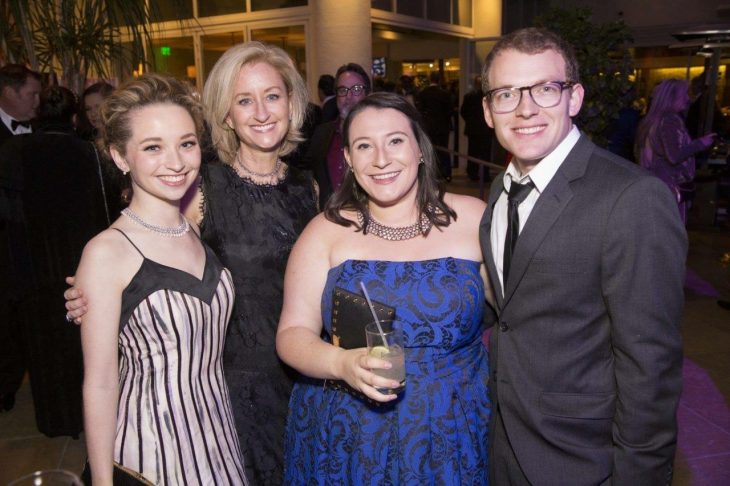
The event became her first glimpse into the professional editing world and her first encounter with Elon’s vast alumni network.
“There was another Elon alumnus there, and he later referred me for what became my first job. Elon pulled through and got me my start in Hollywood,” she explained.
After graduating, Engel moved to Los Angeles without a job or apartment.
“I was couch-hopping and networking, but within weeks, two Elon connections reached out at the same time with opportunities,” she said.
One of those connections led her to her first project: Netflix’s “Extraction,” where she joined the team as an office assistant.
“It was a really good take-off point, I was learning the back end of how a professional post-production office runs,” said Engel.
She has since worked on high-profile projects, including “Vacation Friends” for Hulu, “Peter Pan & Wendy” for Disney+, and “Joker: Folie à Deux” for Warner Bros. As an assistant editor on “Joker: Folie à Deux,” she helped manage footage organization, sound and music coordination and communication between departments.
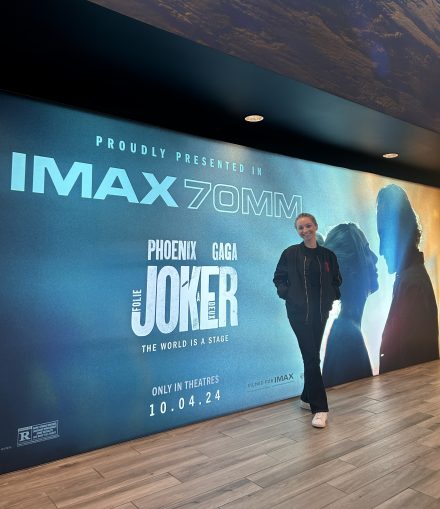
“I was in charge of liaising with the music department, sending and receiving cuts, and integrating the composers’ work,” she explained. “It was a good way for me to learn the process without being totally overwhelmed.”
Despite the differences between genres, Engel says the essence of editing remains the same. “The process doesn’t necessarily change, you still screen, cut, and refine scene by scene with the director. What changes is the scale, but the collaboration and creativity stay constant.”
Now an editor for an independent feature film, she reflects on the challenges of working in an industry that thrives on connections.
“There are no job boards in editing; everything is word of mouth. You can’t force the network, it happens organically,” she said.
She’s also quick to note that setbacks are part of the process: “Mistakes happen, and the key is staying calm and finding a solution. If I’m confident I can fix it — the world isn’t ending. It reflects better to take responsibility, communicate, and move forward.”
Her mentors and collaborators have continued to inspire her growth, including “Joker” editor Jeff Groth.
“Jeff would have us assistants come in and ask our opinions,” she said. “He made the cutting room collaborative. That taught me a lot about leadership and trust.”
Engel remains connected to Elon’s film community, seeking to mentor students who want to enter post-production.
“When I first moved to LA, I didn’t know anyone except some other Elon connections; that network has been everything,” she said. “I always want to be a resource for students interested in editing; it’s not as shiny as directing, but it’s vital to storytelling.”
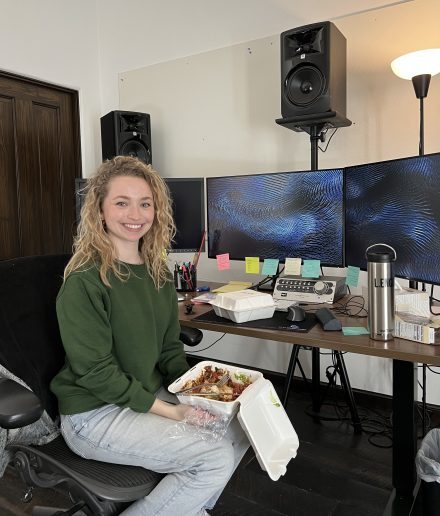
Her advice for students: practice constantly, “Editing is like a muscle; the more you do it, the stronger your eye and timing get. Get involved with projects, apply for competitions, and reach out to professionals. It’s all about staying curious and connecting with people.”
As for her own future, Engel hopes to keep exploring new genres. “I’d love to edit a musical one day, or maybe a period piece, something with a lot of emotion and texture. Right now, success means working on stories I care about and being part of great teams,” she explained.
For those who knew her at Elon, Engel’s story comes as no surprise. Donohue remembers presenting her “Outstanding Senior in Cinema and Television Arts’” award at the end-of-year ceremony.
“We didn’t need prepared remarks to celebrate Lillian,” he said, “She inspired people around her to be better. She left an imprint on this place.”
From the editing suites that first caught her eye to the cutting rooms of Hollywood, Engel’s path reflects the importance of curiosity and perseverance; the same values that continue to shape Elon storytellers today.
Do you know an alum who has an interesting story to tell, maybe even yourself? Please feel free to share those stories online.