


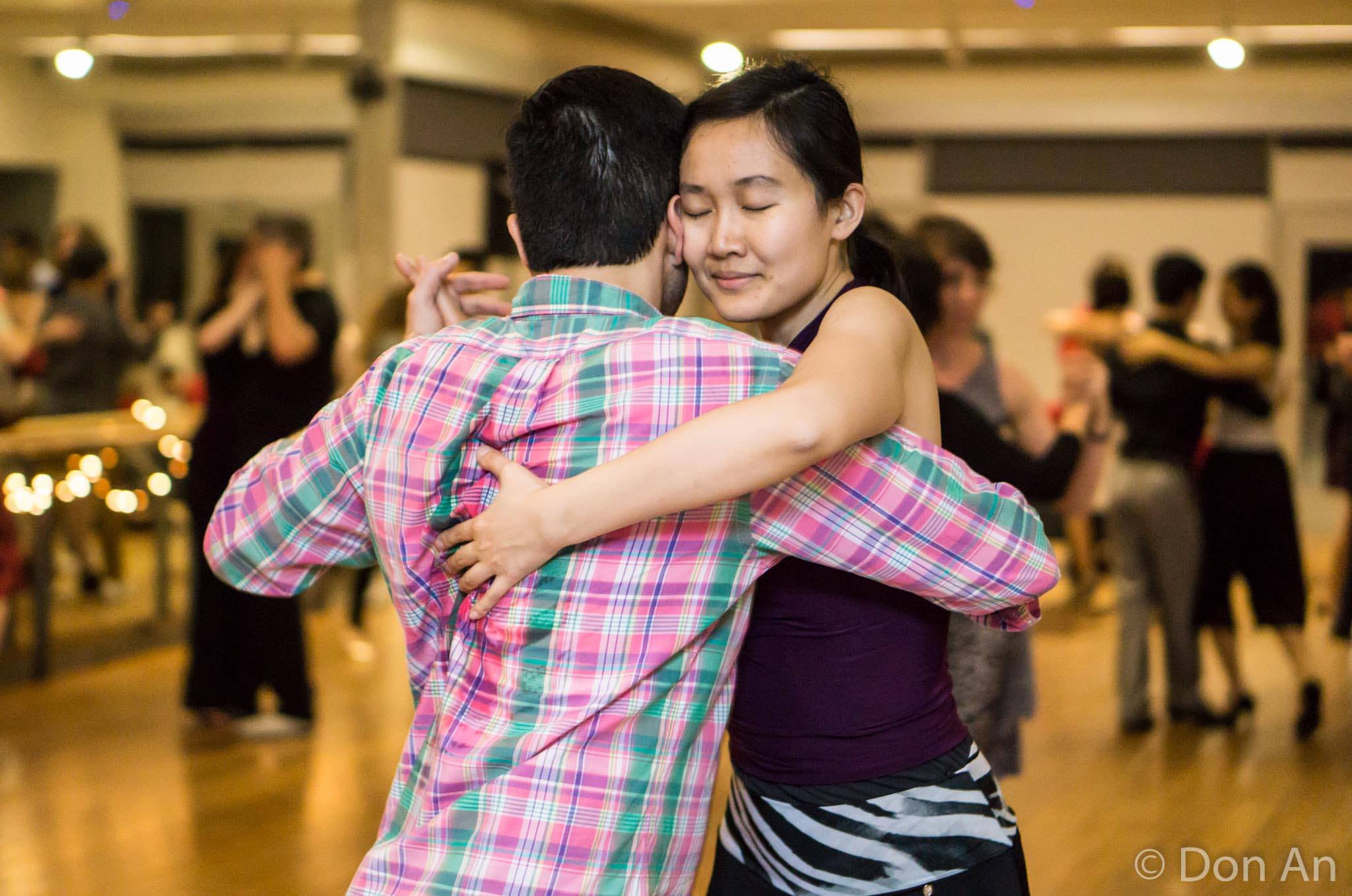
For Yidi Wu, Elon University’s O’Briant Developing Professor and an associate professor of history, Argentine tango started as a break from the demands of graduate school. It grew into a beloved hobby.
This story was originally published in the February issue of the Leaflet, Elon’s quarterly printed newsletter.
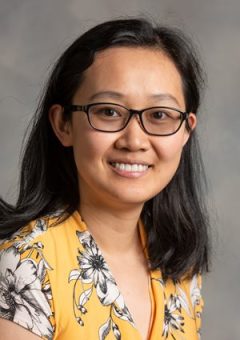
When Yidi Wu talks about Argentine tango, her face glows with the same energy she brings to the dance floor. Growing up in China, Wu learned choreographed dance, like ballet, modern dance and Chinese folk dance, but not partner dancing. Choreography is structured and dancers know the next moves in the routine. In tango, however, each step is improvised, which made Wu fall in love with the dance.
Wu discovered tango while studying to be a China historian at the University of California, Irvine, where she took partner-dance classes at the university gym. She gravitated toward tango and joined a student club for social dancing, where she eventually joined the Bay Area’s wider tango community. More than 10 years later, she still dances regularly — both for pleasure and for work. She describes herself as a historian by day and a dancer by night.
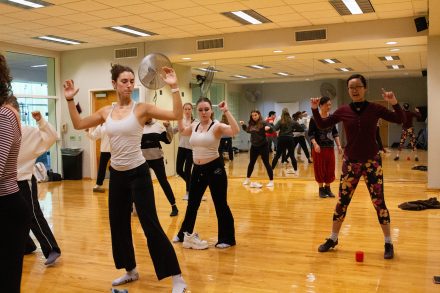
In addition to teaching courses on China, East Asia and world history, Wu also teaches a Winter Term Argentine tango course, which blends her academic expertise with her passion for dance. The course, which she has taught twice, combines history, film and, of course, dance. The course also gives students a broad understanding of tango’s global history. Each class, Wu introduces new vocabulary, emphasizing that tango functions as a language in its own way.
“The Argentine tango course is one of my favorite classes to teach because it is so different from what I usually teach and how I teach,” said Wu, an associate professor of history and Elon’s O’Briant Developing Professor. “Tango is a social dance, and it is for everyone.”
Because tango is a partner dance, Wu invites her local tango friends from Durham, Chapel Hill and Greensboro to join each class and help teach. Wu said she is very appreciative of the local tango community.
The Winter Term course concludes with a milonga, a tango dance party, that is open to the community and features musicians. Wu says milonga is an important part of her course on the history and culture around Argentine tango because the tango is meant to be enjoyed in a social setting.
“This course is very unique, and there are few courses like it in the United States,” she said. “Teaching tango and combining dance with history is very interdisciplinary.”
Students from a variety of majors have enrolled in the course. In fact, Wu said, the first year she taught it, none were dance majors, though many students grew up dancing or enjoyed movement.
If you are looking for Wu outside of the classroom, you can find her dancing at a local tango club in Durham.