


To celebrate Elon University’s Spring Undergraduate Research Forum on April 28, Today at Elon is highlighting several students presenting their research at the annual campus tradition.
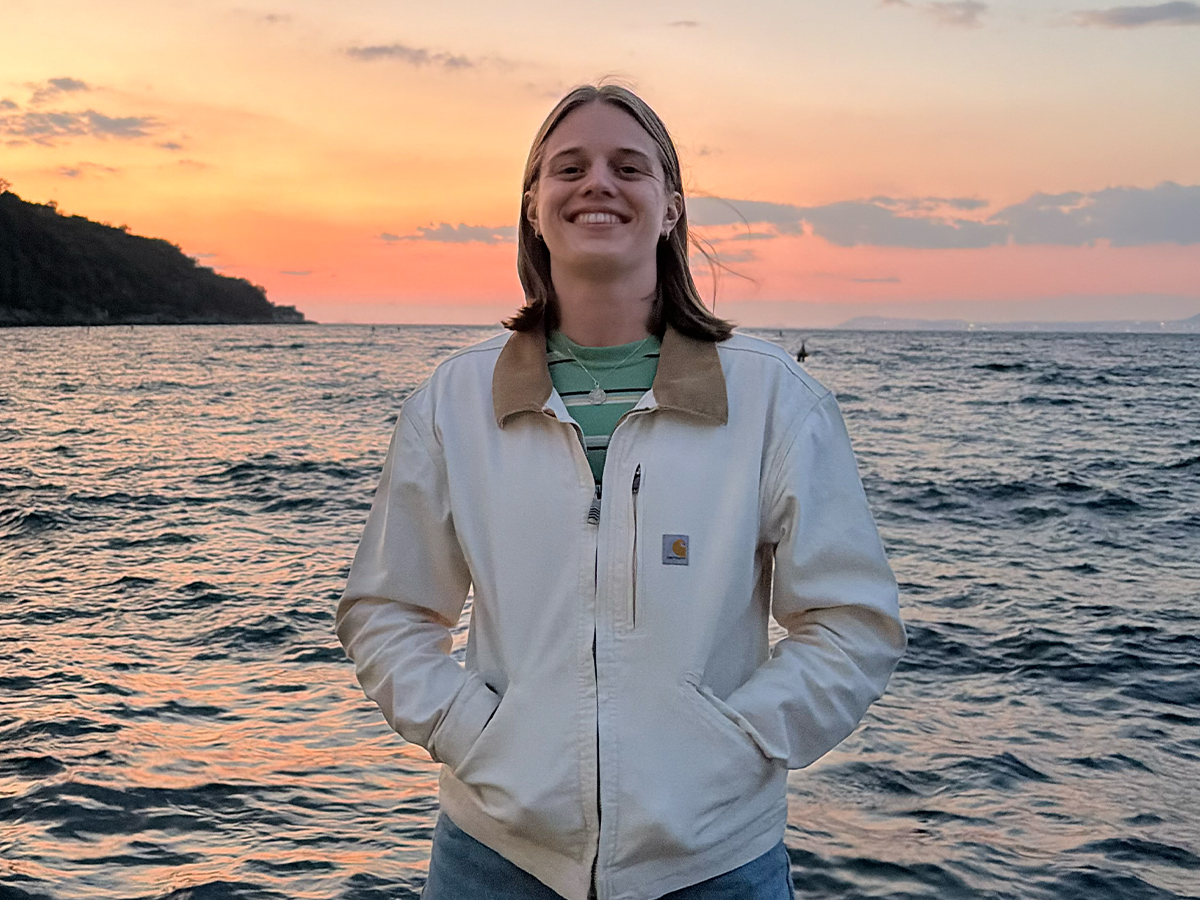
As the midterm election approaches in November, Catherine Dierker ’27 is asking a timely question: Can educators better prepare young people to participate in democracy?
An Elon history major with teacher licensure from Marietta, Georgia, Dierker’s research focuses on improving civic engagement among young voters. She will present her findings during the Spring Undergraduate Research Forum on April 28.
“Considering that the youth turnout rate is so low, what can we do to make students feel prepared and make them feel like when they graduate, they can make a difference?” she said.
Dierker’s interest in research grew through Elon’s Teaching Fellows program, where she developed an inquiry project that eventually evolved into her SURF presentation.
“I’ve always really been very curious,” she said. “It was something that I was interested in, but then given the opportunity to develop.”
Her project examines effective practices in civics education, drawing from national and international data, teacher interviews and existing scholarship. While her findings reveal no single solution, they point to three key strategies that can help foster civic engagement among students.
“The first being to embrace controversy,” Dierker explained. “People shy away from trying to tackle big subjects that are a little controversial, but it’s what makes people engaged. It fires people up, and passionate people are going to act.”
In addition, her research highlights the importance of promoting civic agency, helping students feel that their voices matter, and incorporating service learning into classrooms.
“Allowing people to get out in their local community and do a semester-long project really demonstrates to them that they have made a difference,” she said.
Dierker emphasized that her work is less about prescribing a single method and more about offering a framework for educators.
“There’s not one thing that we can say to all teachers, do this and all of your students will go out and vote,” she said. “But if we apply these strategies, we will see a lot better turnout and results from our civic education.”
Her research process combined large-scale data analysis with qualitative insights. She examined U.S. census data, compared state-level education practices and reviewed studies from both the United States and the United Kingdom.
Mentored by Professor of Political Science and Public Policy Carrie Eaves, Dierker said the experience has been both academically rigorous and personally meaningful.
“She’s fantastic,” said Dierker of Eaves. “It’s those little connections that were nice to talk about and then really dive into the details of the research.”
During SURF Day, all other campus activities are suspended so the Elon community can come together around students’ creative endeavors and research efforts. Undergraduate research is also one of the five Elon Experiences, which provides a natural extension of the work students do in the classroom and ensures that Elon graduates are prepared for both graduate school and careers. Although this will be her first time presenting at SURF, Dierker is looking forward to sharing her work.
“I’m nervous, but I’m excited. I’m really passionate about it. I love talking about things that I’m passionate about,” she said.
As she prepares for a future in the classroom, Dierker hopes her research will help shape how civics is taught and how students see their role in society.
“It’s more of a framework to guide how we go about education and how we go about interacting with our community and with our nation,” she said.