


The virtual panel, hosted by The Conference Board, focused on how artificial intelligence could impact business and higher education.
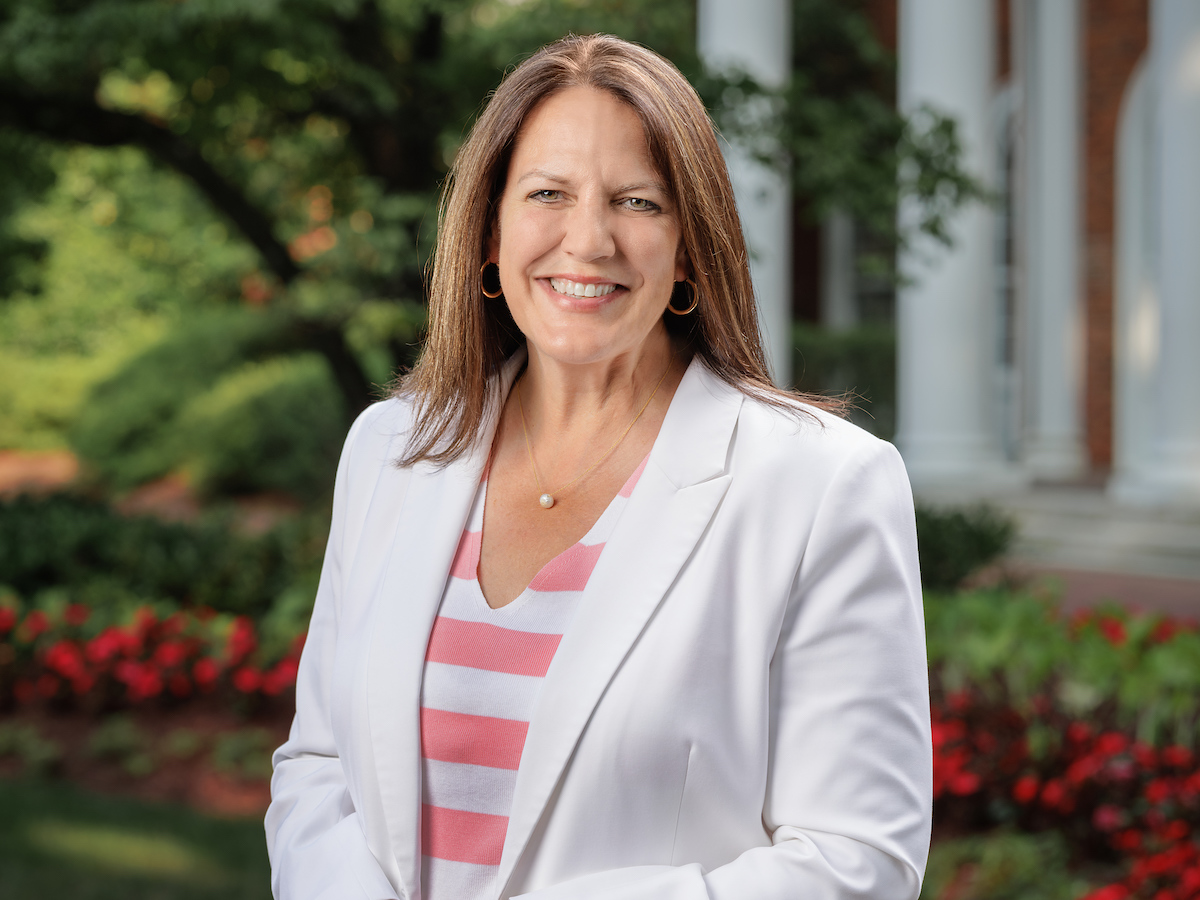
Elon University President Connie Ledoux Book offered her insight on the implications of artificial intelligence during an expert panel hosted by The Conference Board, a global, nonprofit think tank and business membership organization.
The virtual panel on May 21 featured Book; Anand Eswaran, chief executive officer of Veeam; and Joe Sutherland, director of the Center for AI Learning at Emory University, and it focused on five issues:
- How leading companies are prioritizing AI use cases that deliver measurable ROI
- How organizations are building AI governance – risk management, privacy, security and compliance – without slowing innovation
- What “scaling AI” looks like in practice across key functions
- How policy can support an AI innovation ecosystem while managing potential risks
- How policymakers could help prepare employees to succeed in firms using AI
All of the panelists were asked about one development they think people underestimate about the way AI may reshape business, work or daily life. For Book, it’s the “deepening value of humanness.”
“Most people are asking this question … about which jobs AI will replace, but the bigger story is what human capabilities will become newly scarce and newly valuable,” she said. “I think of those as judgments, and the ability to build trust, mentor, and ask better questions are all human capabilities. The institutions and organizations that invest in that are going to be the leaders in five years.”
Book was asked about Elon’s research on AI in higher education, including a November 2025 survey of 1,057 faculty by the American Association of Colleges and Universities and Elon’s Imagining the Digital Future Center. The survey found widespread concern and skepticism about generative artificial intelligence affecting their teaching and student performance across academic disciplines.
“Faculty are not, by majority, anti-AI. They are deeply concerned that we get it right, that we get it right in our universe, and they’re looking for leadership on that,” Book said. “A majority of faculty already said they’re teaching AI literacy … They’re teaching things about bias, hallucinations, ethics and integrity. You see this unfold across universities.”
The survey also found concern over the over-reliance on AI by students. Book noted that it’s important to differentiate “over-reliance” from cheating.
“This is an over-reliance where they’re diminishing critical thinking,” she said. “They’re ‘AI dependent’ on what the answer is, rather than ‘human dominant,’ which is where we want them to take all of those liberal arts and learning skills, and really be human dominant through the technology.”
Eswaran said that adaptability to AI will be key for the workforce, and Book said that AI could even lead to more room for a liberal arts education and better workforce preparation for students.
“I think it creates even more demand for a liberal arts background,” she said. “We tend to think of ‘either or’ – either you’re a technical skills person, a STEM person, or a liberal arts person. I do think the ‘and’ is going to be even more critical in our understanding.”