


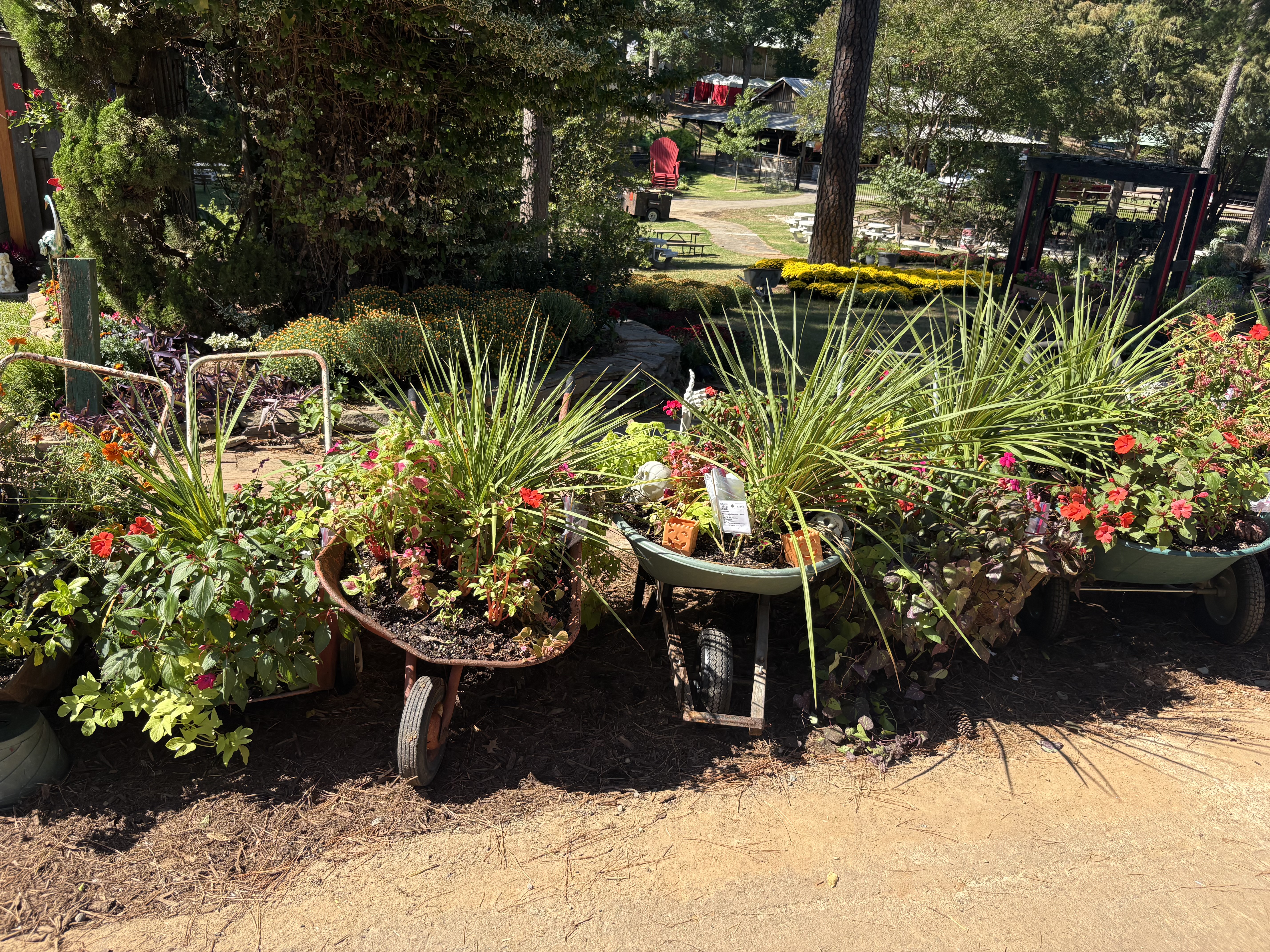
Elon horticulturist Laura Miller and gardener Cevion Marsh-Sheridan partnered with a local elementary school to repurpose Elon plant life in a creative and collaborative effort.
Through a collaboration between Elon’s landscaping department and Walter Williams High School, students in adapted curriculum classrooms created 10 planted wheelbarrows and 11 scarecrows to enter the fair’s special needs division of the competitions. What started as a classroom project has grown into an opportunity for students across Alamance County to showcase their creativity at the North Carolina State Fair.
The project began with Elon horticulturist Laura Miller’s experience teaching horticulture in Alamance Community College’s Career College program, which provides career pathway training for adults with disabilities. While teaching, Miller introduced students to the State Fair’s scarecrow and planted wheelbarrow competitions, using the projects as hands-on opportunities to practice skills like measuring, cutting and assembling materials.
After one of Miller’s former students, Cevion Marsh-Sheridan, graduated from the program in 2024, he went on to intern with Elon’s landscaping department before becoming a full-time employee later that year. The two stayed connected and continued entering the State Fair competitions together. However, after noticing that participation in the special needs categories had dwindled in recent years, Miller wanted to find a way to get more students involved and keep the competition going.
This idea led the pair to Walter Williams High School, where they partnered with special education teacher Ashley Bennett-Bowers to help students create their own entries. Through Elon’s Employee Volunteer Program, Miller and Marsh were able to spend paid volunteer leave time working alongside students, with Marsh returning to his former high school in a new role as a mentor. The group submitted 10 planted wheelbarrows and 11 scarecrows, making up the only entries in both competitions across the entire state. Beyond the competition itself, the projects became part of the State Fair Gardens’ seasonal displays, where thousands of visitors could see the students’ work.

One of the most interesting parts of the project is that sustainability was incorporated into nearly every step of the creative process. Rather than purchasing new materials, Elon’s team and the students relied heavily on repurposed, recycled and salvaged materials.
For the scarecrows, the structural frames were made from invasive bamboo removed from Elon property and collected from the Loy Farm compost pile. Their outfits were also sourced sustainably, using damaged clothing that could no longer be donated, items found in campus trash cans and unusual clothing purchased by the pound from Goodwill. Even the stuffing was made from materials already on hand, including pine straw and pinecones collected on campus, plastic grocery bags and leftover packaging materials. The planted wheelbarrows followed a similar approach. Many of the wheelbarrows had been collected over the years from roadsides, friends and Facebook Marketplace and were given a second life as planters, with some having been entered in the State Fair more than five times.

These sustainability efforts extended to the plants and soil, too. Soil removed from Elon’s annual flower beds was repurposed to fill the wheelbarrows instead of being sent directly to compost. Rather than replacing it each year, Miller replenishes the soil with compost and organic fertilizer produced by a personal worm farm. Leftover Sunpatiens from spring planting and Dracaena removed from campus flower beds were also reused in the entries. By giving these plants another season of use, the project avoided purchasing new plants, plastic containers and the transportation emissions associated with delivering them. The smaller details were also considered. Inverted plastic pots were placed at the bottoms of larger wheelbarrows to reduce the amount of soil needed, and leftover plant containers and trays are being passed along to a high school horticulture program in Winston-Salem for future use.
Together, these efforts demonstrate how sustainability can be incorporated into creative projects through a little resourcefulness and a willingness to look at discarded materials differently. From invasive bamboo and secondhand clothing to leftover campus plants and salvaged wheelbarrows, the entries show that creating something new doesn’t always mean starting with something new.