


The professor of strategic communications delivered two presentations at a major international studies conference in Guadalajara, Mexico, exploring threats to political dissidents and independent journalism in Latin America.
As political repression and threats to press freedom raise concerns across Latin America, Vanessa Bravo is examining how these developments affect political dissidents, independent media and the international reputation of nations.
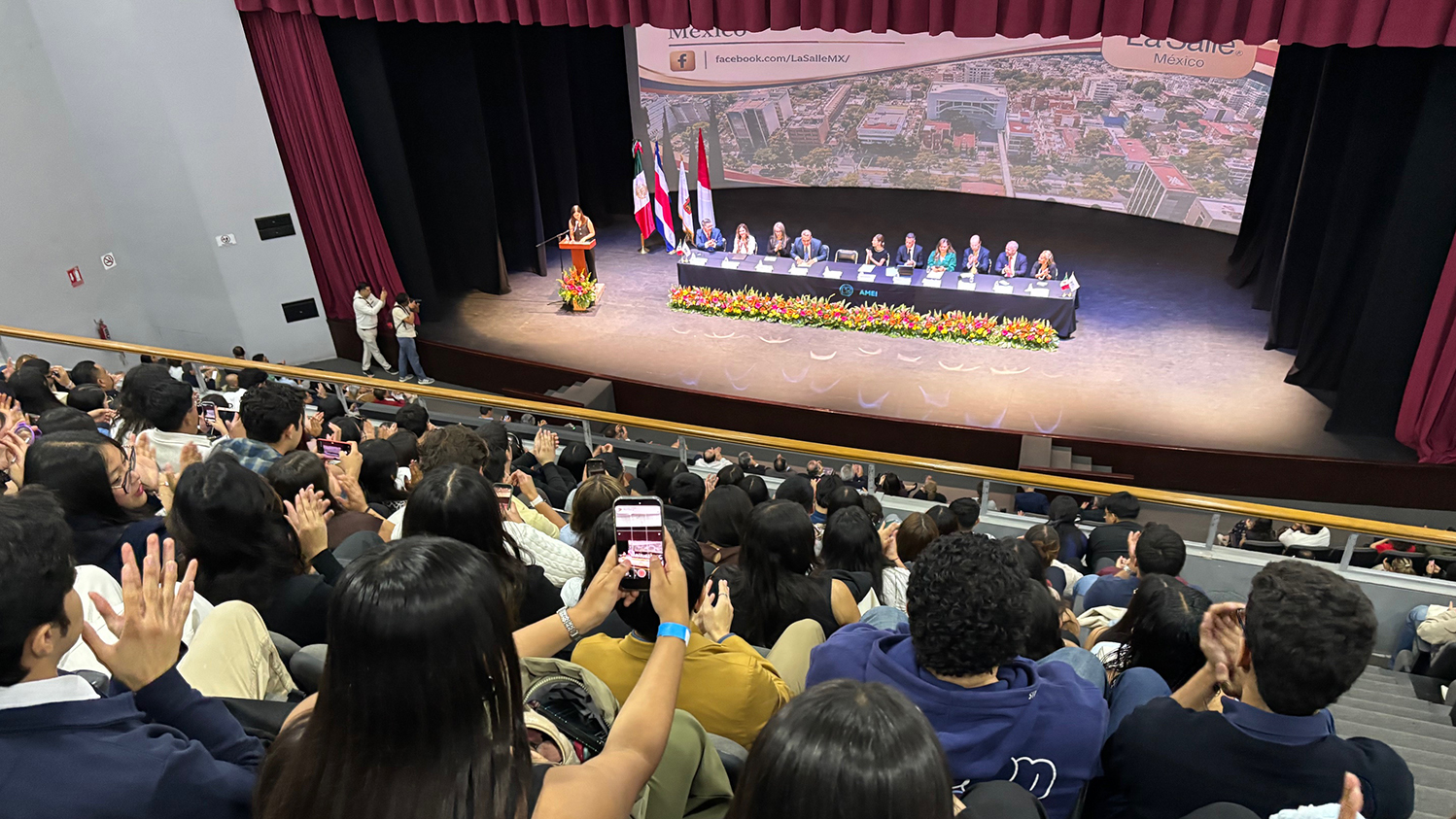
The professor of strategic communications recently presented her research during the annual conference of the Mexican Association of International Studies (Asociación Mexicana de Estudios Internacionales, or AMEI) held Oct. 22–24 in Guadalajara, Mexico.
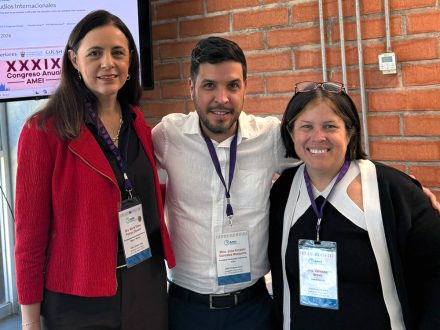
Hosted by the Universidad de Guadalajara, the conference brought together hundreds of researchers and graduate students from Mexico, Costa Rica, the United States, Chile, Argentina and other countries to examine contemporary international issues. AMEI is the largest scholarly organization dedicated to international studies in Latin America.
During her first presentation, Bravo explored the rise of transnational repression in Latin America, a practice in which governments target political opponents and dissidents living beyond their national borders. Her presentation examined cases across the region, with particular attention to Nicaraguan dissidents living in Costa Rica who have been injured or killed under circumstances raising concerns about possible involvement by authorities from their country of origin. The research highlighted how political persecution can extend beyond national borders, threatening individuals who have sought refuge in neighboring countries.
Bravo’s second presentation shifted the focus to Costa Rica, examining how declining press freedom can damage a country’s international image and reputation.
Her research explored changes in the relationship between the Costa Rican government and independent media under former President Rodrigo Chaves (2022–2026) and current President Laura Fernández, who took office in 2026. Bravo examined how the two right-wing administrations, which she characterized as exhibiting authoritarian tendencies, have increasingly favored media outlets and influencers supportive of the government when allocating advertising funds, rather than relying on traditional measures such as audience size and reach.
She also highlighted Costa Rica’s decline in the World Press Freedom Index published by Reporters Without Borders. The country fell from fifth place in 2021 to 38th in 2026, illustrating the challenges facing a nation long recognized for its democratic institutions.
The AMEI conference is held annually in different Mexican cities, with the 2027 gathering scheduled for Mérida, Yucatán.