


Information collected over four years at the Center initiates conversations on the power of design thinking
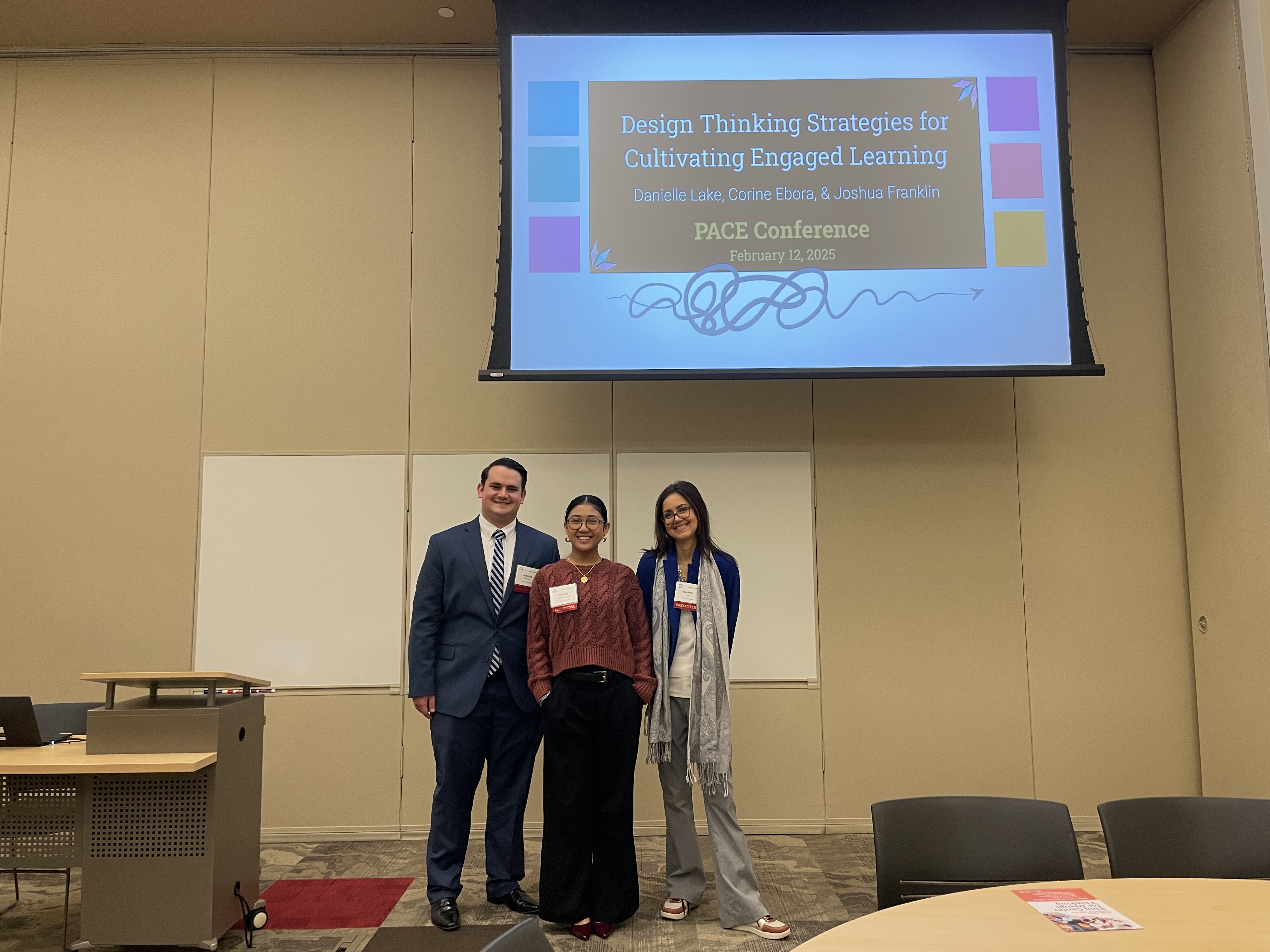
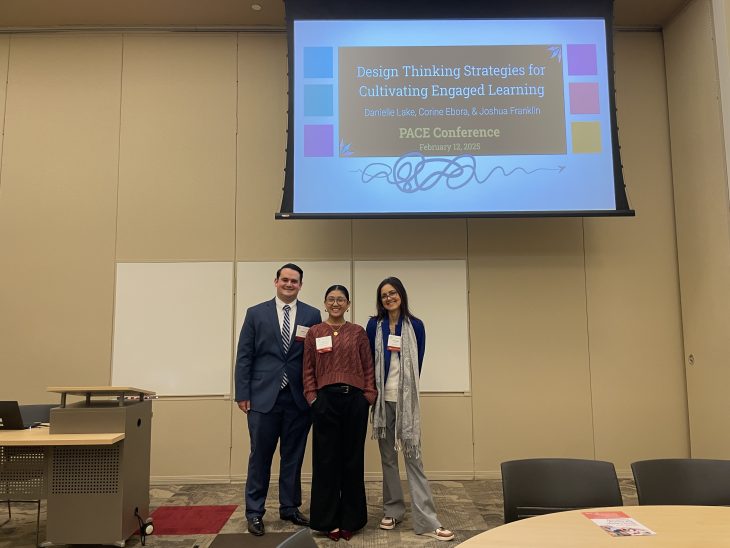
Center for Design Thinking Director Danielle Lake, research lead Joshua Franklin ’25, and research catalyst Corine Ayesha Ebora ’27 presented at the North Carolina Engagement’s annual Pathways to Achieving Civic Engagement (PACE) conference on Feb. 12, 2025. Their session was titled “Design Thinking Strategies for Cultivating Engaged Learning.”
The session demonstrated the ways design thinking supports the conditions that foster engaged learning and civic-minded leaders. Attendees learned how to apply the skills taught by Elon University’s Center for Design Thinking beyond the classroom and approach setbacks from a design thinking perspective.
“When participants attend this presentation, what we’re hoping they will gain is some useful, actionable practices, ideas and tools that they can implement into whatever learning setting that they are assigning so that their participants have engaged learning experiences,” Franklin said.

Information collected from over two decades of literature on design thinking and four years of research emerging from Elon University’s Center for Design Thinking was shared with attendees. The Center examined 950 of its own sessions from 2020 to 2024, consisting of over 20,000 participants and close to 9,000 responses.
Presenters highlighted some of the most effective strategies, including experience and mind mapping, story and strategy sharing and tiny tasks prototyping.
“The cool thing about our results is that, while most of our data was collected in a higher education classroom setting, a lot of the tools and strategies that have been useful for engaged learning can be taken outside the classroom setting,” Franklin said. “At a conference like PACE, where you have faculty, undergraduate students, graduate students, and community partners as participants, you can share your work beyond regular academic classrooms.”
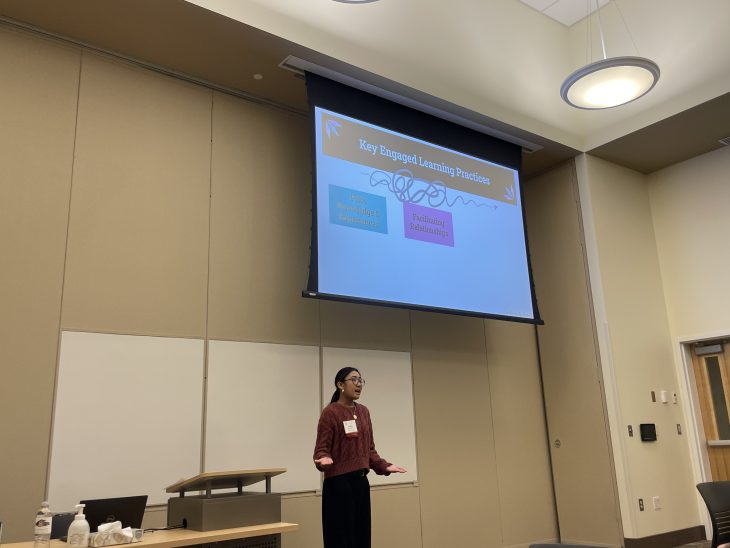
NCCE’s annual PACE Conference seeks to grow and share the practice and scholarship of higher education community and civic engagement. Launched in 1999, PACE is the longest running conference in the nation focused on this topic. The 26th PACE Conference was at Guilford Technical Community College Conference Center in Greensboro, NC.
The Center for Design Thinking is excited to further present later this spring its at the Society for the Advancement of American Philosophers Annual Conference in Washington D.C. on March 14, 2025, and at the University of Dayton in April.
Learn more about the Center’s research.