


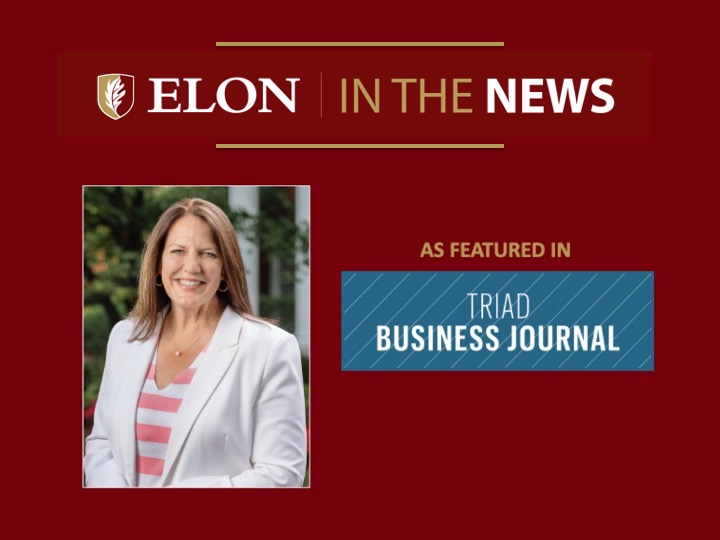
In an interview with the Triad Business Journal's NC Business Minds podcast, Elon President Connie Ledoux Book discussed the new Roberts Academy at Elon, the university's proposed merger with Queens University and what, she says, may lead to the closure of other universities in the future.
Elon University President Connie Ledoux Book was recently interviewed by the Triad Business Journal for the NC Business Minds Podcast.
The more than 20-minute interview began with discussions about the launch of the new Roberts Academy at Elon University, a transitional school serving students with dyslexia in grades 3-4 in a temporary location starting in Fall 2026 (and expanding to grades 1-6 with the opening of a state-of-the-art facility in Fall 2028).
“What’s amazing about this kind of transformative philanthropy is that the Roberts family, one academy at a time, is changing the life of thousands of students who suffer from dyslexia. So, we were really proud to be their fourth and final academy,” said Book.
Book also discussed Elon’s proposed merger with Queens University of Charlotte, which will expand the university’s graduate offerings in Charlotte, specifically in business, law and health programs.
“I will say that the ‘why’ behind Queens is really an extension of the Boldy Elon plan that moved us to Charlotte,” said Book. “The state of North Carolina is experiencing growth, and Charlotte is leading that growth with 150 people moving to the area every day, and it is an exciting young professionals area, so we could see that in our planning data before we opened the law program there and made the decision about the health care program. It’s underserved from a higher education perspective.”
With the current challenges in higher education, Book warned that “large tuition discounts” may lead to university closures in the future.
“What’s happened at smaller universities is that, to try to recruit classes, they keep discounting tuition. The average in the U.S. now is over 60%. So this is this phenomenon where you see a sticker price, and then you don’t see disclosed what people are actually paying,” said Book. “It’s that phenomenon when you’re on the airline and you’re in your seat and you’re not clear who paid what for their seat on the flight. So higher ed suffers from this. Elon has challenged that trend by keeping our sticker price lower. Now our scholarships are lower, but we think that’s a more truthful approach, and we have benefited from that over the years.”
Listen to the full interview and read a full transcript on the Triad Business Journal website.