


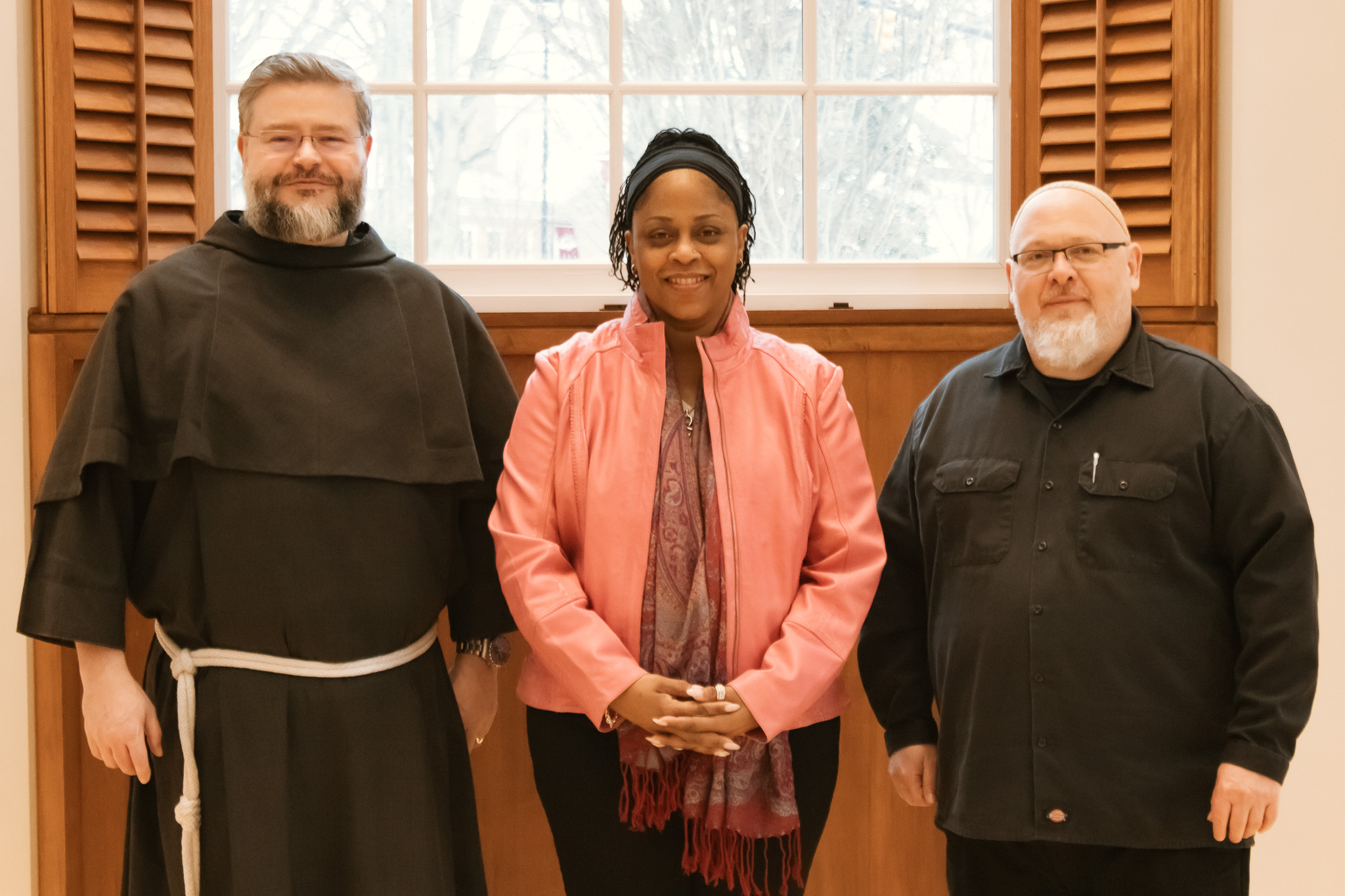
The Truitt Center for Religious and Spiritual Life advances Elon University's multifaith work through education, care and dialogue. Recent scholarly and creative work by three of the university's chaplains extend this impact beyond campus, enriching spiritual life on campus while fostering broader engagement.
The Truitt Center for Religious and Spiritual Life seeks to enrich the Elon University campus and beyond, advancing the mission of Elon University’s multifaith strategic plan. At the center of this work is education through the sharing of diverse religious, spiritual, and ethical worldviews. Recently, three Elon University chaplains have extended their reach beyond campus through scholarly and creative endeavors, complementing their work within the campus community.
Rev. Kirstin Boswell, university chaplain and dean of multifaith engagement, provides leadership and guidance for religious, spiritual, and ethical traditions and worldviews on campus. In this role, she leads the Truitt Center for Religious and Spiritual Life and co-leads multifaith initiatives across campus.
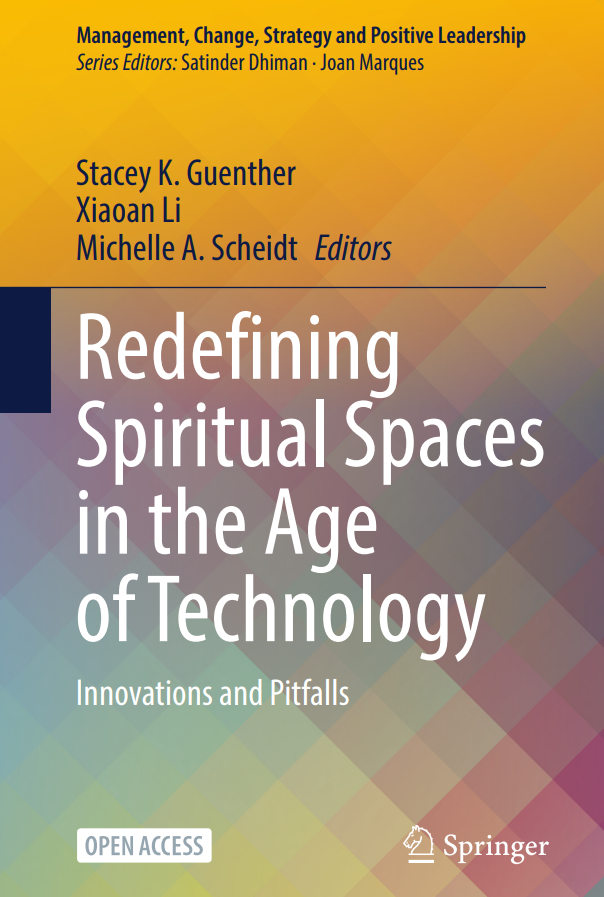
Beyond her campus responsibilities, Rev. Boswell collaborates on published works. Her most recent contribution is Chapter 11, “The Conversation Circles: A Sacred Space of Healing,” published in “Redefining Spiritual Spaces in the Age of Technology: Innovations and Pitfalls.” The chapter explores the development and purpose of the Conversation Circles, an initiative housed within the Chaplaincy Innovation Lab, providing support for chaplains of color navigating today’s climate.
“Engaging in this work beyond campus deepens my commitment to the students, faculty, and staff I serve,” said Boswell. “Writing this chapter affirmed for me that healing is sacred work, and that it requires intentional spaces where people can speak their truths without fear. The Conversation Circles began as a national project, but they continually remind me that chaplaincy must be both justice-centered and relational—work that strengthens our community at Elon as we build spaces of belonging, compassion, and growth.”
Imam Shane Atkinson serves as the associate chaplain for Muslim Life and advisor for the Elon Muslim Society. In this role, he provides support for Muslim students, faculty, and staff across campus, as well as care for faculty and staff as they navigate grief and loss.
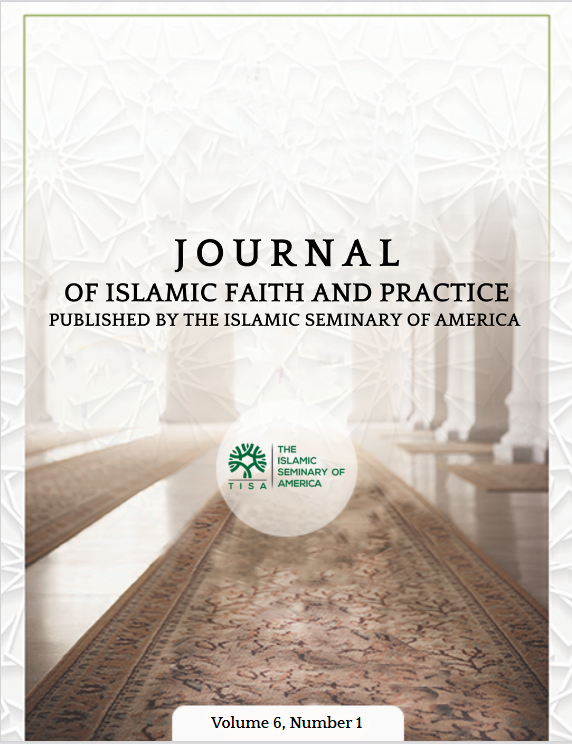
In December 2025, Imam Atkinson contributed to an article published in the Journal of Islamic Faith and Practice titled “The Illuminating Lamp: A Four-Step Model for Islamic Chaplaincy in North America”. The article offers a four-step framework that affirms the necessity of mentorship, accountability, and continuous self-refinement for Muslim chaplains in America. Through this approach, Muslim chaplains provide support by meeting people where they are. “Contributing to the article clarified my approach to mentoring and pastoral care. I focus on being present and building genuine connections,” said Imam Atkinson when asked how contributing to the article impacts his work as a chaplain. He went on to say that “once these relationships are established, we can then explore meaning-making and, if they wish, faith. The article also affirmed my belief that effective chaplaincy relies on ongoing learning, self-reflection, and openness to feedback from peers and mentors.”
Father Peter Tremblay serves as the associate chaplain for Catholic Life and is a member of the Franciscan religious community. In his role, he provides spiritual leadership and pastoral care for students, faculty, and staff of the Catholic faith, as well as members of the surrounding community.

In October 2025, Father Peter collaborated with Elon University students to develop a podcast as part of his doctoral thesis on Catholic social teaching. “Peace and Good,” developed for students, consists of nine episodes that focus on different topics, ranging from Catholic social teaching to discussing solidarity. At the beginning and conclusion of each episode, listeners were invited to complete questionnaires to assess whether the conversations influenced their views.
“There is a deep wisdom and perspective that Gen Z has about society, ethics, and justice,” said Tremblay of how developing the podcast impacts his work on campus. “Collaborating with our students, learning from them and engaging their wisdom made my doctoral research both a joy and made me a better chaplain.”
At the core, a chaplain’s primary role is in caregiving. On a university campus, that care extends to students, faculty and staff alike. Through their work, chaplains contribute not only to the university’s spiritual life on campus, but their works also invites continued dialogue, learning and engagement on campus and beyond.