


Center for Design Thinking Director Danielle Lake and Design Thinking Catalyst Anya Bratić facilitate an AI workshop at a faculty development program in India
As artificial intelligence shapes higher learning worldwide, more institutions are reevaluating how AI can be integrated effectively and ethically to best support their students, faculty and staff.
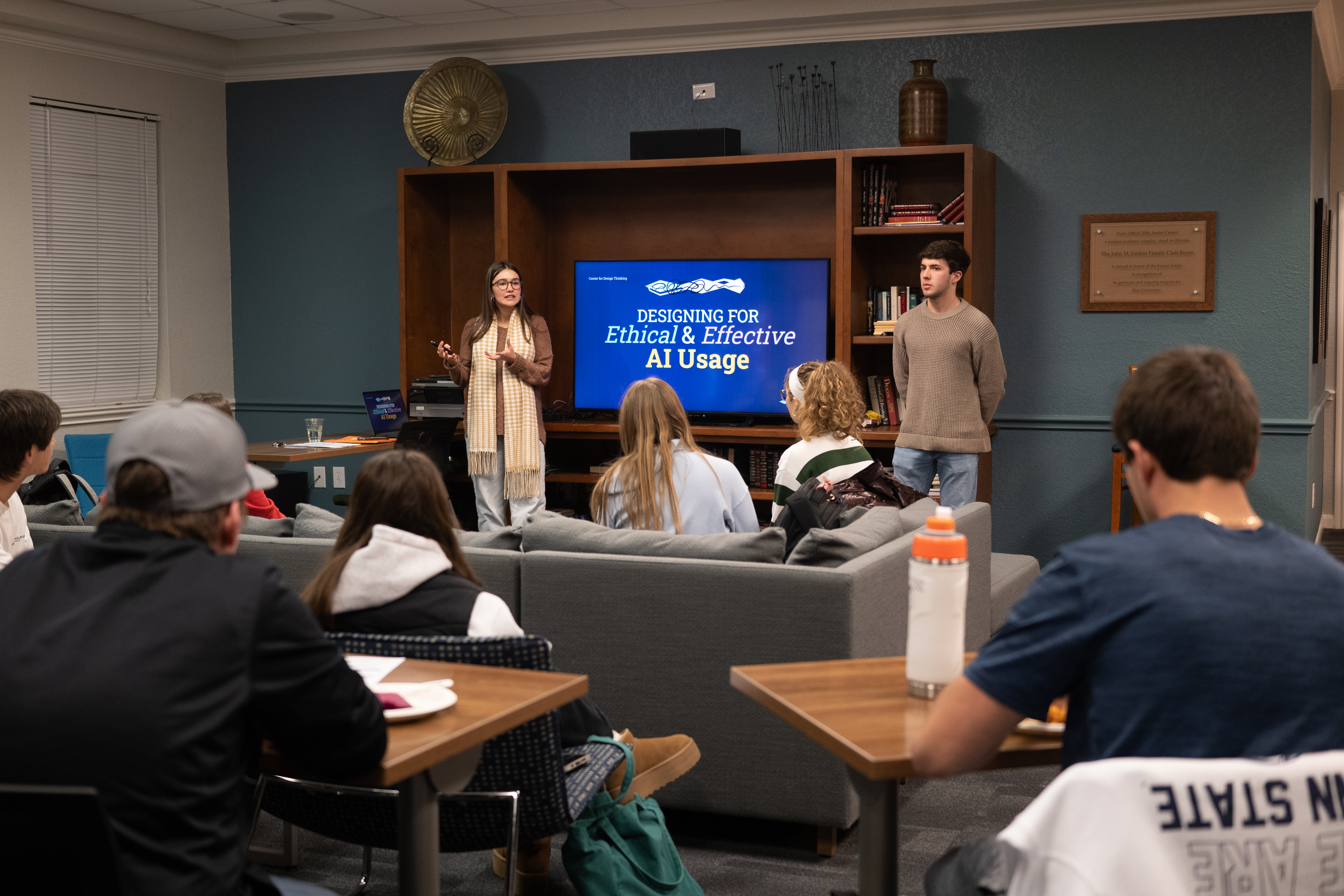
The Center for Design Thinking has developed initiatives to continue the conversation about the implementation of AI in the classroom through a workshop titled “Designing for Ethical and Effective AI Usage.” This workshop aims to bridge the gap between how AI should be used by educators and how students can engage with it effectively and responsibly.
 The Center supported over 110 faculty through a faculty development program designed to support next generation AI solutions. This series is “aimed to equip educators, researchers, and professionals with an in-depth understanding of design thinking principles and their critical role in developing innovative, user-centric AI solutions.”
Contributing to this global conversation, The Center for Design Thinking’s director, Danielle Lake, and Design Thinking Catalyst Anya Bratić facilitated their “Designing for Ethical and Effective AI Usage” workshop and shared the latest research findings on its value for supporting student growth.
Lake introduced and outlined key stages of the design thinking process, particularly framing and exploring. She emphasized the importance of clearly identifying problems, taking ownership of solutions and acknowledging the influence of unconscious bias in decision-making.
Lake also encouraged participants to engage in outward exploration and research, fostering discussion and collaboration among faculty members as they shared their experiences and perspectives.
Bratić focused on the ethical implications of AI use in educational settings, addressing students’ increasing reliance on tools such as ChatGPT. She discussed how improper use of AI can lead to plagiarism and hinder learning, while also highlighting the growing demand for AI literacy in the workforce.
Bratić stressed the important role faculty play in shaping ethical AI usage and presented three tools to assist educators in teaching students how to use AI effectively. These tools include ethical usage rules, a structured prompt-building formula and the concept of “mind before machine.”
Additionally, Bratić showcased various AI applications that can support student learning, such as language development and productivity tools. She emphasized foundational principles like originality and accountability, encouraging students to engage in independent thinking before incorporating AI tools.
The session concluded with hands-on exercises that allowed faculty members to brainstorm and apply AI tools within their teaching practices, reinforcing ethical awareness, creativity and critical thinking.
Through collaboration, dialogue and hands-on application, the workshop reinforced that effective AI integration begins with informed and empowered educators. By centering ethics, creativity and critical thinking, the Center for Design Thinking is ensuring that AI becomes a tool for growth rather than a replacement for learning.