


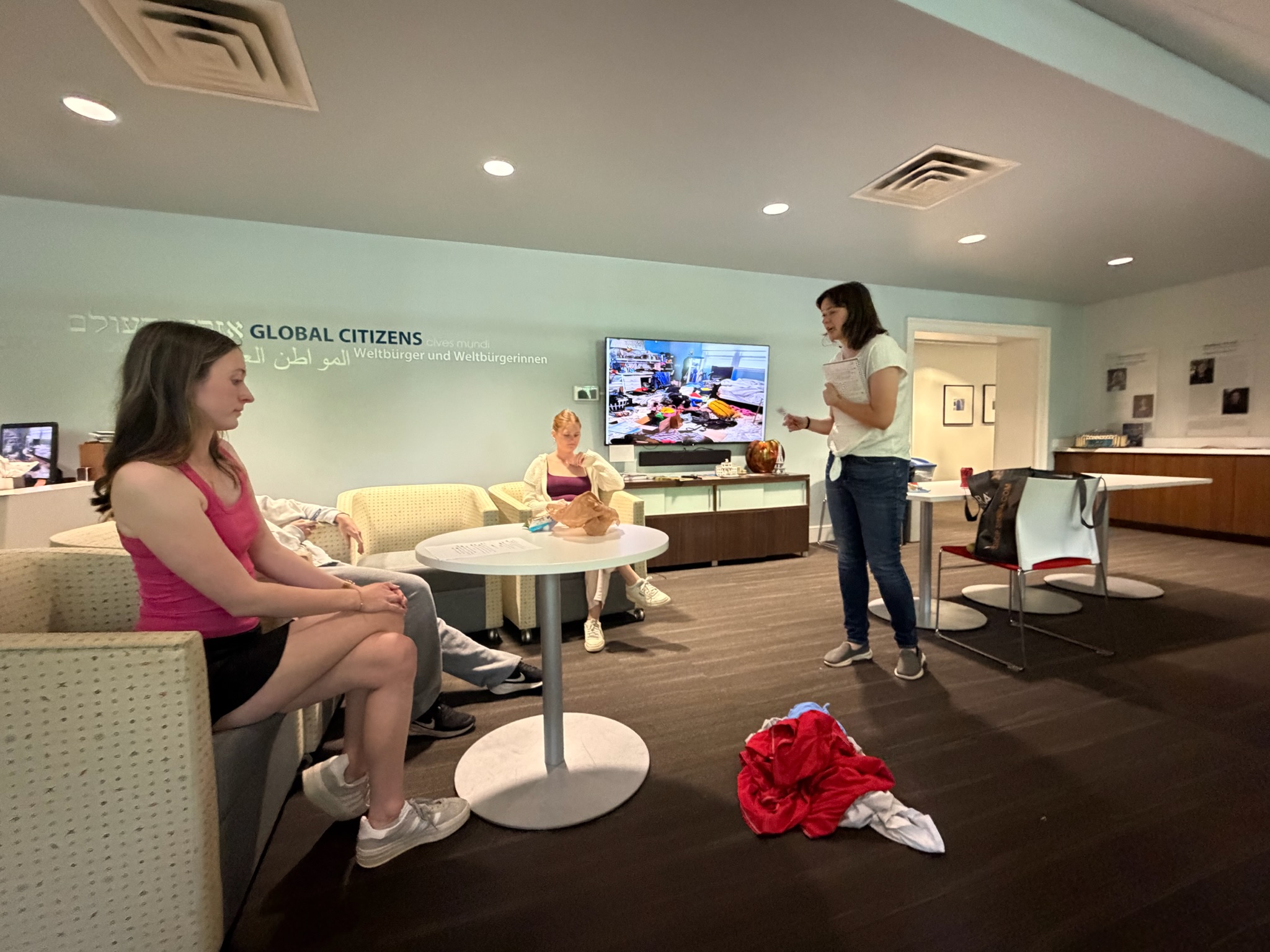
Spanish class performed compelling “forum theater” plays to address contemporary issues in college life.
Students in Elon University’s Representations of Socio-Political Conflicts course used “forum theater” May 7 to explore how people respond to complex social and political issues through interactive performance.
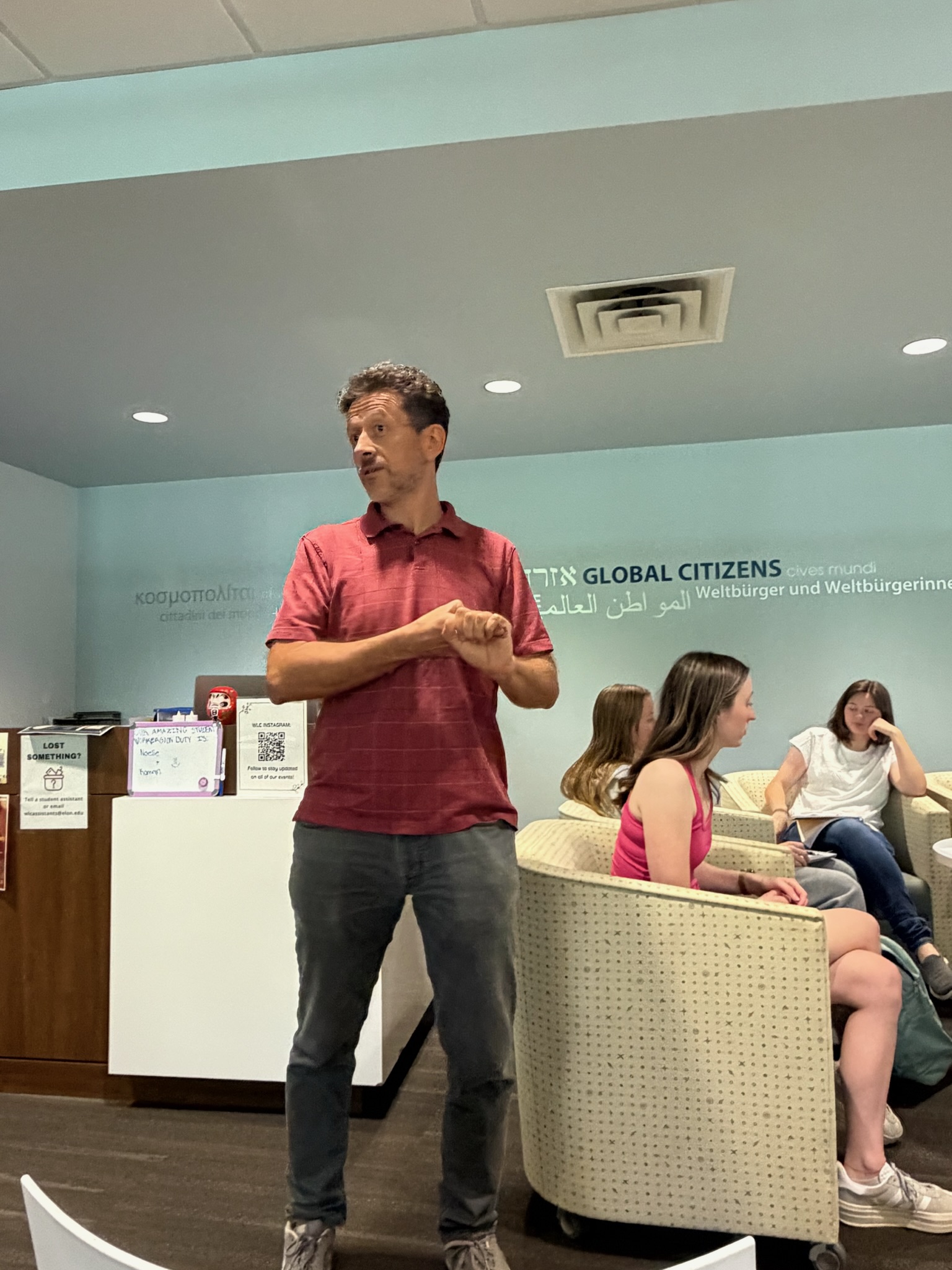
Federico Pous, associate professor of Spanish, introduced students to Teatro Foro, or “forum theater,” an interactive theater technique developed by Augusto Boal to portray social and political conflict.
In Teatro Foro, actors perform a short scene centered on a conflict that remains unresolved at the end of the performance, inviting audience members to intervene and propose solutions. Throughout the semester, students examined how significant events in Latin American history have been represented and understood by the public.
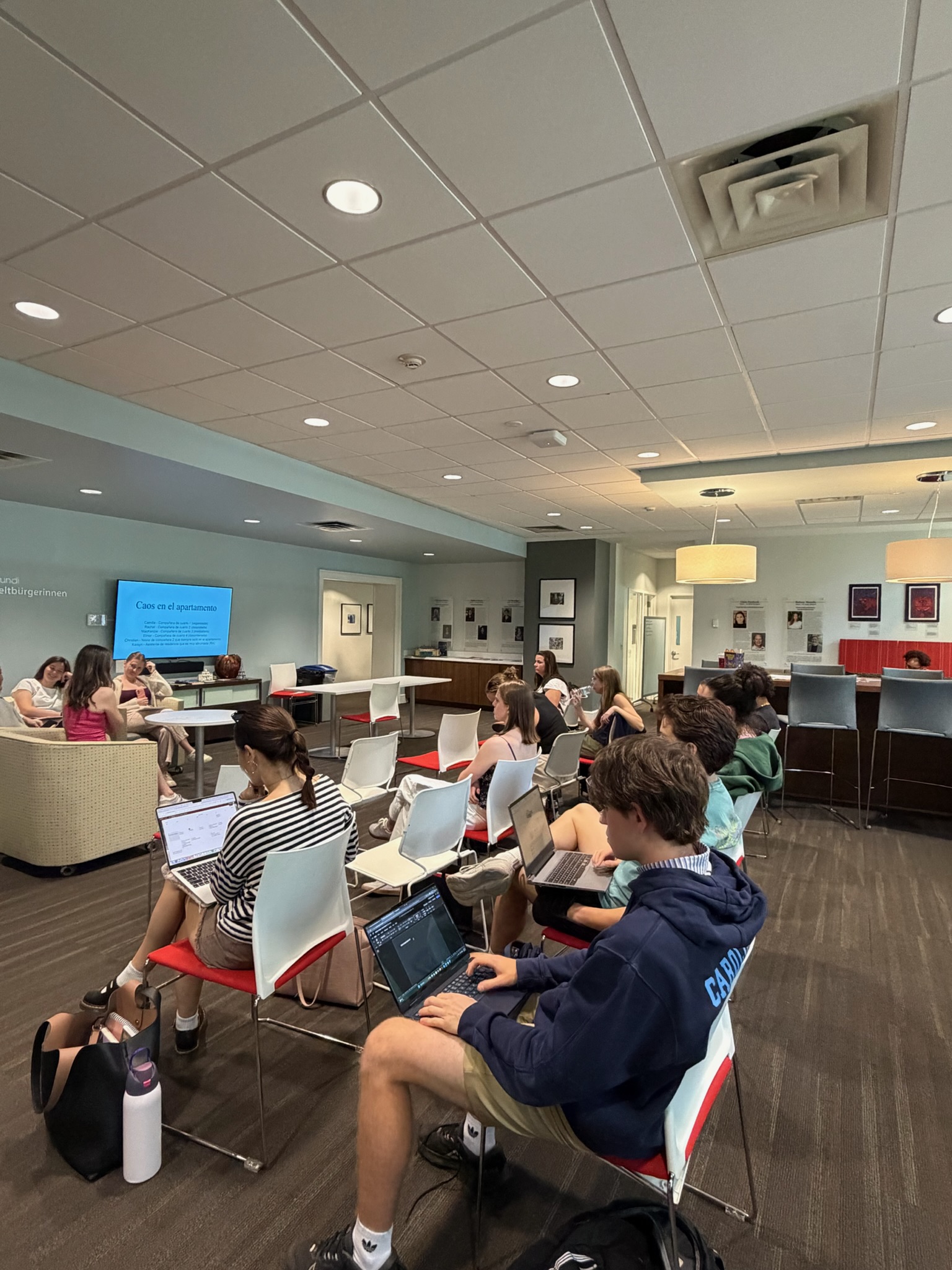
During the May 7 showcase, two student groups performed original scenes depicting conflicts that could occur in everyday college life.
The first performance, “Caos en el apartamento” (“Chaos in the Apartment”), focused on tensions among roommates caused by messy living habits, poor communication and the frequent presence of one roommate’s boyfriend — all compounded by the inaction of an inattentive resident assistant.
Audience members stepped into the performance to suggest compromises and alternative approaches to resolving the conflict. While the scenario centered on a relatively ordinary disagreement, the performance highlighted how power dynamics, silence and passivity can shape even the most personal spaces.
The second performance addressed more serious themes, including sexism, domestic violence and bystander intervention.
“La lección que no escucharon” (“The Lesson They Didn’t Hear”) followed a college student trying to convince her friends to believe her account of domestic violence and warn another friend about the perpetrator before it was too late. The performance challenged audience members to consider why survivors are sometimes dismissed or ignored.
Student spectators again entered the scene to propose solutions and interventions, working through the complexities of responding to gender-based violence and supporting survivors.
Following the performances, Pous led a discussion encouraging students to reflect on the themes raised in each scene, including silence in the face of oppression and the responsibility to speak out against injustice.
The performances prompted broader questions from both actors and audience members, including how individuals can respond to injustice and how communities can work to prevent gender-based violence. Through the forum theater exercise, students explored practical responses to social conflict while encouraging critical reflection among everyone involved.