


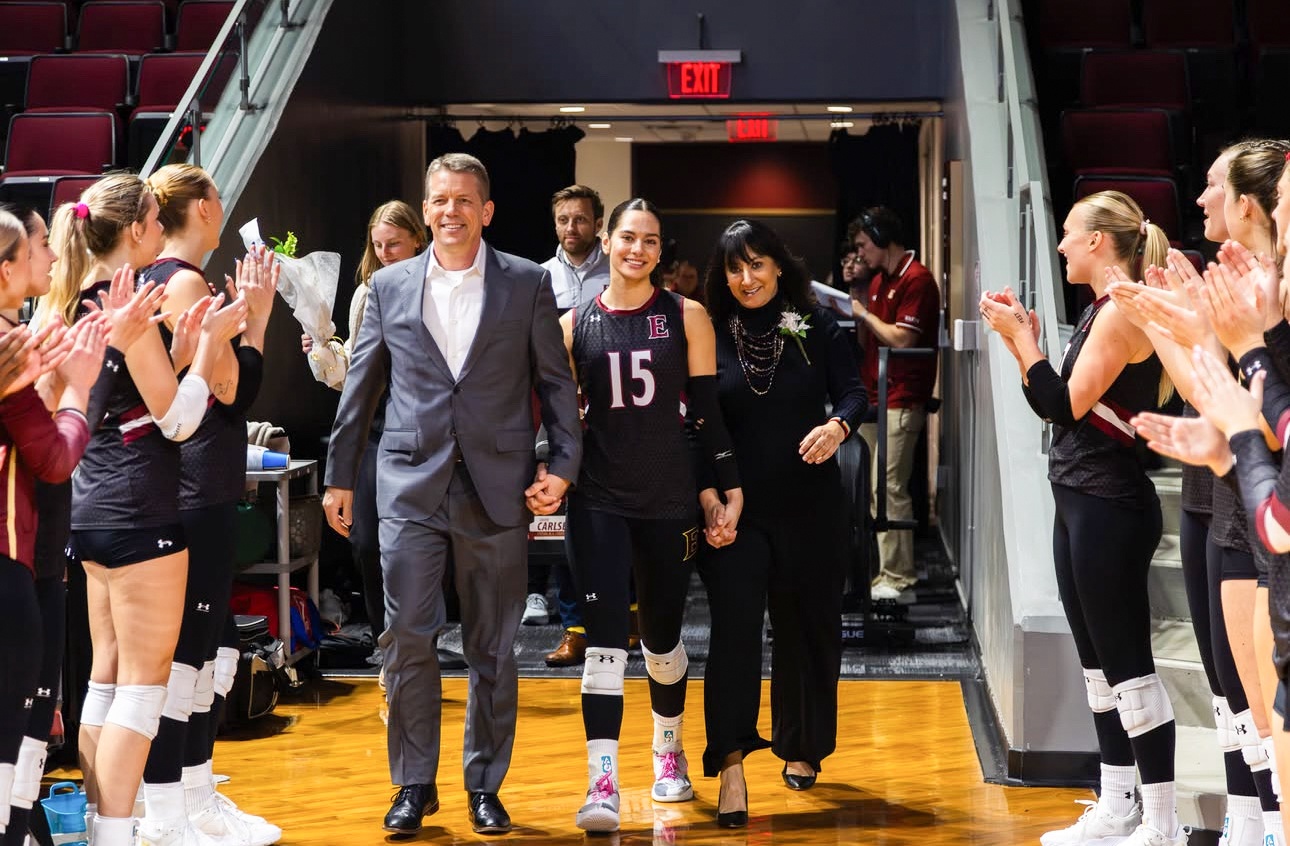
The MSBA graduate student and volleyball player came to Elon for one more season on the court and found a new path in people-centered analytics.
Simrin Carlsen G’26 will tell you Central Jersey exists.
She will also tell you Edison, New Jersey, her hometown, has a tower honoring Thomas Edison. She has visited once.
“It was electric,” Carlsen joked.
That quick humor is part of what makes Carlsen easy to talk to. But underneath the wit is a student-athlete with a clear sense of purpose, a sharp analytical mind and a deep interest in work that keeps people at the center.
Carlsen came to Elon University with one season of volleyball eligibility, a public health background and a question she was still working through: What comes next?
The answer, as it turned out, involved a familiar coach, a new team and a graduate program that helped her see how data could support the kind of mission-driven work she had always cared about.
Carlsen, a Master of Science in Business Analytics student, earned undergraduate degrees in public health and environmental science from Johns Hopkins University. She had spent much of her academic and professional experience drawn to work with a clear purpose, especially in public health and environmental science.
“What stayed consistent for me was wanting to do work that felt mission-driven,” Carlsen said. “I wanted to be part of work that had a clear purpose and could make a meaningful difference for people.”
After completing her undergraduate degree, Carlsen was considering her next step when she reconnected with Matt Troy, who had coached her at Johns Hopkins and was named Elon’s head volleyball coach in December 2024.
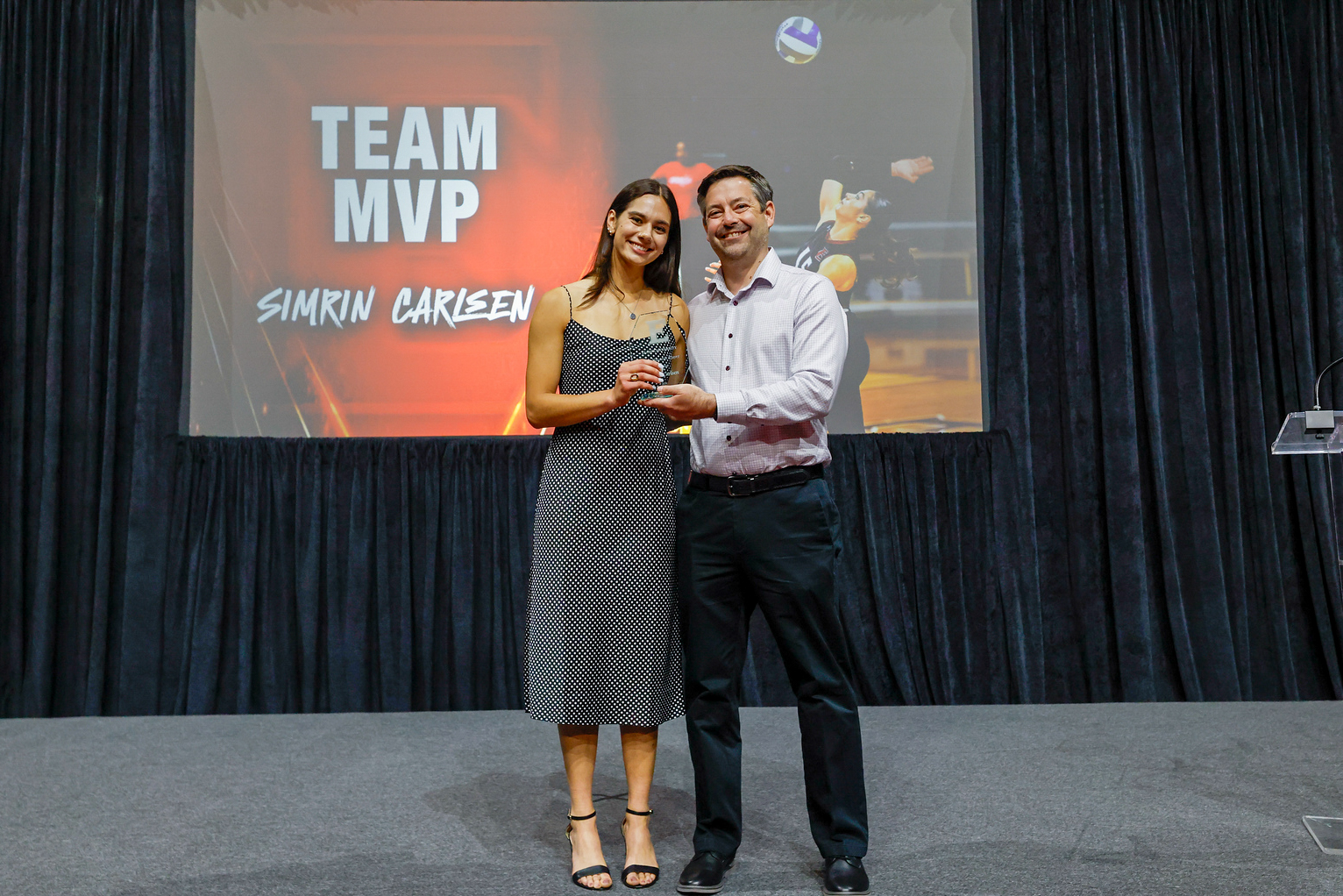
Carlsen still had one year of athletic eligibility remaining after an injury earlier in her college career, and Troy saw an opportunity for her to help shape a new chapter for Elon volleyball.
For Carlsen, the possibility of coming to Elon was about more than playing one more season.
“I knew I wanted to continue my education eventually, but I wanted it to feel purposeful,” Carlsen said. “The MSBA program felt like something I could fully invest in.”
Carlsen said the one-year structure, technical focus and support for students from different academic backgrounds made the program feel like the right fit. She saw it as a way to build the skills she wanted while staying connected to work that keeps people at the center.
“Hopkins gave me a strong foundation,” Carlsen said. “At Elon, I saw an opportunity to build on that with technical skills that would help me become a stronger employee and decision-maker.”
Carlsen found that Elon’s MSBA curriculum paired technical skills with practical application. In one trimester, she studied Python and Tableau in Assistant Professor Long Xia’s data visualization course while also taking “Business for the Greater Good” with Associate Professor Elena Kennedy.
For Carlsen, the pairing helped her understand analytics as more than numbers or software. It was also about how information is shared, understood and used.
“You’re getting the technical foundations,” Carlsen said, “but also learning how to translate those findings in a way that is ethical and makes sense to other stakeholders.”
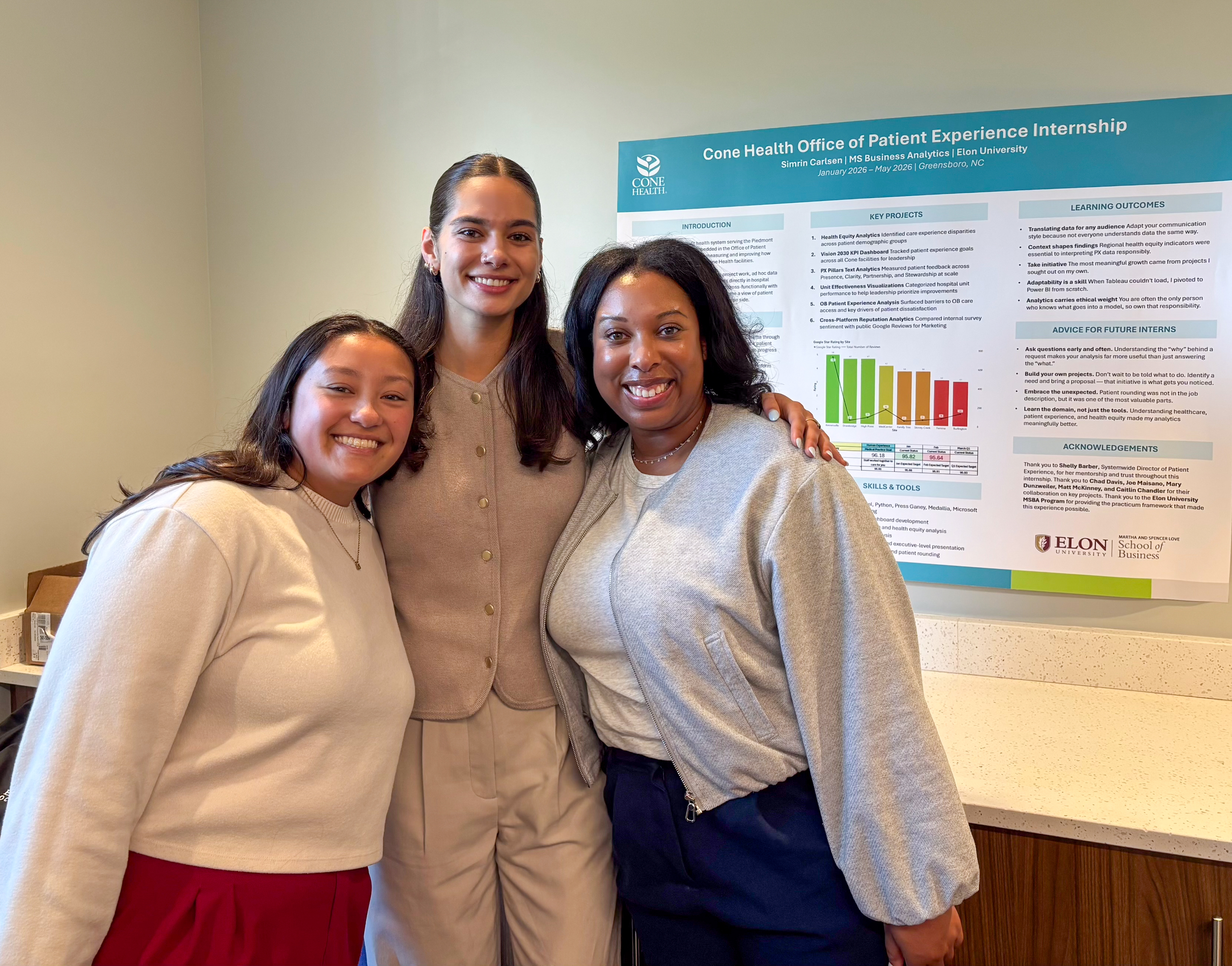
That connection became clearer through her internship with Cone Health, where she worked on patient experience projects. The role helped her see how health care organizations can use data to identify gaps in care, understand patient experiences and make more informed decisions.
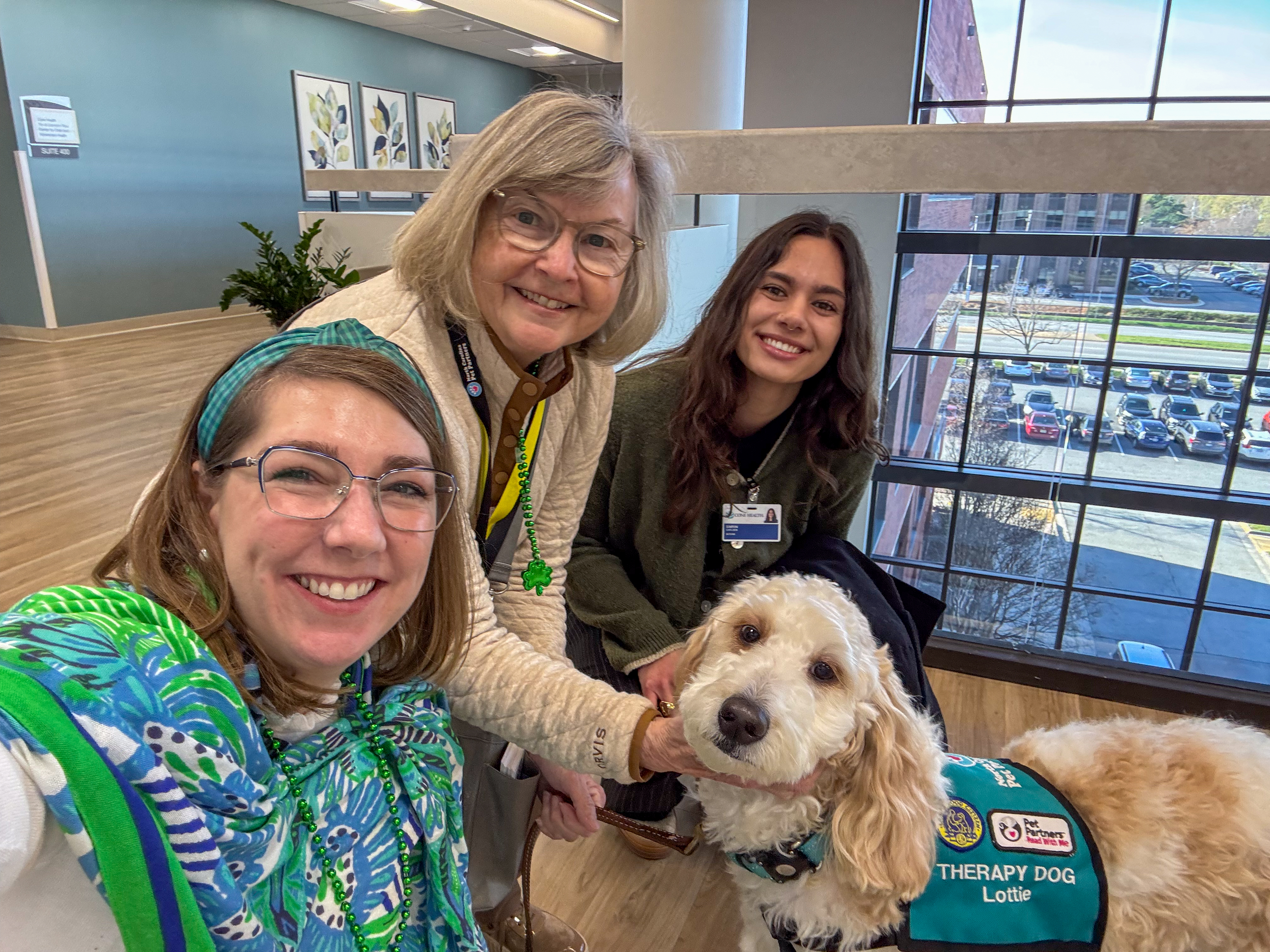
“I got to work on a whole bunch of different projects and figure out how every part of health care touches patient experience,” Carlsen said.
The experience helped confirm the direction she hopes to pursue after graduation.
“Ideally, it would be a role that is people-centric, but also uses analytics to make decisions and hopefully make their lives better,” Carlsen said.
Carlsen’s Elon experience also helped her understand leadership in a new way.
In a course taught by Brittany Mercado, associate professor of management and chair of the Department of Management and Entrepreneurship, Carlsen examined her own leadership style, practiced negotiation and worked through real-world scenarios involving conflict, influence and decision-making.
The timing was meaningful. She was coming off her final collegiate volleyball season and beginning to think about how the leadership skills she had built as an athlete could translate into professional settings.
“It was a class based on identifying your own leadership strategies and the way that you lead,” Carlsen said. “It was very tangible.”
Carlsen said Mercado brought leadership concepts to life by creating a discussion-based environment where students could connect course material to their own experiences.
“You can lecture all day long about leadership,” Carlsen said. “But what made the class meaningful was the way she shared real examples and encouraged us to think about how leadership shows up in our own lives.”
Carlsen had spent more than a decade learning those lessons on the volleyball court.
She began playing around age 11 after watching her older sister play. She was drawn to the communication, shared responsibility and constant movement of the sport.
“There are six of you on the court. Everyone is touching the ball at some point,” Carlsen said. “Everything is a team effort.”
At Johns Hopkins, Carlsen competed on a successful Division III team that regularly reached the NCAA tournament, including a Final Four appearance during her senior season. At Elon, she stepped into something different: a new team, a new coaching staff
For Carlsen, coming to Elon was never about stepping into an established program. It was about being invited into one.
“Coach Troy gave me an opportunity I will always be grateful for,” Carlsen said. “I got to come here, work alongside an incredible group of players and help build something we could all be proud of. And I got to do it while getting an education that genuinely changed how I think. I couldn’t have asked for more than that.”
One of Carlsen’s favorite Elon volleyball memories came at Towson, the CAA leader that entered the weekend on an 18-match winning streak.
After dropping the opening match of the weekend, the Elon team came back the next day with nothing to lose and everything to gain.
“When you’re building something new, there’s a freedom to it. Every match is a chance to show people, and yourself, what you’re capable of,” she said.
The Phoenix pushed Towson to five sets and won the final set 17-15, snapping the Tigers’ winning streak and giving Elon its first win over Towson since 2022.
“It felt really good to beat someone that hadn’t been beaten in a long time,” Carlsen said.
That same mix of grit, humor and initiative carried through her graduate year. Carlsen moved to Elon knowing Coach Troy and almost no one else. The cohort structure of the MSBA program helped change that. Students took classes together, worked through the same challenges and built friendships through the intensity of a one-year graduate program.
A January study abroad experience in Madrid and Milan became a turning point for the cohort. The group visited companies, learned about international business practices and spent enough time together outside the classroom to become more than classmates.
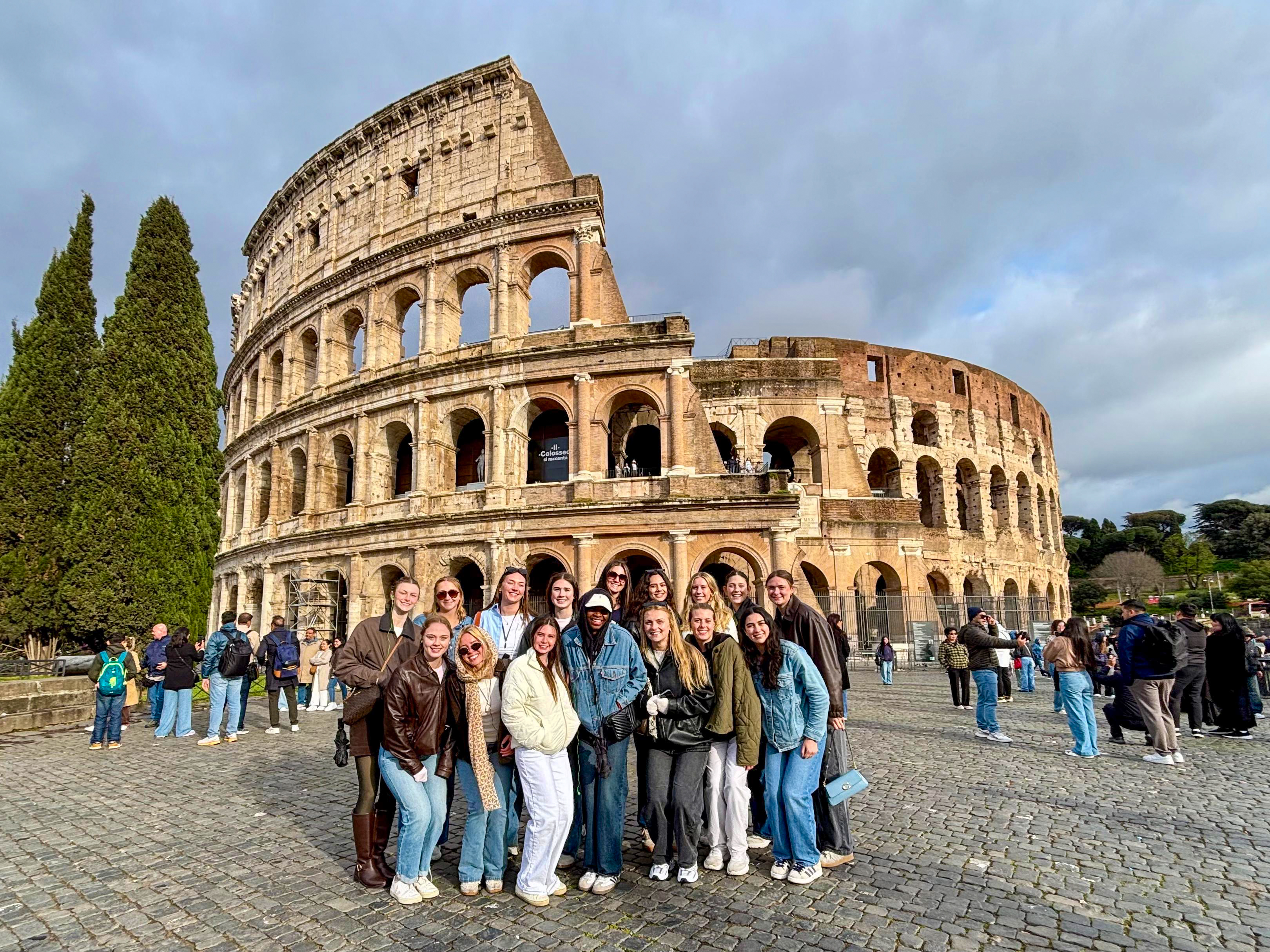
“You’re going out to dinner, you’re exploring a city, you’re in it together,” Carlsen said. “That was the point where we were all like, ‘Why not be friends?’”
The trip also gave Carlsen a broader view of how culture shapes business. In Spain, the group met with a U.S. commercial diplomat who discussed adapting to a more relationship-driven business culture. In Italy, students learned about the significance of “Made in Italy” goods and the role of craftsmanship, pace and cultural identity in business.
For a student interested in how decisions are made, the experience reinforced that analytics does not exist in a vacuum. Data helps people make choices, but those choices are always shaped by context.
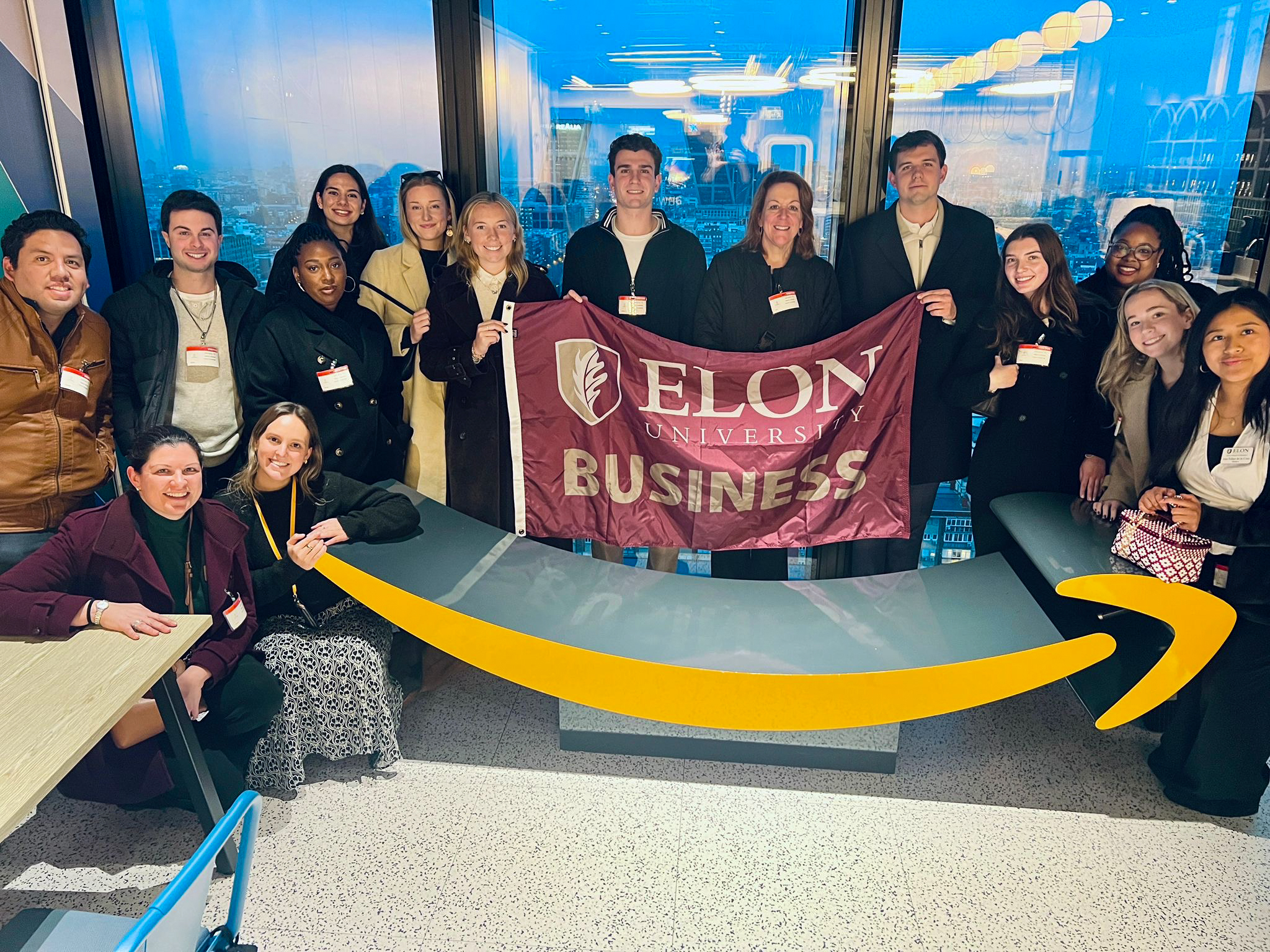 Carlsen also found support through the Porter Family Professional Development Center, especially from Amanda Traugutt, senior associate director of career services – Love School of Business.
Carlsen reached out shortly after moving to Elon, bringing what she described as “a ton of really big ideas” about life after graduation. Traugutt helped her narrow them down, polish application materials and think more intentionally about possible career paths.
“She will walk with you where you are, but a few steps ahead to help lead you in the right direction,” Carlsen said. “She’s your biggest cheerleader.”
As graduation approaches, Carlsen is looking forward to sharing the moment with the people who understand what the year required. The MSBA program is fast, intense and, for Carlsen, layered with practices, lifts, games, travel, classes and an internship.
Her advice to future students is simple: take initiative.
“The best things that have come up for me have been direct products or byproducts of taking initiative,” Carlsen said.
That includes building relationships with professors, using career resources, connecting with classmates, and paying attention to the opportunities that appear along the way.
“I didn’t come in with a business background,” Carlsen said. “But I am leaving more confident in my ability to hold my ground in conversations about business and analytics.”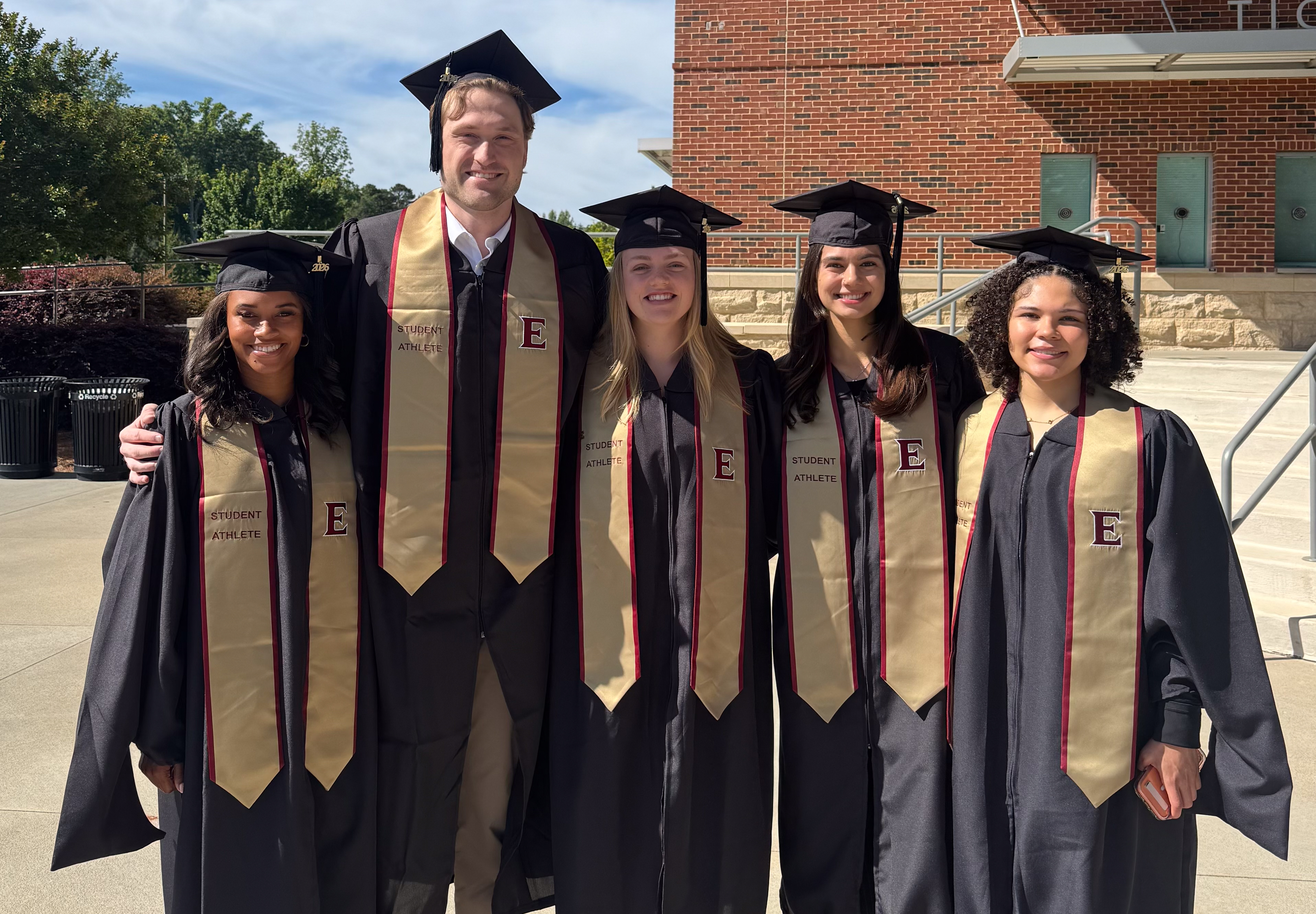
-
Matt Troy
Head Women's Volleyball Coach
-
Brittany Mercado
Associate Professor of Management and Chair of the Department of Management and Entrepreneurship
-
Amanda Traugutt
Director of Career Services for the Love School of Business
-
Elena Kennedy
Associate Professor of Entrepreneurship
-
Long Xia
Associate Professor of Management Information Systems