


Students enrolled in Professor Julie Lellis’ Senior Seminar in Health Communications spent the spring semester working alongside healthcare providers at Cone Health's CenteringPregnancy program, developing strategic communications campaigns designed to increase enrollment, improve patient retention, and expand awareness of group prenatal care.
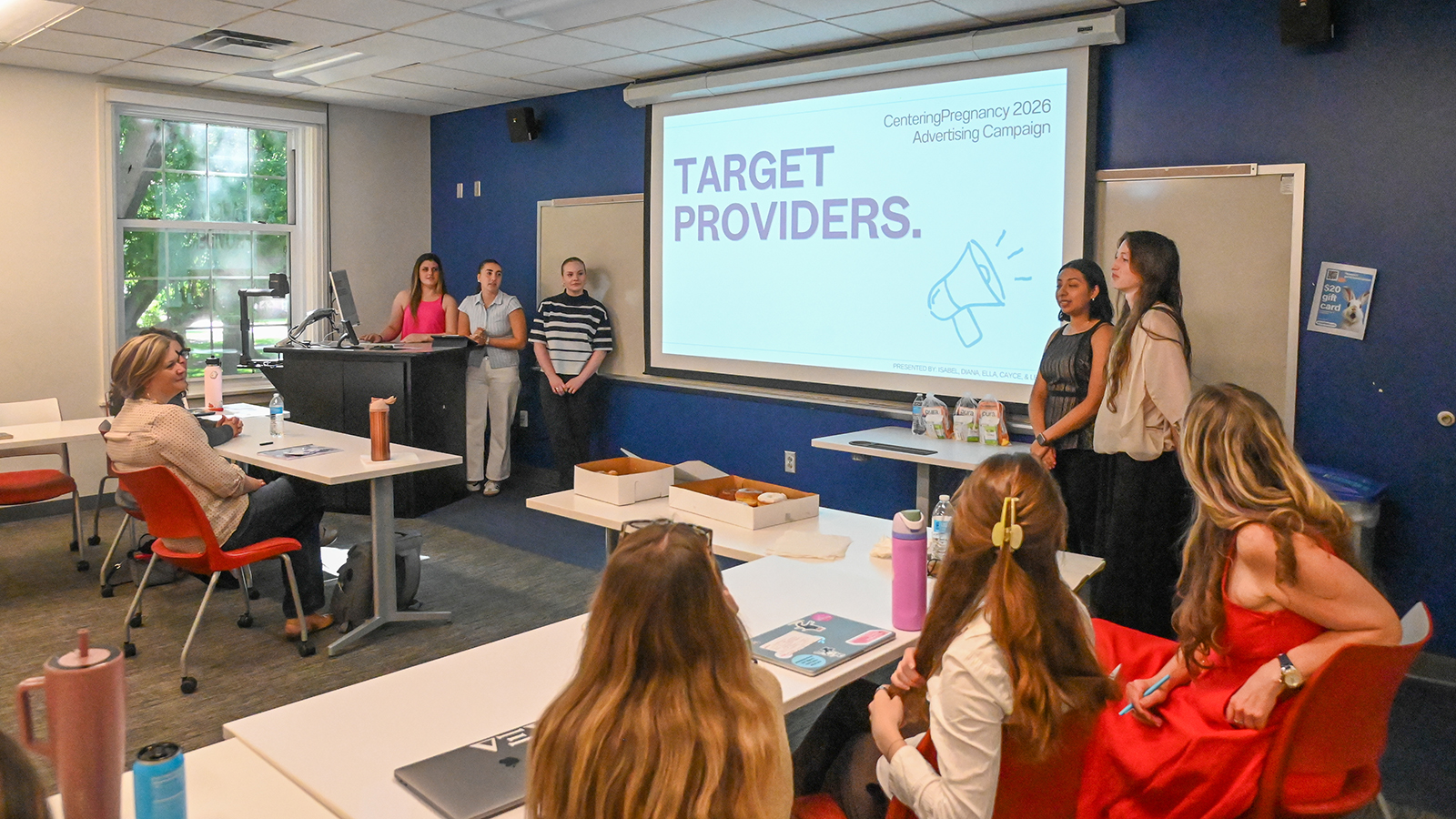
Before they could create communications campaigns, students in Professor Julie Lellis’ Senior Seminar in Health Communications spent time listening.
They listened to physicians and midwives. They listened to expectant mothers. And they listened to the stories behind the data as part of a partnership with Cone Health’s CenteringPregnancy program that challenged students to address real-world maternal health communication needs.
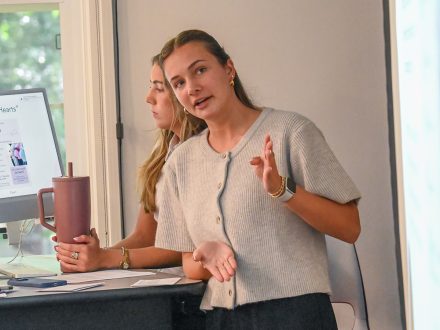
Those conversations and observations laid the foundation for the students’ semester-long projects. Working with the Cone Health Center for Women’s Healthcare at MedCenter for Women, students developed strategic communications campaigns aimed at increasing enrollment, improving retention and expanding awareness of the program among patients and healthcare providers.
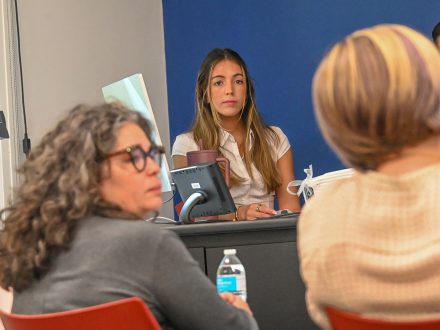
As part of the partnership, students worked directly with healthcare professionals, including Dr. Kim Newton, founder and lead physician of Mom+Baby Combined Care, and Virginia Smith, CenteringPregnancy coordinator. Several students also attended the North Carolina and Virginia Centering Consortium, gaining firsthand insight into the impact of group prenatal care on maternal and infant health outcomes. During Finals Week, students presented their campaigns to Newton and Smith, who visited Elon’s campus.
CenteringPregnancy is an evidence-based model of group prenatal care that combines health assessments, education and peer support. Research has shown the approach can improve maternal and infant health outcomes while helping reduce disparities in care. At the MedCenter for Women in Greensboro, many participants are covered by Medicaid, and the clinic serves uninsured and underinsured patients throughout the region.
“The Elon students were a great part of our team,” Newton said. “They took the time to understand and engage with CenteringPregnancy and really captured how the group care feels different and meets people where they are. Their presentations were impressive to say the least and also provided our team with a roadmap for how to ensure our work to expand Centering feels cohesive and genuine.”
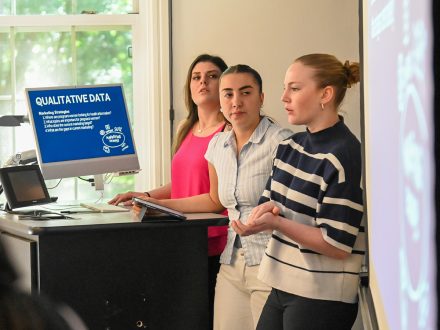
For Emmy Beauvais ’26, a strategic communications major with minors in health communications and business administration, the project demonstrated how classroom learning can translate into community impact.
“Participating in the Health Comm Senior Seminar class – and working with Virginia and Dr. Newton – was one of the most meaningful experiences of my time at Elon,” Beauvais said. “Unlike classroom projects, this project gave us the opportunity to develop and present a real communications campaign for an actual client. We did this through research-backed goals, objectives and strategies, and tangible deliverables that could be implemented in practice.”
Beauvais said attending the regional consortium early in the semester helped shape the team’s work and deepen her understanding of maternal healthcare challenges and opportunities.
“Overall, this experience showed me what it looks like to create work that extends beyond the classroom and truly can make a meaningful impact on a community,” she said.
The course also received a Community Partnership Initiative Grant from Elon’s Kernodle Center. The grant helped Centering providers purchase educational supplies for participants, while students assembled Baby Go! Bags filled with diapers, wipes, burp cloths and other newborn essentials for expectant mothers.
Lellis, who directs the health communications minor, said the partnership allowed students to see both the personal and systemic dimensions of healthcare communication.
“Students experienced everything from the joy of hearing a baby’s heartbeat to the heartache of exploring the realities of health disparities in maternal care,” Lellis said. “They learned how Centering is changing outcomes and making a direct impact on the lives of pregnant women in our local area.”
Lellis explained that the experience challenged students to translate research and data into actionable communications strategies for a community partner.
“Students learned how to generate insights based on data and turn those insights into creative strategies that inform audiences and motivate them to act,” she said.