


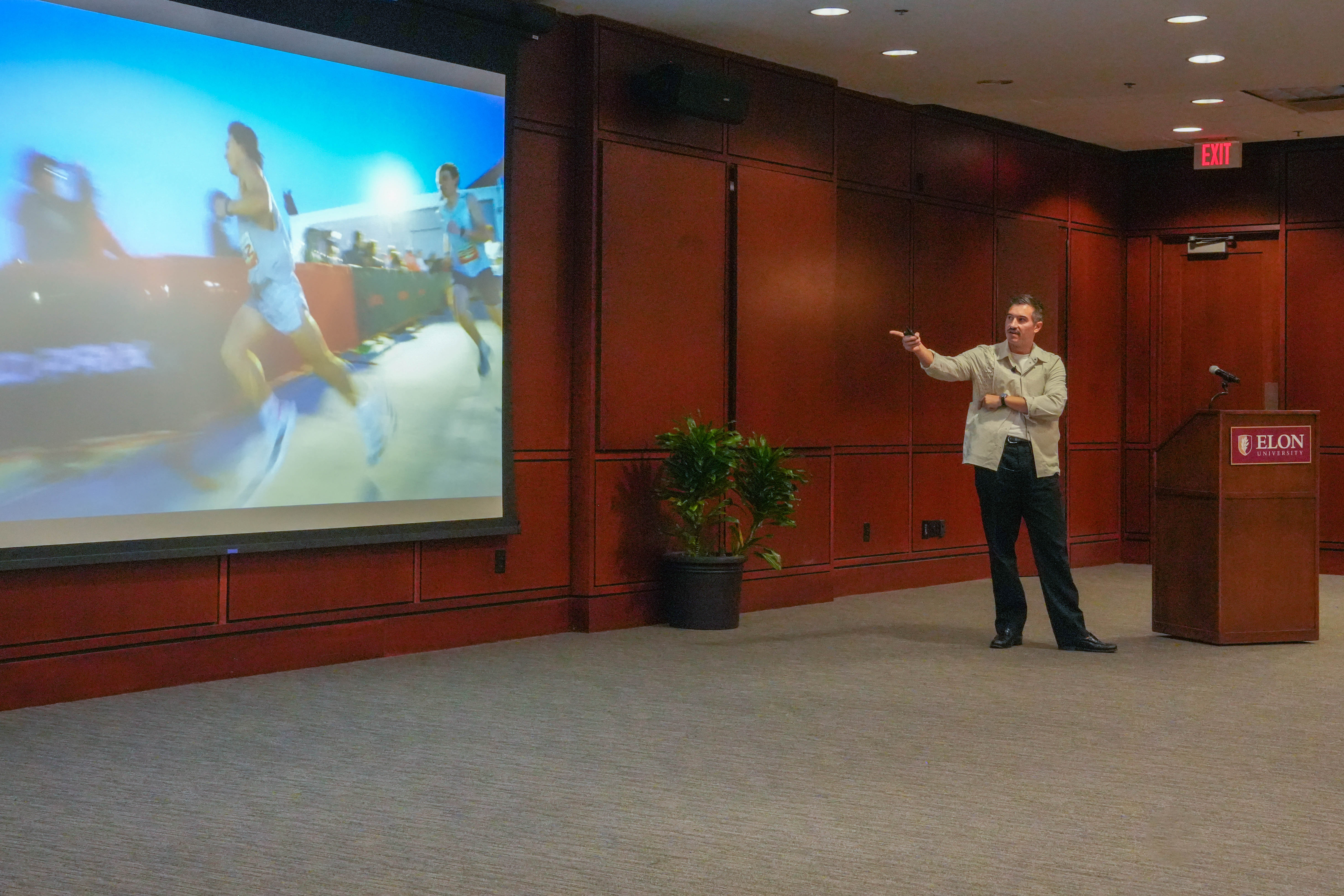
At Elon’s C. Ashton Newhall Endowed Lecture, Nick West '10, the Bandit Running co-founder and CEO, shared how a basement sock business grew by paying attention to what runners needed.
Nick West ’10 and his brother Tim walked into a Brooklyn concert venue and saw a racetrack.
The building was 700 feet long. Rows of doors opened along both sides. The brothers looked at each other and had the same thought.
“We need to do a race in this building,” West recalled.
Two years later, they did.
West, co-founder and CEO of Bandit Running, played a video of the Bandit Grand Prix for the audience in Elon University’s LaRose Digital Theatre on Nov. 11. The race was one of the bets he walked through during the C. Ashton Newhall Endowed Lecture.
Haya Ajjan, dean of the Martha and Spencer Love School of Business, welcomed the audience, and Ashley Wilcox, director of the Doherty Center for Creativity, Innovation and Entrepreneurship, introduced West. The Doherty Center hosts the lecture series, named for Elon alumnus C. Ashton Newhall ’98.
West described himself and his brother as “lemonade stand kids” who kept starting side projects long after they had full-time jobs.
The one that stuck began when Tim saw something in New York City’s running clubs that reminded him of the surf scene the brothers grew up around in New Jersey. In 2020, they started shipping Bandit’s running socks out of Tim’s basement.
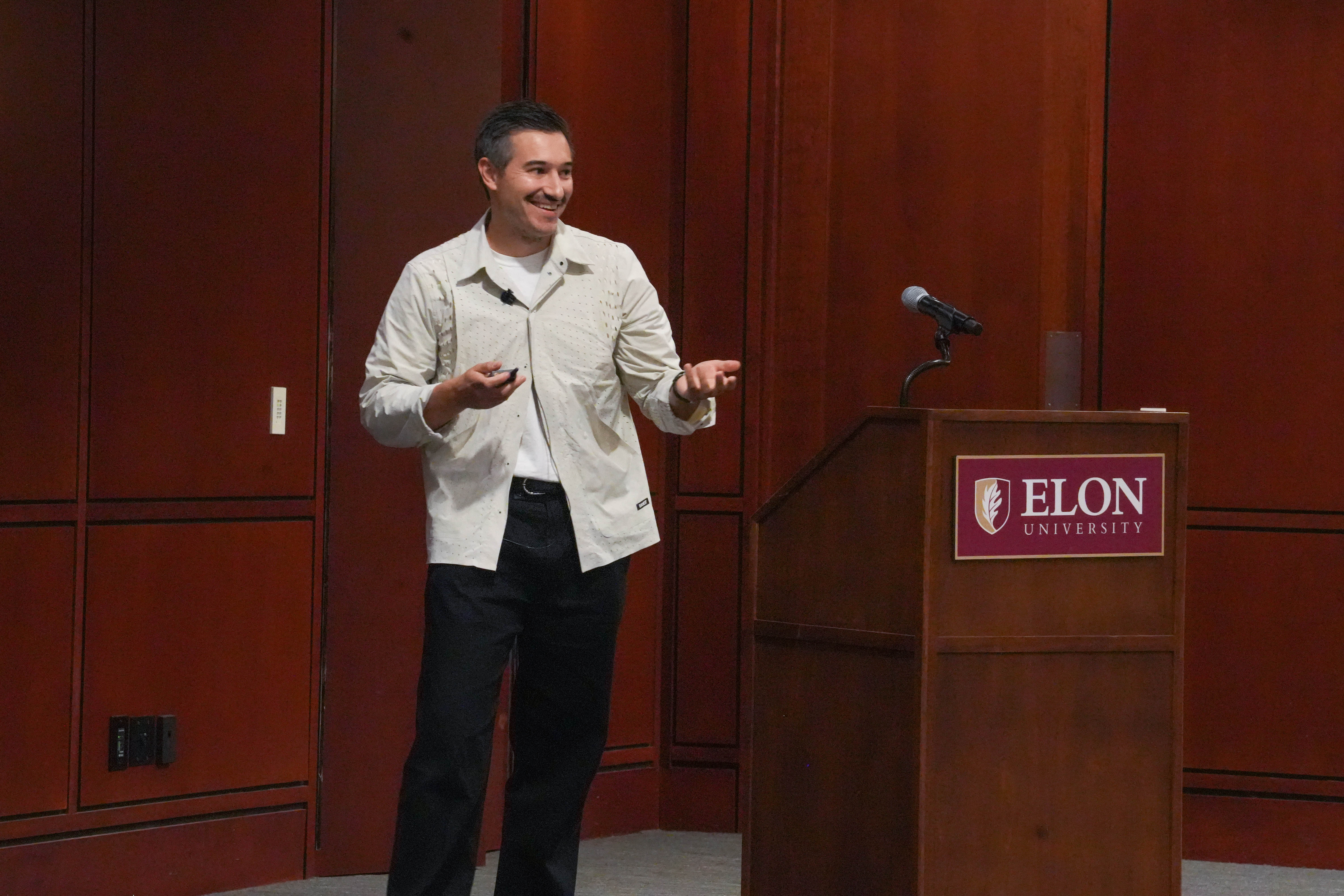
“It was totally self-funded,” West said. “We told ourselves that we were never going to give it to an influencer or spend a dollar on marketing. It had to spread organically for us.”
West’s first venture, a beverage company, failed. He went on to work at Jet.com, an online marketplace, and later helped build a baby food business. After Walmart acquired Jet.com, West worked with teams evaluating brands that sold directly to consumers. Reviewing those companies’ finances showed him how heavily they relied on paid advertising to reach customers.
West saw an opening in running apparel. The biggest brands in the sport focused much of their attention on shoes. Bandit could make running clothes and reach customers where they already shopped and gathered, from local stores to race-weekend pop-ups.
Bandit’s office was still unfurnished when the team began inviting runners in to show them their favorite gear. West said those conversations still happen after each collection.
“They talk about what they love about it. They talk about what’s missing in the market,” West said. “They talk about the things that really are not working, that they wish could be tweaked.”
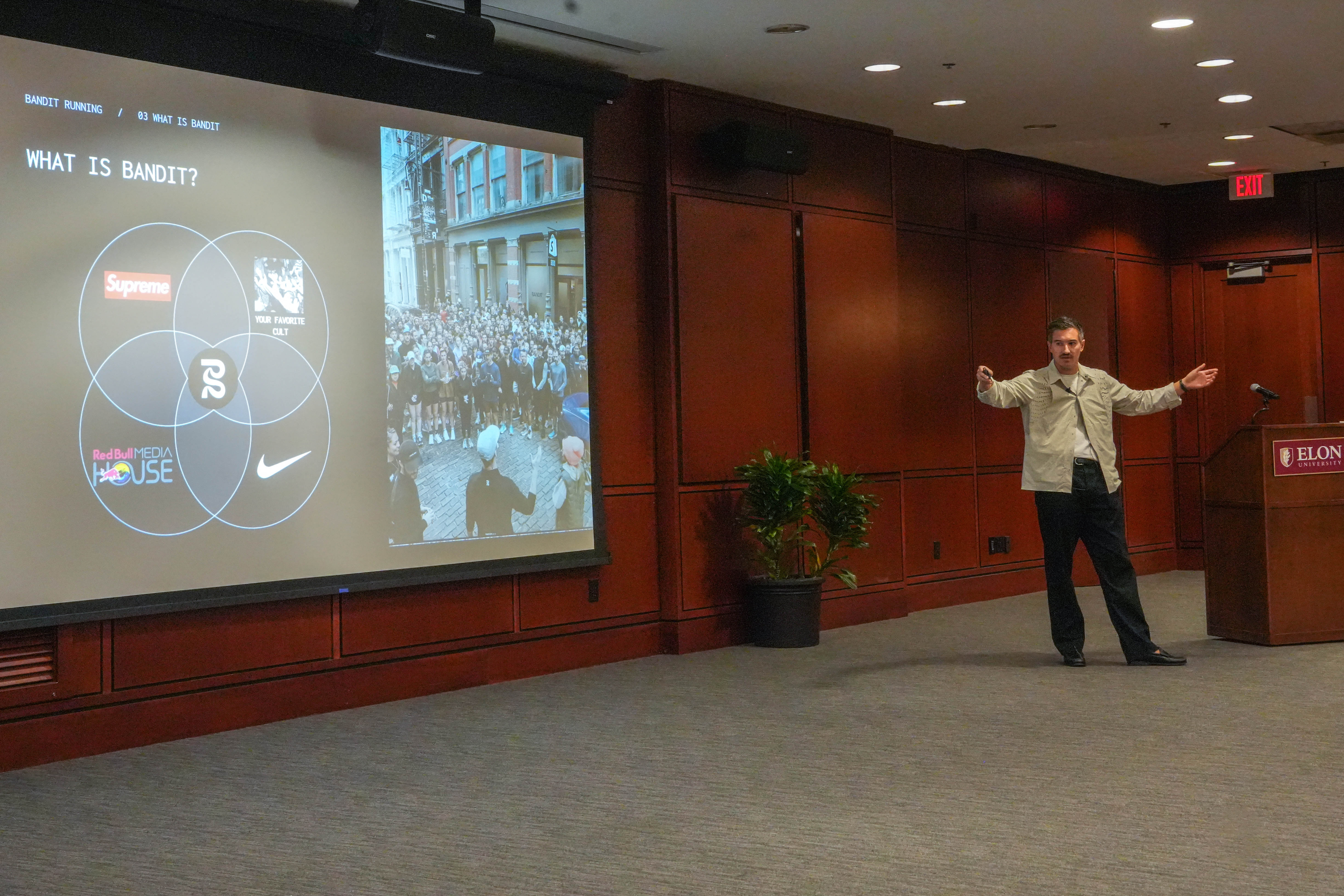
In women’s running apparel, the company saw room for more pockets. One of its sports bras has seven.
Through its Unsponsored Project, Bandit helps athletes without sponsors cover expenses such as flights and hotels so they can compete at events like the U.S. Olympic Trials. The company also gives them racing gear with no logo. That part took some convincing.
“It was so hard for me as a CEO to wrap my head around: Wait, we’re not going to put our logos on the athletes who are going to be televised?” West said.
His marketing team saw a chance to help athletes land longer-term sponsorships. The unbranded gear made it clear they were available.
“We’re shining a spotlight that they’re open for business, for the big footwear brands to sign them to real deals,” West said.
West said it took nearly three months to boil Bandit’s mission down to two words, “Evolve Running.” He wanted a mission the team could point to in a conference room when it had a decision to make.
West traced the way he approaches decisions at Bandit back to his time at Elon.
“I think a lot of my learning in undergrad was learning how to learn and how to really ask good questions,” West said.
He gave an example from Bandit’s marketing discussions. “How do we figure out the things that are not changing and root our strategies in those things?”
When Wilcox asked what advice he had for students starting their careers, West told them to pay attention to the person across the desk in a job interview. A first boss can become a mentor.
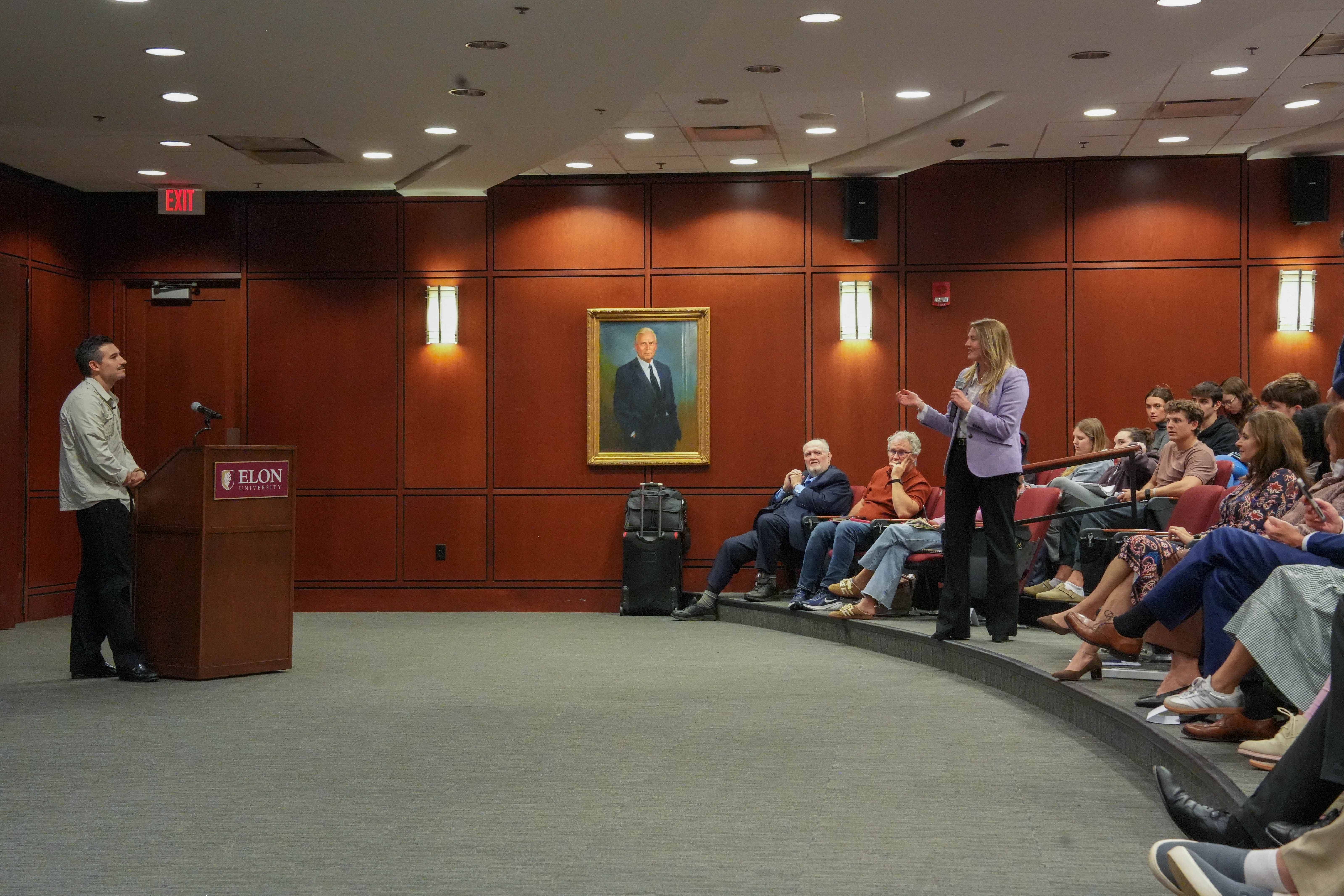
West urged students to pay attention to the people they meet along the way. Some of the people who changed the course of his career were people he met by chance at events he hadn’t wanted to attend.
“If you’re going to be somewhere, take advantage of it,” West said.
About the C. Ashton Newhall Endowed Lecture Series
Named for a former member of the Board of Trustees who is a 1998 graduate of Elon University, the C. Ashton Newhall Endowed Lecture Series brings accomplished entrepreneurs to campus each year to share their insights on managing risks, capitalizing on opportunities and innovating in today’s marketplace.
Featuring candid talks and interactive sessions, the series offers students, faculty, and the broader community a valuable window into the inner workings of entrepreneurial success, from sparking an idea to sustaining long-term growth.