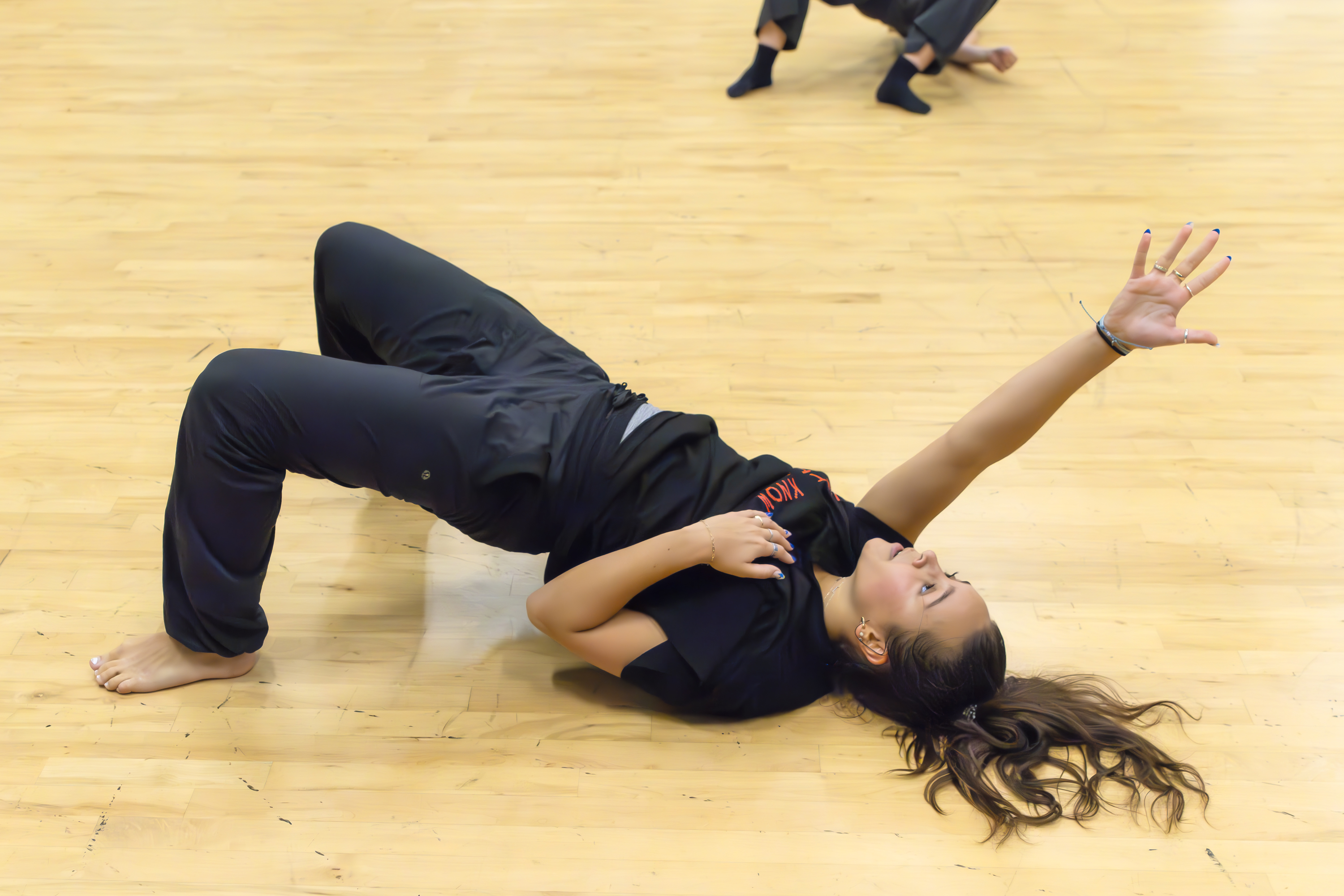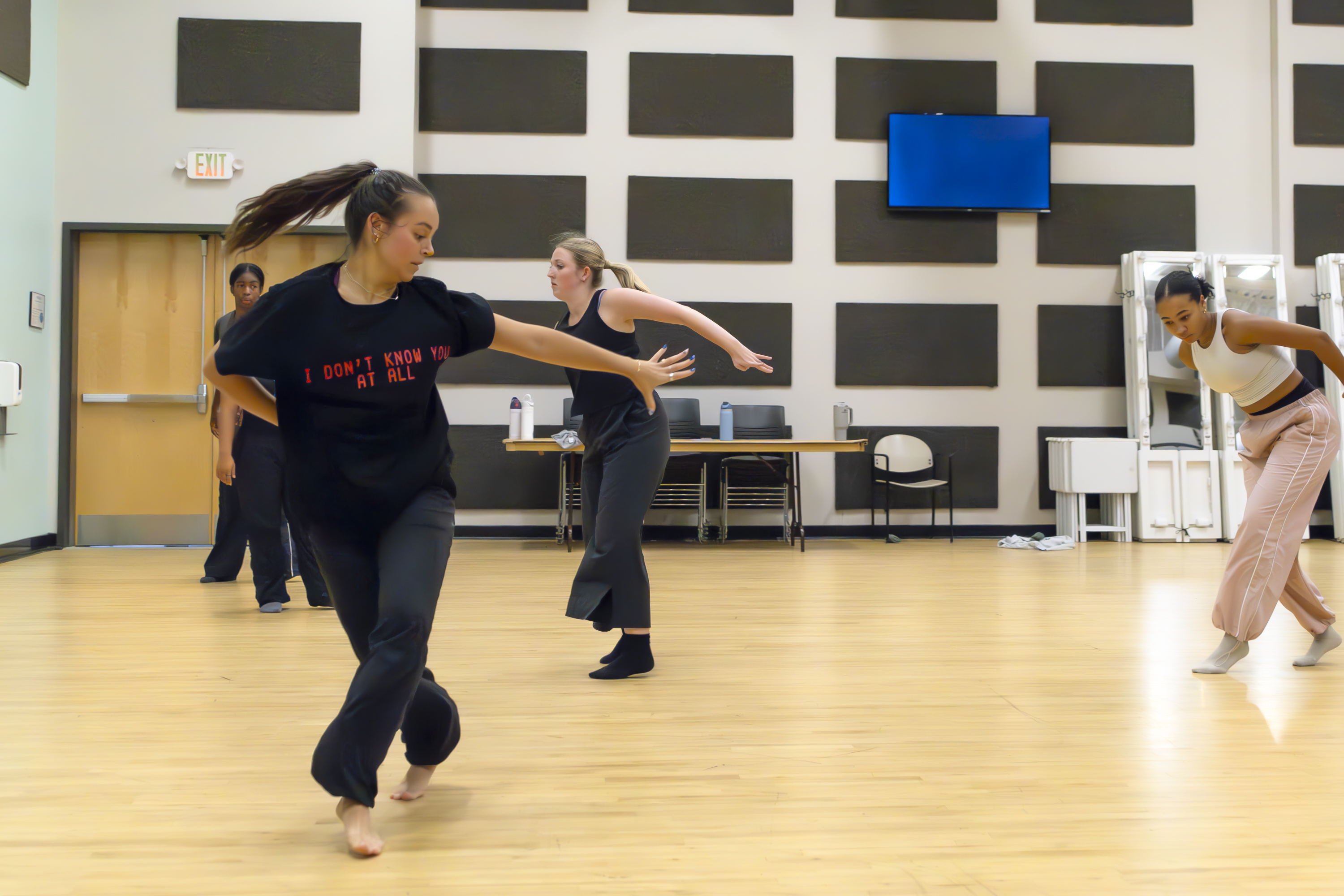
The Lumen Scholar is connecting her interests in dance and math by studying the danceability of a knot.
With a dancer mother and a math teacher father, it seems like the perfect fit for Lila Snodgrass ’26 to study dance and math at Elon University. But her desire for research as a Lumen Scholar comes from a deep passion for both subjects.
“Dance has always been part of who I am; I’ve been dancing my whole life,” said Snodgrass, who is from Pittsburgh, Pennsylvania. “I’ve always liked math out of all of the subjects, and my senior Calculus teacher opened my eyes to how math can be more than just the numbers.”
More than the numbers
Seeing her passion, a faculty member recommended Snodgrass to Nancy Scherich, assistant professor of mathematics, who also happens to be a dancer.
“You might think that math and dance are totally different. How would you combine those? But there’s actually quite a large sub-community in mathematics of people who dance,” said Scherich.
The pair have been working on research in the field of topology, specifically knot theory, a subfield of mathematics dedicated to the study of knots.
“We are all familiar with the mathematical field of geometry as the study of shapes. We can geometrically think of shapes as being made of rigid, unbendable wire. This perspective is limiting because if a circle is made of rope, it can bend and fold and will not be a geometric circle anymore, but it is still a perfectly good loop. This is how the mathematical field of topology thinks of shapes in a different way than geometry- shapes are bendable and flexible,” said Scherich.
According to Scherich, as a dancer travels the stage over time, their path traces out a knotted curve. If multiple dancers are on stage, and it is assumed that each dancer ends in the starting position of another dancer, the total paths danced by all dancers form a large knot. The danceability of a knot is the minimum number of dancers required to create the knot.
Connecting the dance
Mathematicians use tools called “invariants” to distinguish knots, so Snodgrass, along with her research collaborators, have developed a new knot invariant called the “danceability index” and are comparing it to other invariants.
“We’re connecting this one idea of the dancer’s paths on the floor with these other ideas which are more connected to the greater idea of knot theory,” Snodgrass says.
But applying for the Lumen Prize wasn’t initially on Snodgrass’ radar. The Lumen Prize is Elon’s premier undergraduate research award that includes a $20,000 scholarship to support and celebrate their academic achievements and research proposals.
It wasn’t until her modern dance professor, Keshia Wall Gee, assistant professor of dance, encouraged the class to apply, she brought it to Scherich and was eventually awarded the honor.
From theory to the stage
Lumen Scholars work closely with their mentors during their final two years to pursue and complete their projects. Efforts traditionally include coursework, study abroad, research both on and off campus, internships locally and overseas, program development, and creative productions and performances.
In August 2024, Snodgrass, Sol Addison ‘25 and Scherich presented this research at two conferences, and their research article on the subject has been accepted for publication in a peer-reviewed journal. They also developed a video demonstrating the danceability of twisted virtual knots.
“I’m really excited to be able to connect these two things that feel so me, but so different worlds,” said Snodgrass. “It’s crazy that this is possible and that I’m given the opportunity to do this and be able to present it for other people.”
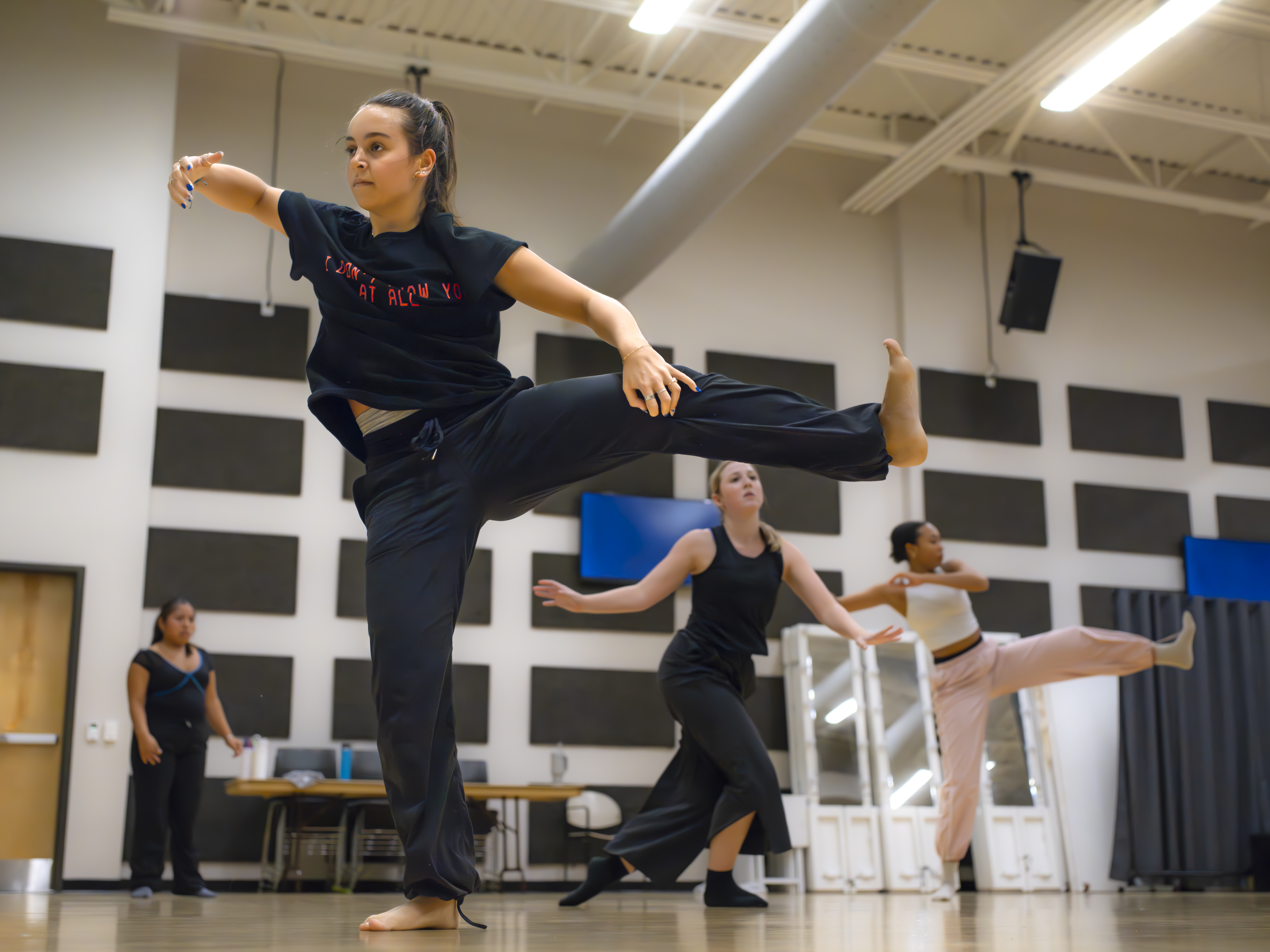
For her senior year, Snodgrass is hoping to create a movement study and eventually a full-length performance demonstrating her research.
“It’s illustrating these mathematical ideas that I’ve been researching for the past year through movement with live dances and hopefully projections to show audiences this deep math research in a more accessible way,” said Snodgrass.