


Disaster relief efforts bring home the power of service and connection.
“I may want to do this for the rest of my life.”
That realization struck Coby Fecher ’25 somewhere between sanding drywall and mudding seams in a flood-damaged home in Asheville in Western North Carolina. What began as a service trip with fellow Elon students and staff had transformed into something far more personal: a glimpse of a future built around helping others rebuild.
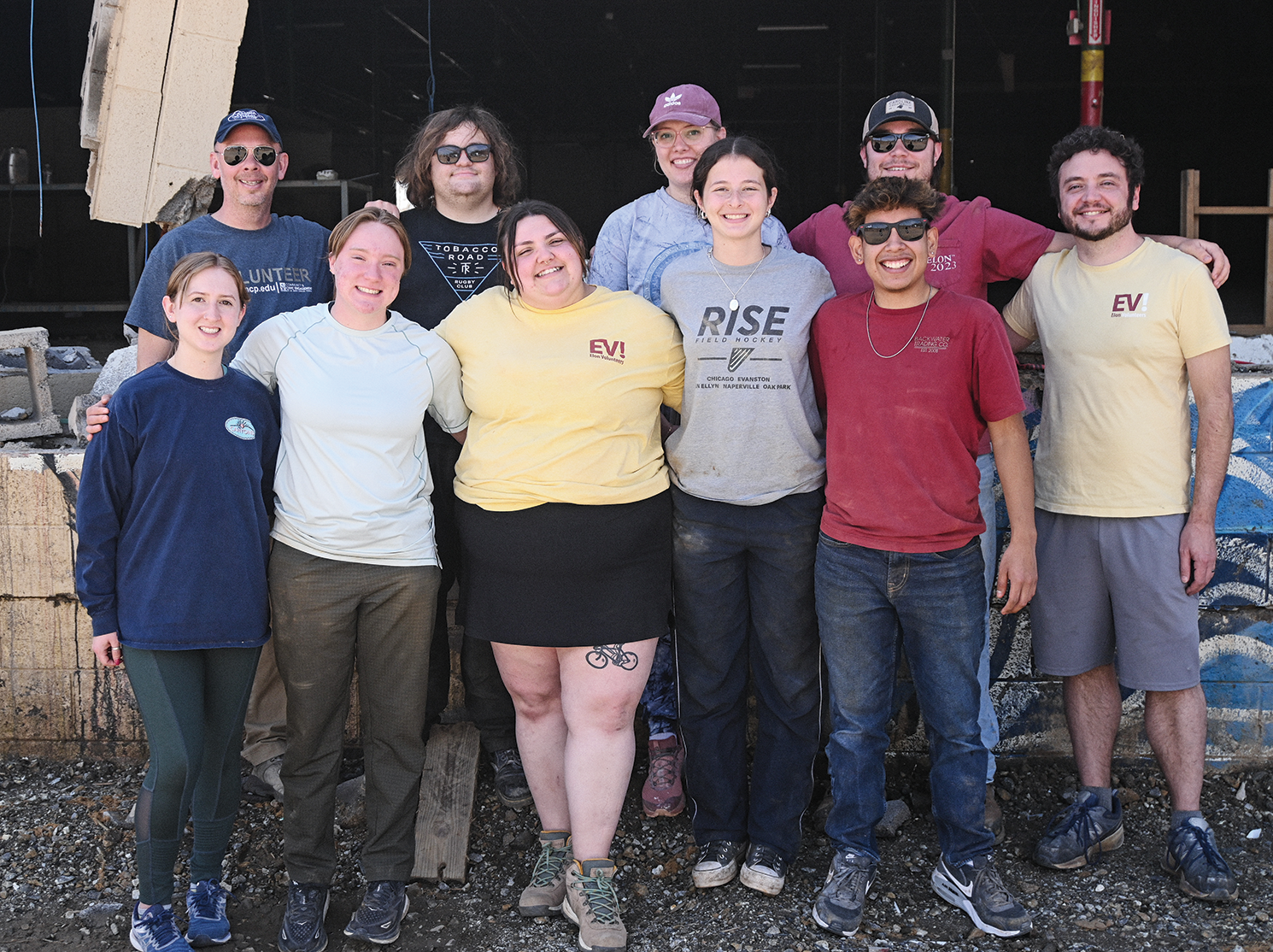
Fecher was one of six students and five staff members who traveled to the region in March, months after Hurricane Helene swept through the area. The group went to support recovery efforts, but they left with a greater understanding of what it means to serve with empathy.
 Answering the Call
Hurricane Helene made landfall in October 2024, bringing severe flooding and damage to homes, businesses and community spaces throughout the region. The extent of the destruction prompted a unique collaboration between Elon’s Student Government Association and the Kernodle Center for Civic Life to support local disaster relief.
“Given that Hurricane Helene impacted our local community, and we felt the impact at other universities that we partner with, it was something that we knew pretty quickly that we wanted to help in whatever way we could,” says Connor Vaughn ’26, an SGA senator representing the Dr. Jo Watts Williams School of Education.
The Kernodle Center typically organizes alternative spring break trips that offer immersive service experiences designed to introduce students to new communities while addressing domestic and global social issues. Partnering with SGA allowed them to broaden their reach and deepen student engagement.
“This collaboration between the Student Government Association and the Kernodle Center for Civic Life is nothing short of monumental,” says Bob Frigo, the center’s director.
As planning began, the Kernodle Center turned to NECHAMA — Jewish Response to Disaster, a Minnesota-based nonprofit and the only Jewish organization in the U.S. that provides direct disaster response services.
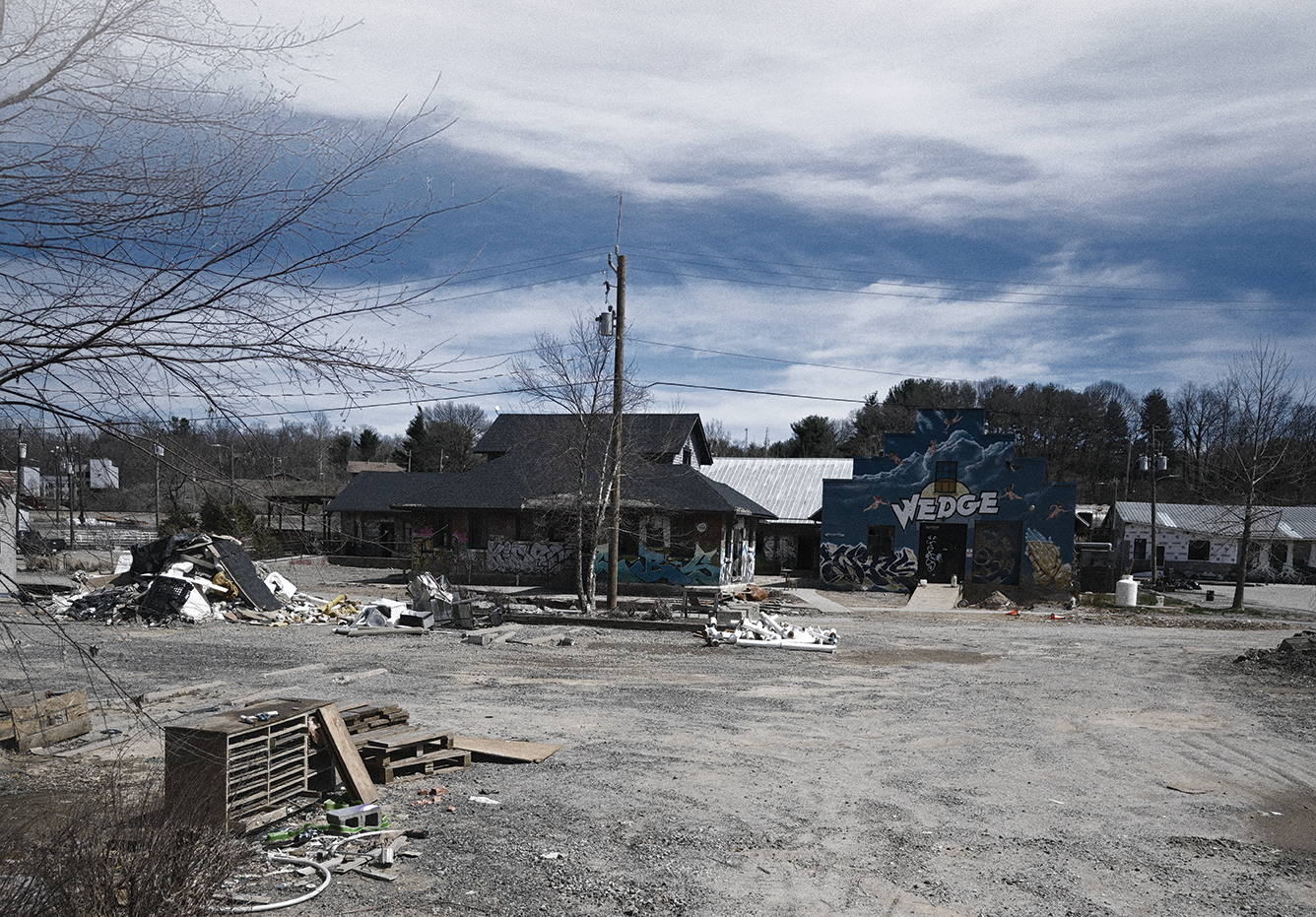
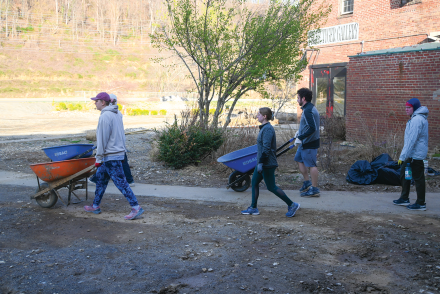
Through NECHAMA’s coordination, the Elon team joined recovery efforts in Asheville, restoring the home of an elderly couple and assisting with cleanup at Riverside Studios in the city’s River Arts District, home to more than 70 local artists’ studios.
A Shift in Perspective
While working alongside community members, the team gained firsthand insight on the lasting effects of natural disasters, learning that service is just as much about listening as it is about action.
“Service is a pathway to open and honest conversation,” says Abby Wiatrek, assistant director of the Kernodle Center. “It can be tangible things like showing up and doing the work … but also listening to stories and understanding what partners truly need.”
For Kai Barker ’27, the experience offered a new lens through which to view others’ struggles, and his own role in addressing them. “I’ve never been through a natural disaster,” Barker says. “It showed me what people are going through on a real, everyday level. Perspective helps you grow and develop empathy for others.”
Joseph Neclerio ’28 echoed that sentiment, reflecting on how his family values have shaped his understanding and passion for service. “My dad instilled in me the importance of having a heart for service and giving back,” he says. “When I saw the damage in Asheville, I wanted to make a difference. I might not be able to clean up all of Asheville, but I’m able to do a small portion.”
For Vaughn, the experience underscored how local acts of service relate to a broader sense of civic responsibility. “A big part of being a global citizen is empathy and being able to connect with others,” he says. “Being with these people as they’re trying to rebuild without a doubt builds your capacity for empathy.”
Ruby Radis ’26 saw volunteering in Asheville as part of a larger journey. “It starts local and then builds its way up to be a global citizen,” Radis says. “Living in North Carolina for the past three years, I think this adds to my part as being a global citizen, as the duty to work together and build a safer and stronger community.”
 Restoring Hope
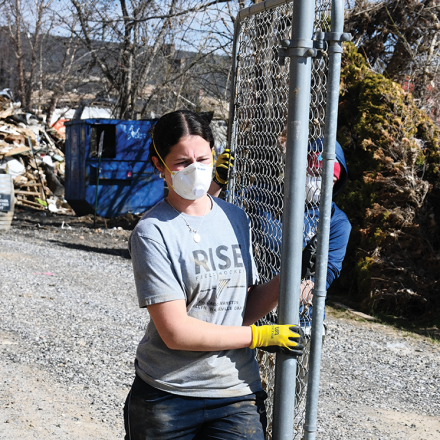
The relief efforts left a lasting impression on everyone who participated, including those in the Asheville community. Rami Schwartzer, Hurricane Helene Team Lead at NECHAMA, saw firsthand the impact the Elon team had on local homeowners. “I hear every day from homeowners that what they’re getting the most out of this experience is hope for the future by seeing young people who still want to engage in service,” Schwartzer says. “Just seeing people who are growing and learning and still thinking outwardly, that’s something that brings homeowners gratitude and hope every day.”
Staff members, too, found connection through the work. Charlotte Grush, coordinator of donor relations, valued the opportunity to build deeper relationships with students. “I don’t usually get to put [students’] names and faces together,” she says. “The [experience] gave me that chance to get to know students, their passions and goals, and learn how I can kind of help facilitate that.”
Alice Chesley-Akhtar, AmeriCorps VISTA Leader at NC Campus Engagement, joined the relief efforts to deepen her own service year. What stood out to her was the students’ passion for service. “The students really want to help out, and they have a heart of gold,” she says. “They want to use that to better the area and help out with these natural disasters.”
Back at Elon, the drywall dust may be gone, but the impact remains. For Fecher, the experience sparked something lasting.
“I’ve been thinking ever since [the service trip], when we were sanding and mudding, that I may want to start doing this as kind of a career, maybe helping out, doing Habitat for Humanity, or working with our partner here,” Fecher says.
In a storm’s aftermath, it’s easy to focus on what was lost. But for this group of students and staff, what mattered most was what they built together — understanding, connection and a deeper belief in the power of showing up.