


By highlighting the Food Studies Minor in this interactive format, the event raised awareness about the program’s focus on how food shapes health, sustainability and culture.
The food studies minor joined this week’s College Coffee with a colorful table display and an interactive game to spark conversation about food and culture.
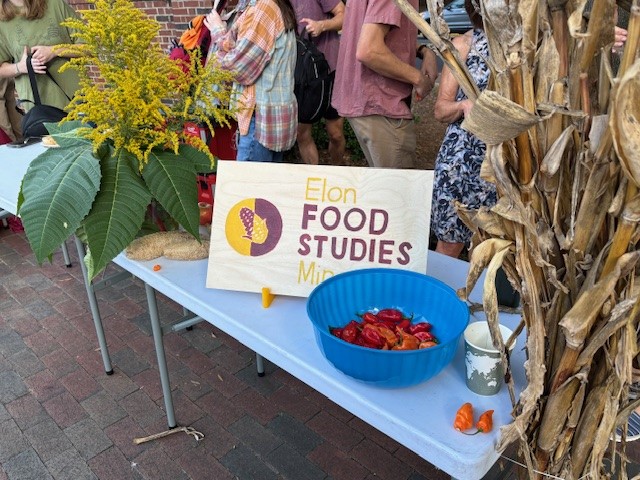
The table featured autumn-themed decorations, a basket of brightly colored peppers and a handmade wooden sign created at Elon’s Maker Hub, highlighting the creative spirit behind the program. Professor Jacob Rutz invited attendees to try “Pepper Roulette,” an activity where participants guessed which pepper was sweet and which was spicy. Sampling peppers gave students and faculty the chance to learn about their flavors, heat levels and role in food traditions.
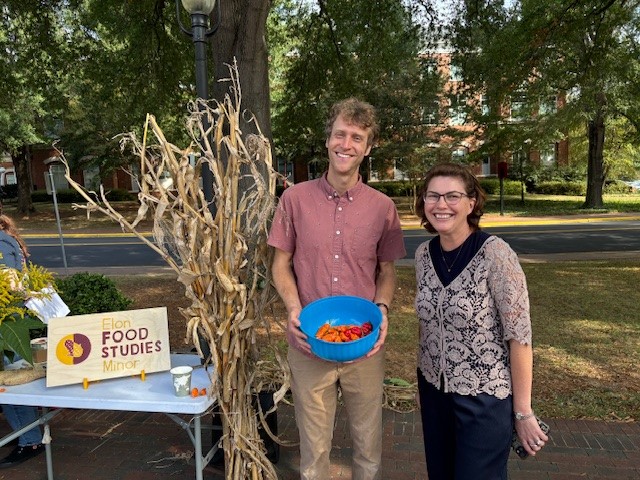
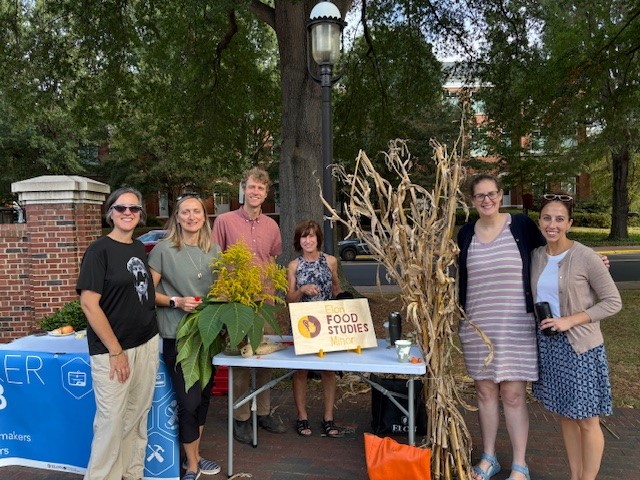
Among those who stopped by were Provost Rebecca Kohn, who sampled both the sweet and the spicy peppers. Members of the Food Studies Advisory Board ( Svetlana Nepocatych, Elizabeth Bailey, Nina Namaste, Pamela Runestad, Mary McManamy and Jacob Rutz) also attended to answer student questions. Their presence demonstrated the university’s support for food studies as a field that links health, sustainability and culture.
Participants took part in conversations, learned about different peppers, and enjoyed the playful setup. The table created a space for the campus community to engage with food in a fun and memorable way.
The food studies minor offers courses such as Culinary Transformations: “The Science Behind What’s Cooking, Nutrition and Bioenergetics”, “Garden Studio: Fall & Winter Gardening”, and “Edible Ideologies: Food, Power, and Identity.” These classes allow students to examine food through the lenses of health, science, identity, environment, and tradition. By combining classroom learning with experiential opportunities, like College Coffee events, the minor helps students connect big ideas to everyday life.
By highlighting the Food Studies Minor in this interactive format, the event raised awareness about the program’s focus on how food shapes health, sustainability and culture. The experience reflected the minor’s broader mission: using food as a tool to build curiosity and community.
-
Jacob Rutz
Assistant Teaching Professor of Environmental Studies
-
Rebecca Kohn
Provost and Vice President of Academic Affairs and Professor of Biology
-
Svetlana Nepocatych
Professor of Exercise Science
-
Elizabeth Bailey
Assistant Teaching Professor of Exercise Science
-
Nina Namaste
Professor of Spanish in the Department of World Languages and Cultures
-
Pamela Runestad
Assistant Professor of Anthropology
-
Mary McManamy
Associate Teaching Professor of Chemistry