


Through a 2025 Pulitzer Center Reporting Fellowship, the Elon junior traveled to Costa Rica to investigate illegal hammerhead shark fishing and the enforcement gaps threatening the endangered species.
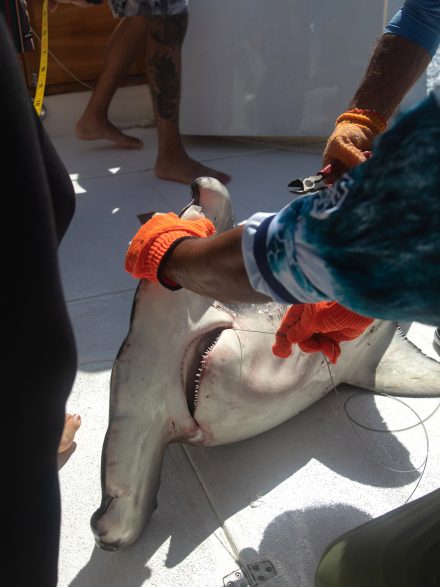
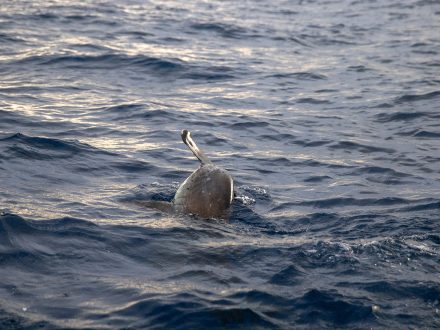
Lilly Molina ’27 had never slept on a boat before. By the time she woke up in the middle of the Pacific Ocean – six hours off the coast of Costa Rica – she had already spent the night battling seasickness, clutching her camera, and worrying whether she’d get the images she hoped for. Five minutes after stepping onto the deck at sunrise, a hammerhead shark surfaced beside the boat, confirming months of preparation and giving Molina firsthand access to an endangered species few reporters document alive.
The encounter came during Molina’s three-week reporting trip last summer to Costa Rica as a 2025 Pulitzer Center Reporting Fellow, where the journalism and media analytics double major investigated illegal hammerhead shark fishing and the legal loopholes allowing the endangered species to be caught and sold. For Molina, whose parents immigrated from Costa Rica, the fellowship offered a rare opportunity to report in her family’s home country – placing her not only in government offices and fishing towns, but also aboard a research vessel in international waters alongside marine biologists tagging hammerhead sharks.
“I was really worried about visuals,” Molina said of her investigation. “I was like, ‘How am I going to get a visual of a hammerhead shark? They’re all the way out in the ocean.’”
That anxiety followed her offshore. Molina was the only journalist on board, far from land, without cell service and with no easy way out if something went wrong. The physical toll hit quickly.
“I was severely seasick the first night,” Molina said. “Like, I’ve never been that pale in my life.”
Despite the discomfort, Molina never questioned why she was there, staying alert with her camera at the ready.
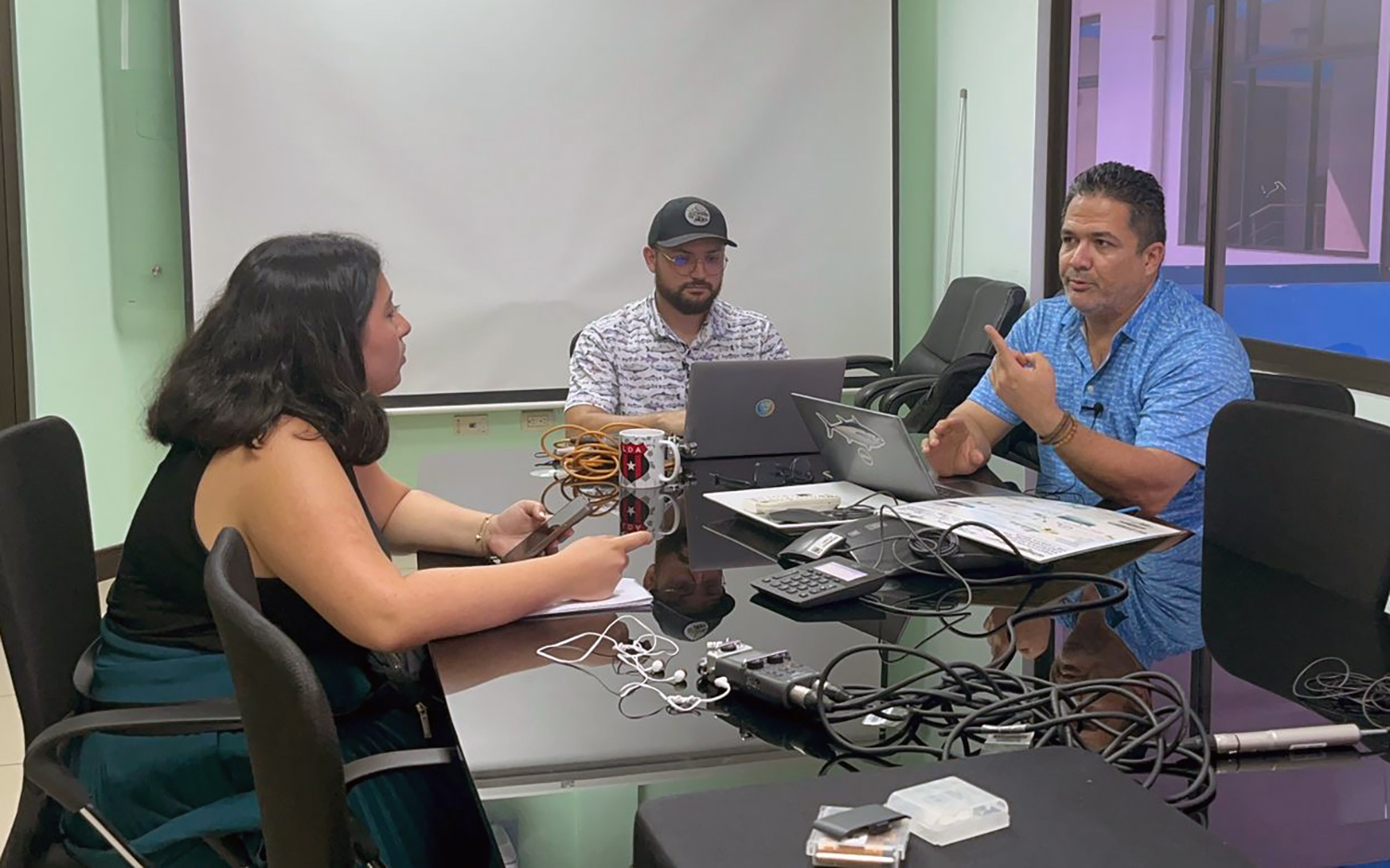
Those hours at sea were just one chapter in a much longer reporting journey – one that began with a phone call to family. The project took shape after a conversation with Molina’s aunt, Sophia Gamboa, who lives in Costa Rica and raised concerns about illegal hammerhead shark fishing that she felt was largely overlooked.
Nearly two years after that conversation, Molina’s reporting culminated in a Pulitzer Center–published investigation titled “Hunted and Hooked: Costa Rica’s Hammerhead Sharks Caught in a Loophole of Law and Survival,” an in-depth examination of how enforcement gaps continue to threaten the endangered species. Molina said her connection to the country shaped both the focus and the urgency of the work.
“Being Costa Rican is a central part of my identity,” Molina said. “I’ve returned regularly since I was very young to visit family, and I now hold dual citizenship.”
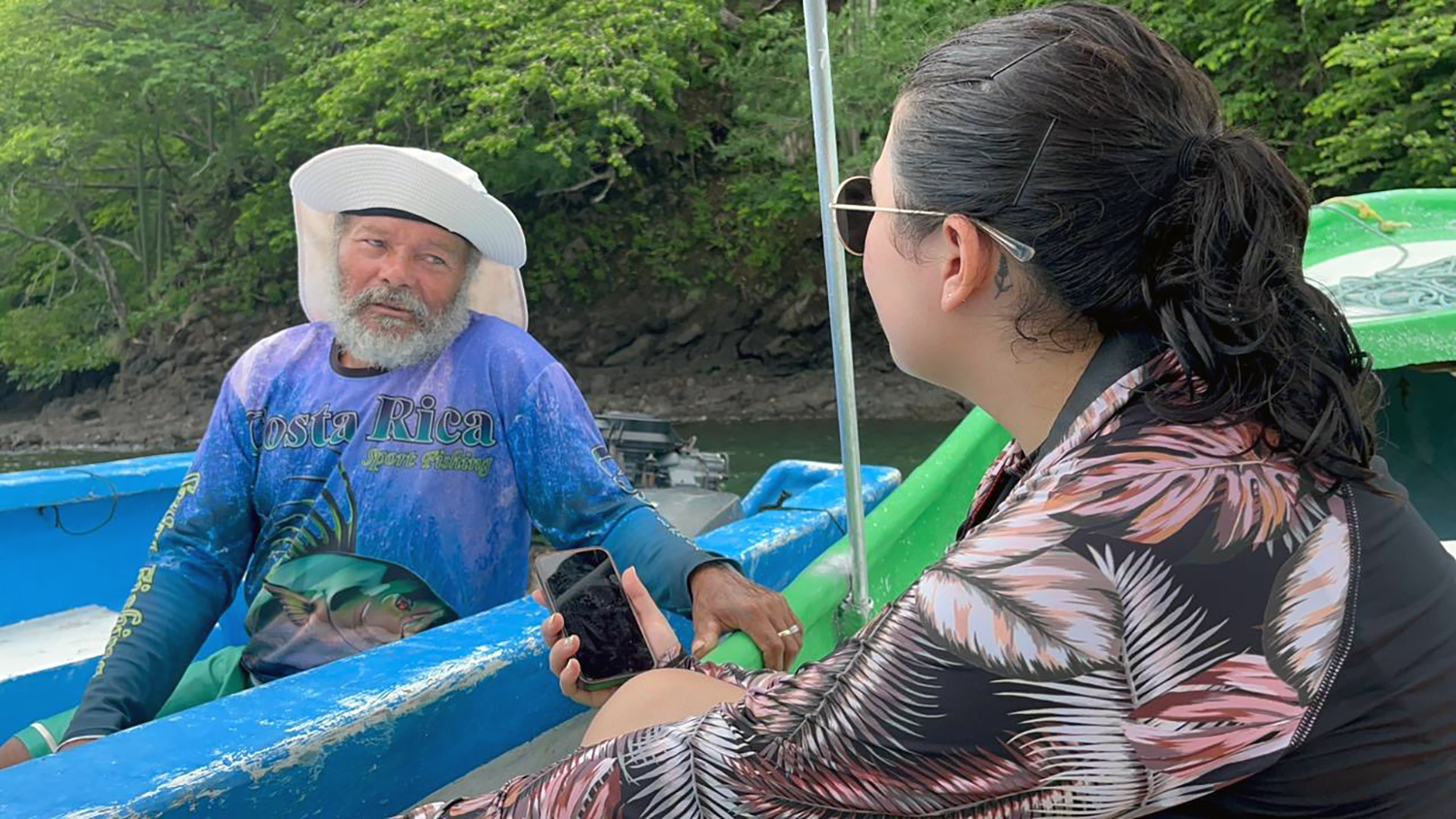
Throughout her three-week trip, Molina relied heavily on her aunt, who served as a translator during interviews with fishermen and local officials, and helped coordinate travel between coastal communities. That support allowed Molina to focus on reporting while gaining access she would not have been able to secure alone.
Molina’s reporting took her from government offices in San José to small fishing towns along the Pacific coast, before culminating far offshore with a team led by marine biologist Randall Arauz. “I was on my own reporting for about a week,” Molina said. “And then I was invited by Randall, whom I interviewed back in December (2024), to come out on the boat with him.”
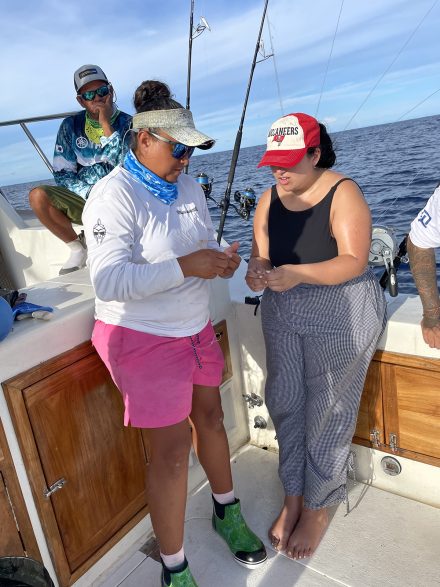
The plan was to tag thresher sharks. Hammerheads were never guaranteed. When a hammerhead finally appeared one morning, the tagging process unfolded quickly.
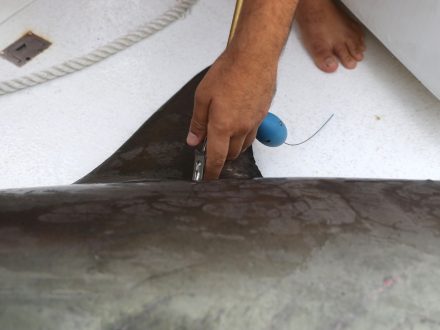
“They make an incision right near the fin,” Molina explained. “They put in the tag … and then it goes with the shark, and it will eventually come off and send all that data back.”
As the scientists worked, Molina remained on deck with the fishermen, documenting the moment. “They were like, ‘You have to come here. This is a good angle for a photo,’” she said of the crew. “They were really nice people.”
By the end of the trip, the team had tagged three hammerhead sharks.
For Molina, seeing the sharks alive and released underscored the stakes of her reporting. Hammerhead sharks are elusive and endangered, and encounters outside of fishing contexts are rare. The experience offshore made tangible what had previously existed only in interviews, documents and preparation.
“I’ve gone through a lot for this story,” Molina said.
The experience also reshaped how Molina understood the investigation itself. What began as a project focused largely on enforcement failures evolved into something more complex once she began interviewing government officials, scientists and fishing advocates.
“I truly don’t think that they’re bad people and don’t care about hammerhead sharks,” Molina said of the regulators she interviewed. “I think it’s more like there are three people monitoring over 2,000 boats.”
That realization shifted the reporting away from individual blame and toward systemic limitations, including understaffing, resource constraints and the challenges of monitoring Costa Rica’s extensive coastline. For Molina, that nuance became central to the final piece.
In the final days of the trip, Molina shifted from reporting to writing. “I actually wrote the entire article before I even left Costa Rica,” she said. She worked from her grandmother’s house – a familiar place she had visited since childhood – drafting the investigation at the coffee table. After the intensity of the fieldwork, Molina finished her story as rain fell outside, dampening the orchids lining her grandmother’s backyard.
About Pulitzer Center’s Campus Consortium
Elon is a partner in the Pulitzer Center’s Campus Consortium, a network of colleges and universities that support the center’s mission to promote journalism on critical global issues. Along with travel funding, the fellowship provides mentorship, journalism resources, and the opportunity to present work at an annual fall conference in Washington, D.C. Student projects are published in major media outlets nationally and internationally, as well as on the Pulitzer Center website.
In fact, Molina’s main report was published by Latina Republic, a U.S.-based nonprofit media and research organization focused on bridging understanding between the U.S. and Latin America.