


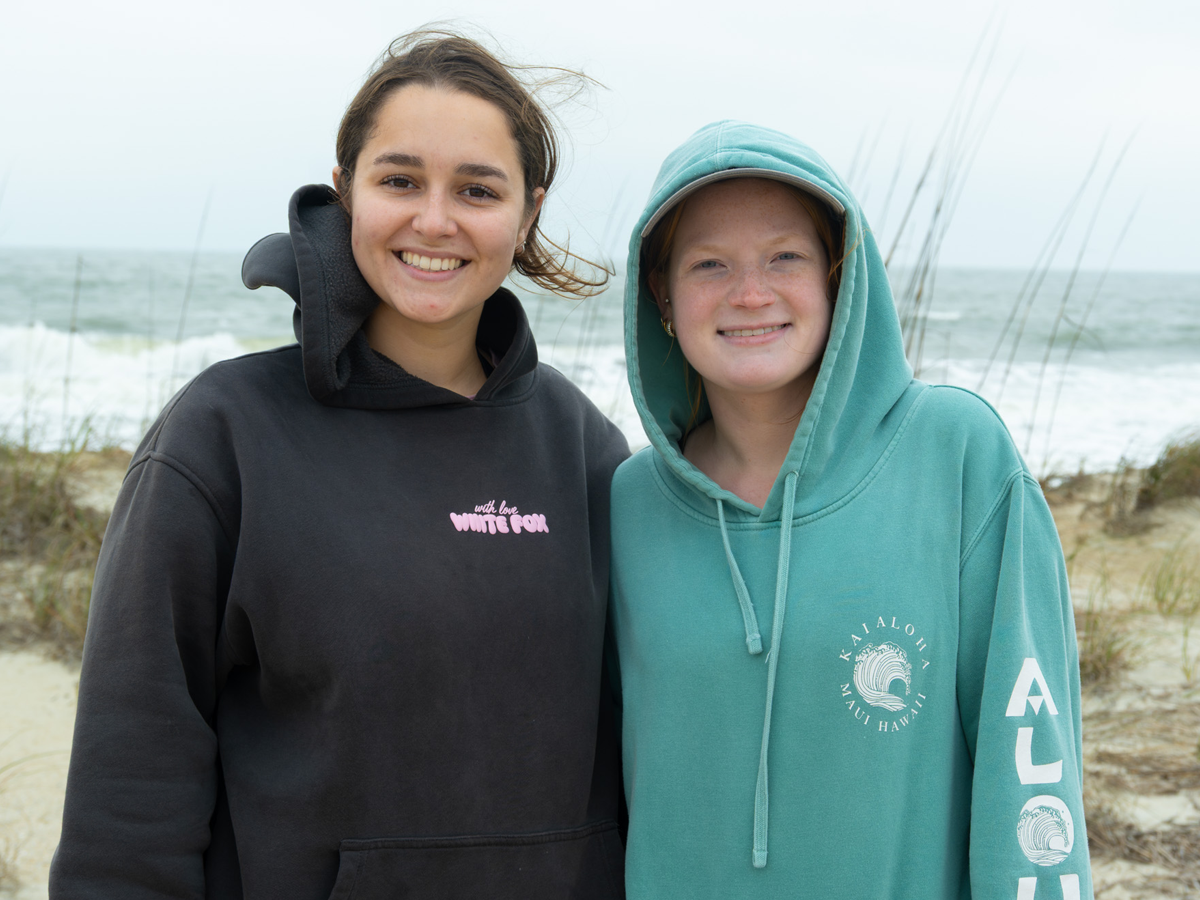
Students reflect on how sustainability influences their daily choices, relationships and future goals following an Alternative Spring Break experience.
Sustainability isn’t just about environmental health. It’s about how we live, connect and care for ourselves, each other and the communities around us. As students reflect on their participation in the Alternative Spring Break trip to Savannah, Georgia, they explore how small, intentional choices support holistic well-being through HealthEU’s six dimensions.
Community Well-Being: How has sustainability helped you feel more connected to a community—either on campus or beyond?
Finn Hughes ’28: On campus, it’s helped me connect with people who share the same values and passions, whether that’s for the environment, animals or sustainability in general. It’s helped me build friendships, but it’s also shaped my moral compass and pushed me to get more involved beyond campus. I’ve had opportunities I didn’t even know were possible, like trips where we can go to the beach, do cleanups and take part in volunteer work.
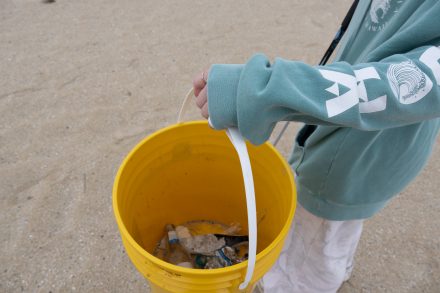
Sophie Frank ’29: On campus, Eco Reps and the Office of Sustainability host a lot of events, and since many of my friends are involved in organizing them, I’m able to show up and participate. It feels like we’re all contributing to sustainability on campus as a community, and that’s something that really brings us together. There’s always something going on.
Grace Smith ’27: I’ve been really involved with the Sustainability LLC, especially last year as an RA. I got to see the community we built with the first-year students on my floor. It gave us a way to connect around something bigger than ourselves while still making a real impact in small ways. That shared commitment really shaped a strong sense of community on campus.
Lulu Welch ’28: Between my classes, especially the more environmentally focused ones, and this trip, it’s nice to be around people who care about the environment as much as I do. It can be hard to find people who also care about sustainability, even though it is such an important issue right now.
Emotional Well-Being: In what ways does practicing sustainability support your emotional well-being or sense of purpose?
Hughes: It definitely hurts my emotional well-being to see the things that are happening to our planet. But practicing sustainability also helps me with my emotional and social well-being. Practicing activities, like cleanups and seeing the positive impact that I can have on the planet, helps me to feel rejuvenated.
Frank: The Earth is very valuable, and honestly, it feels good to be able to take care of it and do what I’m supposed to do. When you make sustainable choices, you influence and engage others. It is rewarding.
Smith: It makes me feel like I’m part of something larger than myself. We all have to be a part of promoting sustainability, educating ourselves and others and living a sustainable lifestyle. All those little things add up, especially when a large group of people is doing them. It feels good to support the well-being of others and the world around me.
Welch: Sustainability is important because it’s how we preserve our environment. It’s something I practice every day. If I didn’t, I’d feel like I wasn’t practicing what I preach and I would be a hypocrite.
Seeing people not care about the environment can be upsetting, because this is our Earth and we need to take care of it. But at the same time, seeing people who do care gives me hope for the future. It makes me emotional because it reminds me that there are people who are paying attention and trying to make a difference.
Physical: Well-Being: What are some sustainable choices you make in your daily routine that also support your physical health?
Hughes: I try to use less plastic, which is good, because it limits the microplastics in your body. I’m also vegan and eat homegrown and fresh produce. I also try to avoid processed foods.
I also try to limit my emissions by walking or biking instead of driving whenever I can.
Frank: I am big on spending time outdoors, walking outside and not using single-use plastic. I am also a vegetarian, which is something that affects my day-to-day lifestyle and overall helps the environment.
Smith: I’ve really been into spending more time outdoors and supporting my national and state parks. When I am outside, I try to pick up any trash and keep the environment clean.
Welch: I always pick up trash when I see it on the ground, and I try to avoid unnecessary plastics by using reusable items. I also try to shop for organic food.
I do a lot of gardening, mostly flowers. I grew up helping take care of my yard, and my mom loves growing flowers, so that’s something I’ve always enjoyed. I’ve tried growing vegetables too, but being from Massachusetts, that didn’t always go very well. I also avoid using pesticides or anything that could be harmful to the environment.
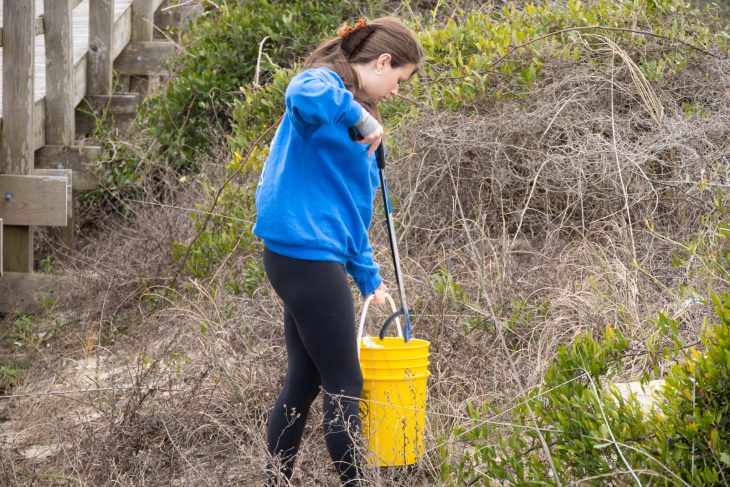
Social Well-Being: How have conversations or shared experiences around sustainability influenced your relationships with others?
Hughes: I’m able to relate to others, whether through protests or shared involvement in sustainability, which helps me feel like I’m not alone. It can be overwhelming at times. It’s easy to feel like one person can’t make a difference. But when you’re surrounded by others who care, it reminds you that your actions matter and together you can get more done, take action and create more opportunities to make an impact.
Frank: Through my major, I’ve been able to connect with a lot of people and build close relationships. I’ve also done volunteer work in western North Carolina, where I met new people. Experiences like this trip and the work we’re doing right now, are already helping me to build new connections.
Smith: Even with this trip, I’ve built a lot of friendships. Coming together in support of a common cause, like sustainability, has helped me build relationships with others who are working toward that same goal.
I came into this trip not knowing anyone, and I’m leaving with friends, all because we shared the same purpose: promoting sustainability.
Welch: I think a lot of people don’t fully understand the importance of sustainability, and that’s the first step. It includes having conversations and educating others so they can better understand the impact of sustainability.
There are plenty of people who don’t really believe in sustainability, which I find funny, because there’s so much science and research that shows why it matters. It’s how we keep our environment clean, healthy and moving forward.
Financial Well-Being: How has sustainability shaped the way you think about spending, saving or using resources?
Hughes: Even when I go to the store, I’ll pick something up and then stop and think, ‘Wait, is this good for the environment?’ It’s made me more aware of where things come from and what happens after I use them. I think documentaries and experiences like seeing trash on the beach really put that into perspective. It makes you realize how your everyday choices add up and what they actually mean.
Frank: I try not to use single-use plastic. That’s one of the things I try to do the most. When I go to the store, I try to avoid plastic bags and water bottles as much as I can. If I do use them, I make sure to recycle whenever possible.
Smith: I’ve really tried to buy less plastic and throw away less. I avoid things like individually wrapped snacks, like Goldfish. It’s the little things that add up.
That’s really how it has impacted me. I think more about what I’m using and what happens to it after. Where is the garbage I produce going? Is it being recycled properly? Is it actually being turned into something else?
I refuse to use single-use plastics, like one-use water bottles. I’m not a fan. I’ve also been trying to bring my own bags every time I grocery shop. All of those small choices are ways I’m trying to stop contributing to overconsumption and the mass production of plastic, and really downsize my impact.
Welch: I only use reusable products and try to avoid food that is overly processed or full of hormones by shopping for organic foods. Overall, I try to live my life as sustainably as possible.
Purpose Well-Being: How has your understanding of sustainability influenced your sense of purpose or the impact you want to make after Elon?
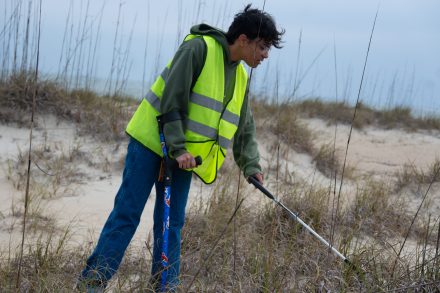
Hughes: Sustainability has shaped a lot of my purpose because I’m really passionate about it. It’s changed me to focus more on action rather than being passive, telling people what needs to be done. Getting hands-on has made me more confident and more passionate about getting involved, whether that’s through school boards, larger organizations or even speaking opportunities.
It’s also helped me realize that I have a purpose that’s bigger than myself. I am able to talk about sustainability in ways that feel more accessible. Sometimes it can seem distant or overwhelming, but bringing it back to everyday actions makes it feel more real and something people can actually connect to.
Frank: With my major, I want to go into corporate sustainability, more on the business side. My goal is to work with larger companies to find ways for them to become more sustainable, while also helping engage businesses and the public in making choices that better support our environment.
Smith: I want to live a sustainable life. As a nursing major. I see there’s so much single-use plastic, things being thrown away in the healthcare industry. I would love to someday make an impact in the healthcare system and make it more sustainable. I want my own life to be sustainable, but there’s more work to be done toward a bigger cause here. Many of our industries aren’t promoting sustainability, and I want to make an impact there.
Welch: For me, sustainability has given me a great sense of purpose. I grew up in a town that was big on recycling. You could even get fined if you didn’t do it. Because of that, my dad has always been a big recycler and it became something that was important to me, too.
I’ve also always been interested in science and biology, so over time those interests started to align with my goals. Now, I want to go into research focused on sustainability or ecological conservation.
Through this shared experience, students reflected on how sustainability isn’t just a single action. It’s a mindset shaped by everyday choices that support the environment and strengthen their own well-being across the six dimensions of well-being.