


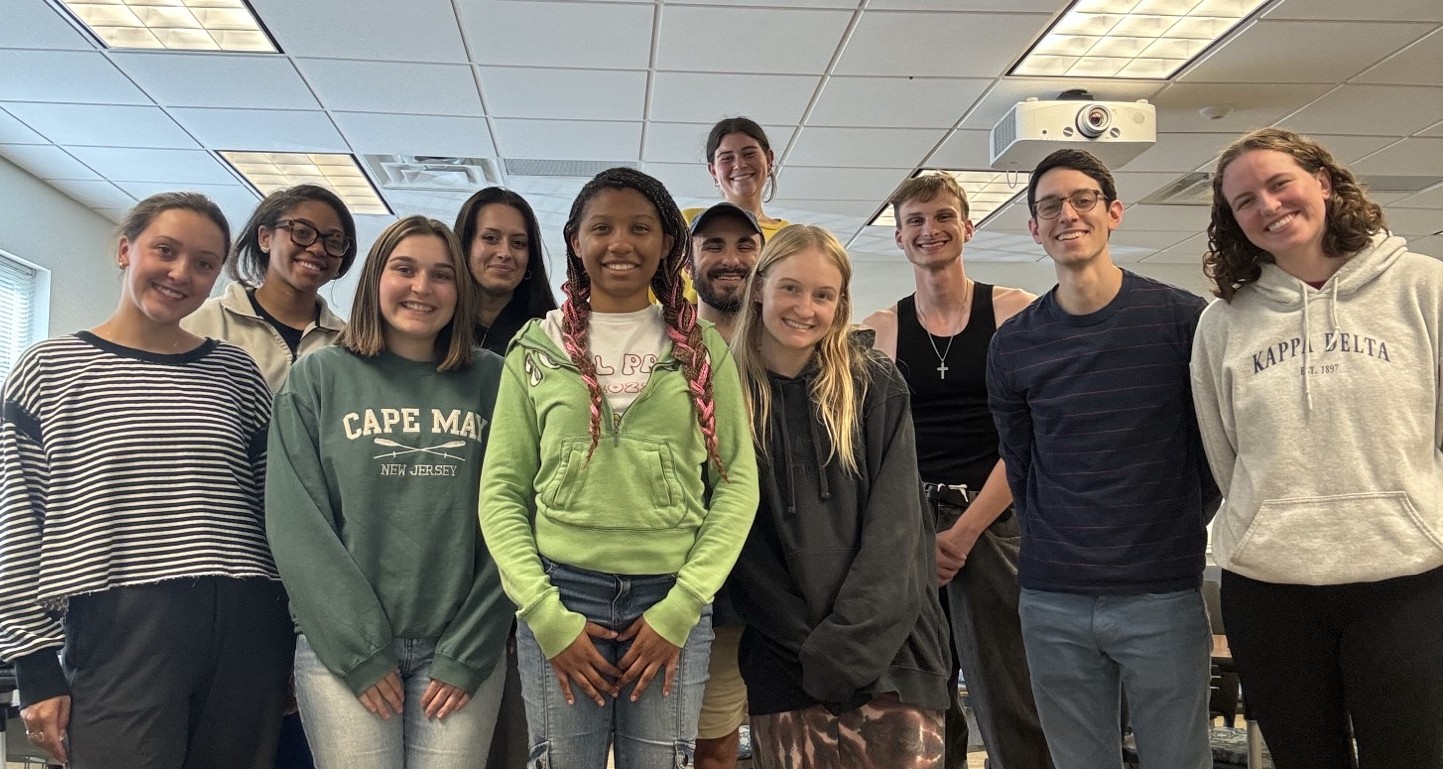
Students in the Designing and Assessing Human Services Programs course received a grant to help the formerly incarcerated gain and sustain employment.
Students in Elon University’s Human Service Studies program were recently awarded a $2,000 grant to Sustainable Alamance, a Burlington nonprofit that helps formerly incarcerated men and women return to the community and find lasting employment.
The funding was awarded through HSS 4110: Designing and Assessing Human Services Programs, a senior-level course taught by Tony Reyes, associate professor of Human Service Studies. In the course, students learn how to design programs that address social problems by conducting needs assessments, developing interventions, identifying necessary resources and evaluating program effectiveness.
Four Human Service Studies students — Jack Bull ’26, Haleigh Cephus ’26, Margaret Crawford ’26, and Eden Redmond ’26 — wrote the grant proposal that led to the award. Bull, who was interning with Sustainable Alamance at the time, brought firsthand knowledge of the organization’s work to the group’s research. Their proposal recommended funding a program to help people leaving incarceration understand the conditions of parole, a gap the students identified while researching reentry services in Alamance County.
Parole conditions are often complex and violating them can send someone back to prison for reasons unrelated to new criminal activity. The students proposed a series of monthly classes covering what counts as a violation, how to navigate parole requirements, and how to use the technology needed to pay parole fees. The program would be added to the life-skills courses and in-jail classes Sustainable Alamance already provides.
Sustainable Alamance has worked in reentry for 17 years and serves as the Local Reentry Council for Alamance County. The organization was founded by Phil Bowers, who continues to lead it.
“Students in this course don’t write a hypothetical proposal for a hypothetical organization,” Reyes said. “They identify a real gap, work with a real partner, and make a funding decision that has consequences. That changes how carefully they think.”
The grant funding was made possible through a gift from an Elon alumna who supports the Learning by Giving model, an educational approach that allows students to learn philanthropy by making real funding decisions. The model has been championed at Elon by Bud Warner, emeritus professor of Human Service Studies, who advocated for incorporating hands-on philanthropy into undergraduate education.
Through the project, students gained experience researching community needs, working with local partners, and developing a professional grant proposal.