


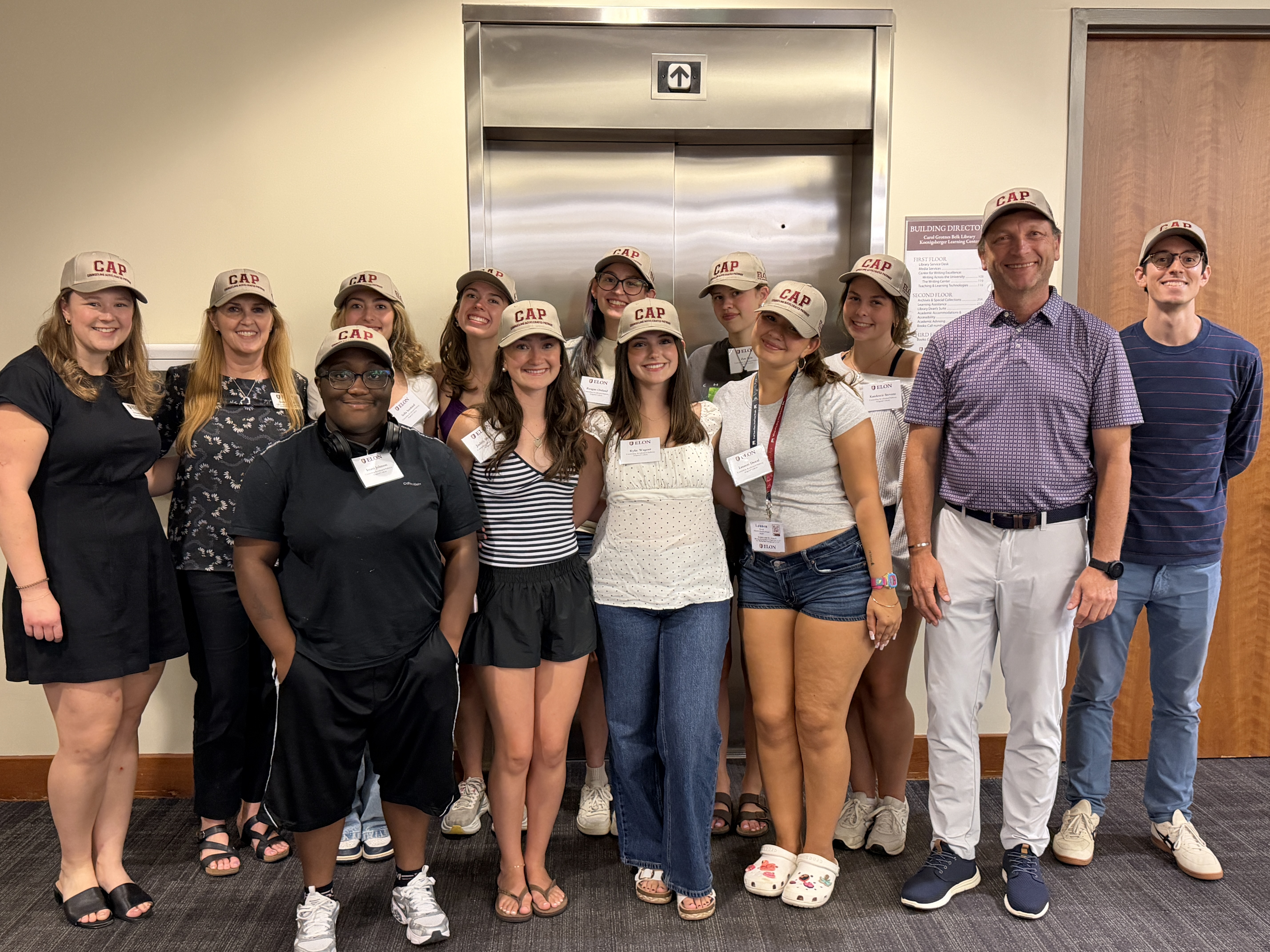
Elon’s new 3+2 Counseling Accelerated Pathway (CAP) is officially underway.
Elon’s Clinical Mental Health Counseling program welcomed the inaugural cohort of students in its new 3+2 Counseling Accelerated Pathway (CAP) this fall, launching a pathway designed to help undergraduate students begin preparing early for graduate study and careers in counseling.
CAP provides eligible Elon undergraduates with the opportunity to complete their undergraduate degree and the Master of Science in Clinical Mental Health Counseling on an accelerated timeline. But the program is designed to offer much more than a faster route to a graduate degree. From the beginning, CAP students are invited into a community where they can explore the counseling profession, build relationships with faculty and peers, and begin developing their professional identities well before entering the graduate phase of the program.
Kicking Off the CAP Community
The inaugural CAP cohort gathered in Belk Library on August 24 for the program’s first CAP Kickoff, an opportunity to meet one another, connect with faculty and advisors and talk about what the next several years will look like.
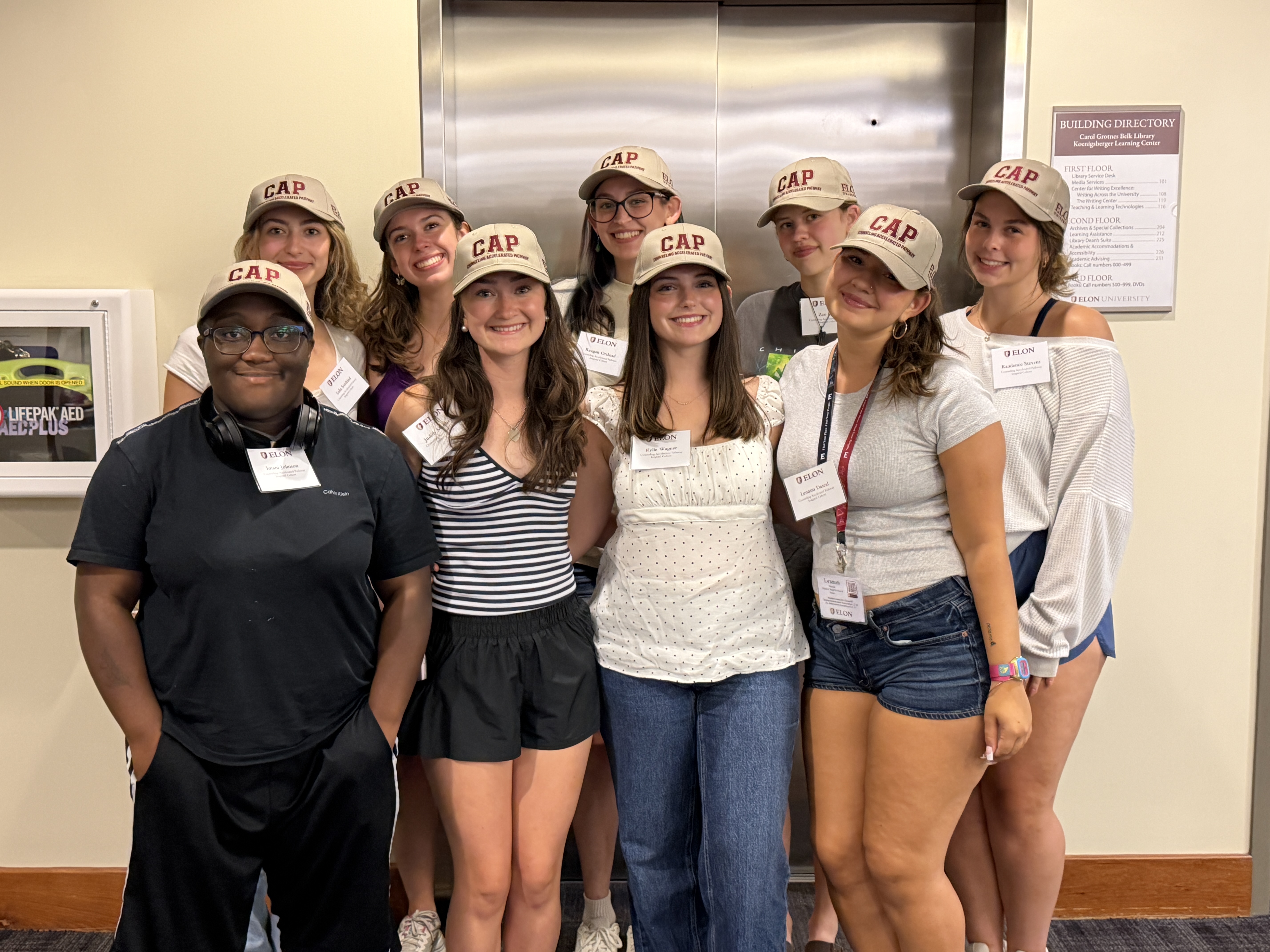
The CAP program is led by an interdisciplinary faculty team representing the undergraduate programs from which students enter the pathway as well as the graduate counseling program: Judy Folmar, interim program director of Clinical Mental Health Counseling; Bilal Ghandour, associate professor of psychology; Amanda Davis, assistant professor of psychology; and Tony Reyes, associate professor of human service studies.
The kickoff brought students, staff and faculty leaders together as a community for the first time. Students learned more about the CAP experience, upcoming opportunities, advising and ways they can begin preparing now for graduate study. Steve Folger from the School of Health Sciences also welcomed the CAP students. Just as importantly, the gathering gave students an opportunity to begin forming relationships with others who will travel a similar path.
Although CAP students remain fully engaged in their undergraduate majors and the broader Elon experience, they are also beginning to see themselves as future members of the counseling profession.
Advising for both the present and the future
Individualized advising is a central part of the CAP experience. Students are paired with CAP faculty advisors who can help them navigate their undergraduate programs while also keeping the accelerated counseling pathway in view.
With faculty leadership spanning Clinical Mental Health Counseling, Psychology, and Human Service Studies, students benefit from advising that bridges their undergraduate education and future graduate training.
These conversations extend beyond simply determining which course to take next. CAP advising provides space for students to think intentionally about their academic progress, interests, experiences, professional goals and readiness for graduate-level counselor preparation. As students progress, advisors will help them connect the pieces of their Elon experience—from coursework and co-curricular involvement to professional development and their eventual transition into the Master of Science in Clinical Mental Health Counseling program.
Beginning Professional Development Early
CAP students will also have opportunities throughout the year to begin exploring what it means to become a professional counselor. Planned experiences will bring students together with CMHC faculty, graduate students, practitioners and community partners for conversations and activities related to the counseling profession.
Professional development will include opportunities to explore counseling specialties and career paths, connect with professionals in the field, develop professional communication and networking skills, learn about graduate school preparation, and consider wellness and sustainability in the helping professions.
Students will also begin building an emerging counseling portfolio, providing a place to document meaningful experiences, reflect on their developing interests and skills and see their professional growth over time.
The goal is not for CAP students to have their professional identities figured out as undergraduates. Instead, CAP creates intentional opportunities for them to ask questions, explore possibilities, make connections, and gradually discover the kind of counselors they hope to become.
Building the path together
As the inaugural cohort, this year’s CAP students are not simply participating in an established program—they are helping shape what the CAP experience will become for future Elon students.
The kickoff was only the beginning. Through advising, community gatherings, professional development and ongoing connections with the Clinical Mental Health Counseling program, CAP students will continue building relationships with one another, their faculty mentors, and the profession they are preparing to enter.
-
Judy Folmar
Interim Program Director and Chair of the Clinical Mental Health Counseling Program and Associate Professor of Human Service Studies
-
Bilal Ghandour
Associate Professor of Psychology
-
Amanda Davis
Assistant Professor of Psychology
-
Tony Reyes
Associate Professor of Human Service Studies and Faculty Associate for Academic Accommodations and Accessibility