


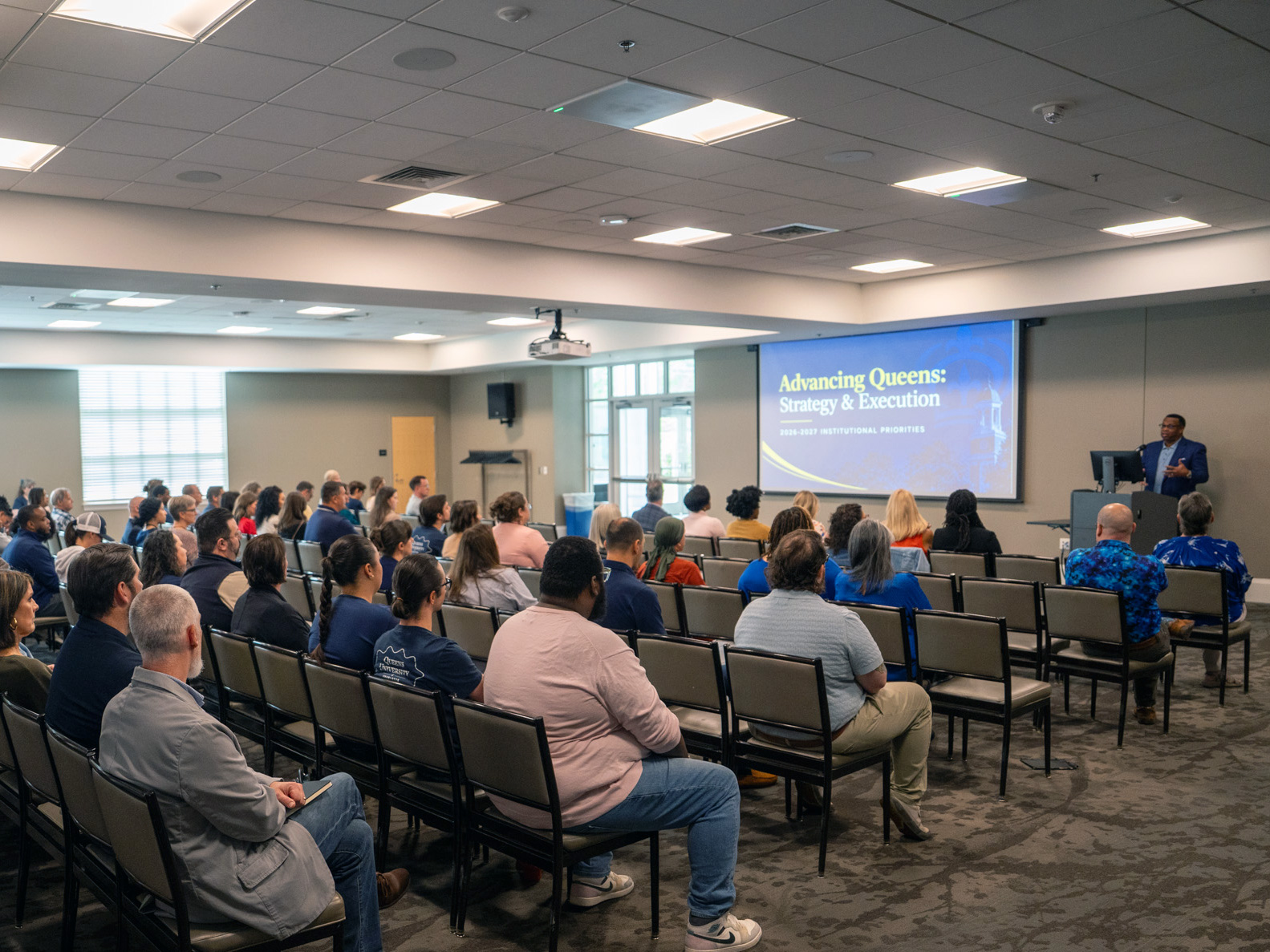
At an Oct. 9 campus forum, Queens University of Charlotte leaders detailed 2026–27 strategic priorities focused on academic alignment, student well-being, regional integration and philanthropic growth.
A campus-wide forum at Queens University of Charlotte on Oct. 9 brought faculty and staff together for a conversation on the university’s future, laying out institutional priorities for the 2026–27 academic year and detailing ongoing integration efforts with Elon University.
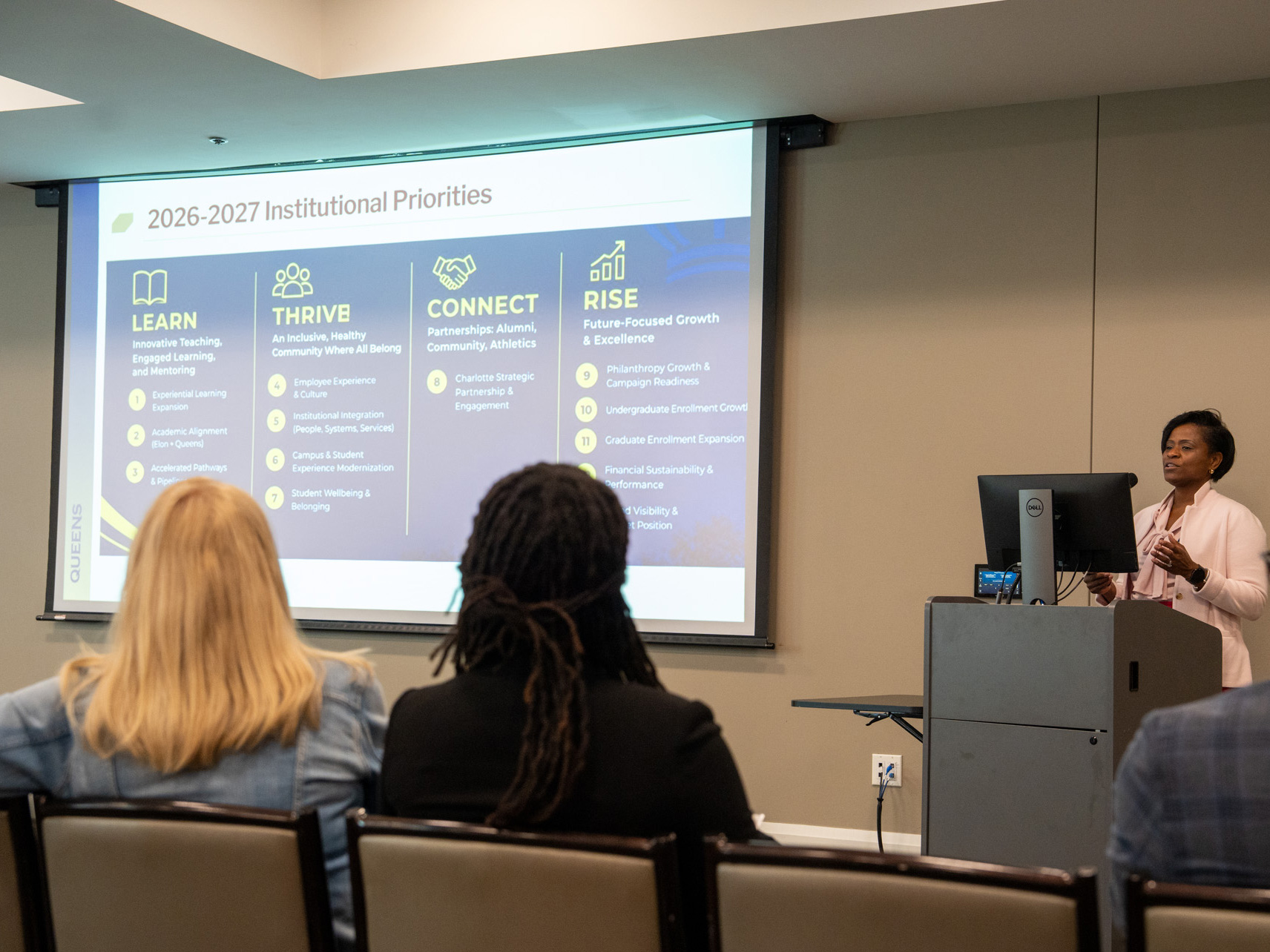
Led by members of the Queens senior leadership team, the event focused on the year’s institutional priorities organized under four pillars of the strategic plan: Learn, Thrive, Connect, and Rise. Going forward, the development of annual departmental, divisional, and institutional priorities will align faculty and staff across the university in advancing these themes.
“These four pillars represent the foundational roadmap for our merged institution,” said Acting President Jesse Cureton. “Bringing faculty and staff together for these forums allows us to be intentional about our shared progress, ensure transparency and keep our momentum moving forward across both campuses.”
Strategic framework: The four pillars
- Learn (Innovative Teaching, Engaged Learning, and Mentoring): Focuses on experiential learning expansion, academic alignment between Elon and Queens, and accelerated pathways and pipelines.
- Thrive (An Inclusive, Healthy Community Where All Belong): Prioritizes employee experience and culture, institutional integration across people, systems, and services, campus and student experience modernization, and student well-being and belonging.
- Connect (Partnerships: Alumni, Community, Athletics): Focuses on Charlotte strategic partnership and engagement to position the institution as a regional hub for talent, innovation and impact.
- Rise (Future-Focused Growth & Excellence): Encompasses philanthropy growth and campaign readiness, undergraduate enrollment growth, graduate enrollment expansion, financial sustainability and performance, and brand visibility.
Learn: Calendar alignment and academic innovations
Provost Sarah Fatherly detailed operational shifts designed to enable academic collaborations between the two campuses, beginning with undergraduate academic calendar alignment in January 2027. The shift introduces a three-week Winter Term course, leading into a synchronized spring semester.
Fatherly also shared encouraging news on student retention, noting that undergraduate retention has rebounded to approximately 76%. The university has already launched new academic cohorts in nursing, business, communications and a re-envisioned honors fellows program that will build on this momentum.
Fatherly noted that purposeful cohorts create a sense of belonging by surrounding incoming students with dedicated mentors and peers from day one.
“You’re connected with a peer set, and you’re connected with a staff or faculty member who knows you,” Fatherly said. “This is one way we can help accelerate retention in a way that’ll continue to improve our results.”
Thrive: Enhancing the student experience
Vice President for Student Affairs and Dean of Campus Life Amber Perrell Slack detailed plans to adopt Elon’s HealthEU framework to support student well-being, belonging and overall campus life. The initiative brings together programs, resources, and six dimensions of well-being to empower the campus community and foster a healthier, more connected experience.
Turning to campus facilities, Slack highlighted the initial steps being made by the Campus Master Plan Committee to modernize the physical student spaces on campus.
“We’ve already started looking at ways that we can improve facilities for our residence halls and create more spaces for our students to have opportunities to connect with each other,” said Slack.
Connect: Positioning Queens as a strategic partner in Charlotte
Chief Integration Officer Jeff Stein emphasized that the university’s future growth relies on expanding deep civic, cultural and workforce development across the region. The primary focus under this theme is positioning the merged institution as a strategic partner and gateway for opportunity in Charlotte by strengthening employer relationships and talent development, advancing experiential learning opportunities for students in the community, and serving as an intellectual and cultural hub through programs like the Queens Learning Society.
“For the university to be strong, we have to be engaged in Charlotte, and Charlotte has to be engaged with the university,” said Stein.
Rise: Growth through philanthropy
Queens’ Vice President for University Advancement Lori Ann Summers outlined how strategic philanthropy will fuel the university’s academic and operational ambitions, pointing to the importance of support through the Queens Fund and expanding programs and corporate partnerships as critical drivers.
Summers emphasized that feasibility studies are already underway to lay the groundwork for a historic capital campaign with Elon designed to build long-term scholarship support, capital improvements and endowment capacity.
Looking ahead: Sustaining campus dialogue
Closing the forum, university leaders emphasized that ongoing communication remains essential as Queens and Elon continue aligning their academic, operational and philanthropic goals. Campus leadership plans to host regular forums and town halls throughout the academic year to keep faculty and staff informed on key integration milestones and gather feedback as initiatives progress.
“Feedback’s a gift and we get a lot of it, but I welcome it so that we can be responsive to our campus community,” said Chief Operating Officer Kenitra Horsley. “We want to make sure this dialogue continues as we do this work together.”