


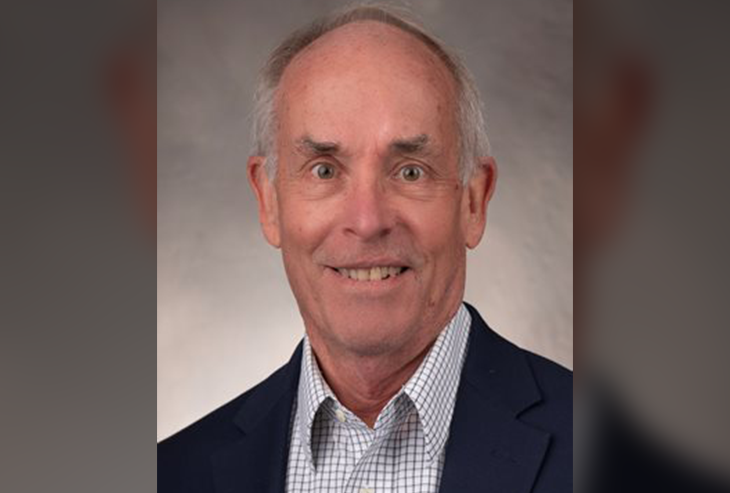
The director of Elon's Imagining the Digital Future Center has become affiliated with the InnovateUS research team at Northeastern, studying the ways that public servants use artificial intelligence.
Lee Rainie, director of Elon’s Imagining the Digital Future Center (ITDF) has joined a project of Northeastern University’s Burnes Center for Social Change, gathering and analyzing tens of thousands of survey findings from state and local public servants who take courses and workshops offered by the Northeastern’s InnovateUS team.
Rainie has been named a senior fellow to help shape and publish research findings from those surveys and other encounters with civil servants. The goal is to learn more about the ways government workers use AI and the impact on the workings of democracy.
Rainie was a main writer for Northeastern’s Observatory of Public Sector AI new report: “From Curiosity to Capability: What we learned from training 250,000 public servants on AI.”
Some of the key findings:
- Many public professionals are just getting started with understanding and using GenAI.
- The biggest barriers to using GenAI in government are not tied to resistance.
- Leadership knowledge gaps about GenAI are a primary bottleneck to its adoption and effective use.
- Public professionals primarily use AI for information and communication tasks, such as research, drafting, editing, and summarizing.
The report was covered in the Boston Globe and other New England media and will become the anchor of several dozen presentations the group gives to government leaders, public professionals and civil society groups.
Rainie’s affiliation with the Burnes Center will bring benefits to the ITDF Center. ITDF and the Burnes Center will co-publish the reports he helps create and promote them to the media and other audiences as joint efforts. He will become one of the Burnes Center’s spokespeople at conferences, in the media and in web events like podcasts and YouTube webinars.
“This is an exciting chance for me to be present at the creation of something that we hope will become an important reference for those who work in the public sector and those who care about government performance,” Rainie said. “This kind of research fits perfectly with the ongoing studies of the Imagining the Digital Future Center, such as our recent reports “Building a Human Resilience Infrastructure of the AI Age,“ “Human Purpose in Peril” and “The Meaning of Work in the AI Age.“ Ultimately, the great hope at the Burnes Center is that researchers here at Elon and around the country will use these findings from our Observatory in their own scholarship and will want to work with our datasets themselves. I hope to hear from students or faculty members who would like to become involved in the next round of research the Observatory undertakes.”
Rainie says the next wave of research could involve such things as truly longitudinal studies in which specific public servants are tracked as they think about using AI in their jobs; studies that combine these survey findings with administrative records collected by state and local government; and studies that explore the impact of AI use by government employees on such critically important public purposes such as government performance and citizen engagement on policy issues.