


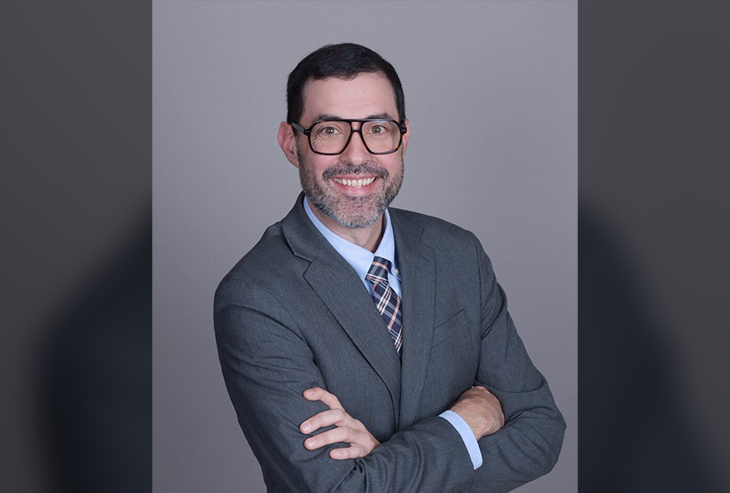
Elon Law alumnus Jonathan Perry, Western Region manager for Legal Aid of North Carolina and managing attorney at Legal Aid’s Foothills Office in Morganton, received the North Carolina Bar Association’s Greenblatt Outstanding Lawyer Award at its annual meeting June 25-28.
Jonathan Perry L’10 recently received the North Carolina Bar Association’s 2025 Greenblatt Outstanding Lawyer Award in recognition of his leadership and legal support for residents in the aftermath of Hurricane Helene.
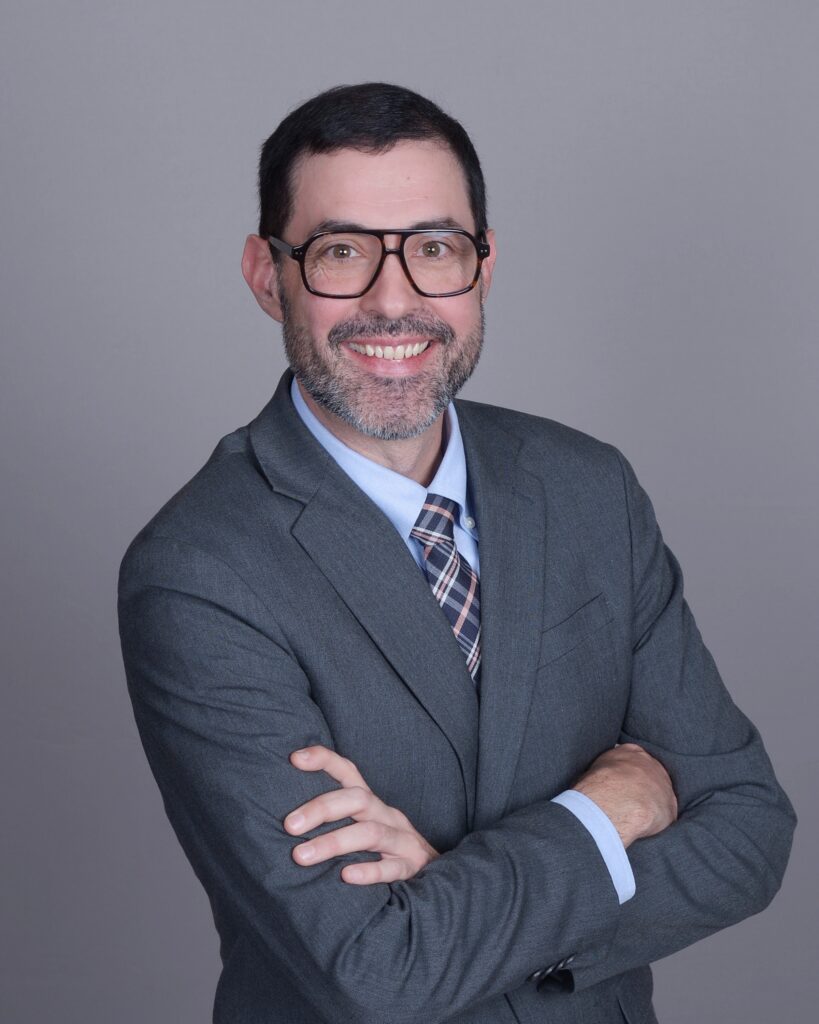
Perry serves as Western Region manager for Legal Aid of North Carolina and managing attorney at Legal Aid’s Foothills Office in Morganton. He helped lead Legal Aid’s efforts to assist individuals and families in crisis — facing housing loss, seeking disaster benefits and missing documentation after the storm. Legal Aid became the first law firm in the country granted access to assist clients within a Red Cross shelter.
The Bar Association’s annual award is presented to a legal services program lawyer for exemplary contributions in meeting the needs of North Carolinians in poverty. It honors Deborah Greenblatt, who led Carolina Legal Assistance for two decades. Perry received the award during the association’s annual meeting held in Asheville, North Carolina, June 25-28.
“I’m honored by the award, but I think it could have gone to any number of deserving people — like the librarian who came to work unshowered after four weeks without power, just so people would have a place to go,” Perry said. “It’s about community. I’ve seen people band together in places most have never heard of.”
Perry first interned with Legal Aid while a student at Elon Law and joined the organization full-time after graduation. He recently reflected on the experience of serving clients across western North Carolina.
How were you and Legal Aid involved in assisting people in the aftermath of Hurricane Helene?
After the storm, and together with Legal Aid’s Disaster Relief Project, we went into mountain communities with no idea what to expect. People were coming in traumatized — not just losing possessions but their entire homes. Honestly, a lot of it was just being there to listen. I spoke with a homeless veteran who had watched five people die. Others had lost family members and neighbors. The trauma was immense.
We helped people in urgent need: families with nowhere to go, people trying to complete FEMA or disaster unemployment applications. Some would drive 20 or 30 miles just because we had a computer and could help them navigate the forms. Many said they just weren’t comfortable with technology: We were often typing for them.
Legal issues arose that I had never encountered. For example, if the land beneath your mortgaged home is gone, what happens to the loan?
What’s important to you about Legal Aid’s work? What drew you to it, and what keeps you there?
I tell my staff, “You may be the first person to empower this client.” Our clients often live in poverty, may be survivors of abuse, or are stuck in substandard housing. We strive to be excellent attorneys. We want judges to respect our work. We advocate zealously — for free.
In a time of austerity, we serve a critical public good. Judicial efficiency, access to justice, a voice for the voiceless — we’re free legal help when organic milk is $10 a gallon. This is a calling. We don’t expect to be millionaires. And we see firsthand what our clients go through. It’s a privilege to help.
You describe your work as a calling. When did you first feel that call?
I studied at North Carolina State University and was involved in poverty issues. Elon Law offered one of the few programs in nonprofit, pro bono, or poverty law.
Other schools didn’t offer that emphasis. Elon helped me get grants, practice certifications and experience. I felt supported every step of the way, from faculty to classmates. There was a strong investment in public interest work, and I think that investment is paying off.
What do you want people to know about the storm recovery?
The people of the mountains are strong. They’re not looking for charity. I remember one woman in Mitchell County — she’d had no power for a week but somehow came in with her hair done, dressed nicely. I offered her a Diet Coke. She said, ‘I don’t take charity.’ I said, ‘This isn’t charity — it’s hospitality.’ Then she accepted it.
They’re tough. They love their communities. They’re just looking for a fair shot and a system that works as hard for them as they do for their families. And the biggest takeaway? I haven’t heard anyone complain. Not once. I’ve seen loss, trauma, people fighting red tape — but no one complains. That’s the character of the mountains.