


Faculty from the School of Communications engaged with peers from around the world, contributing research and insights across multiple sessions. Discussions spanned topics such as artificial intelligence, press freedoms, personal branding, and well-being in the communications industry.
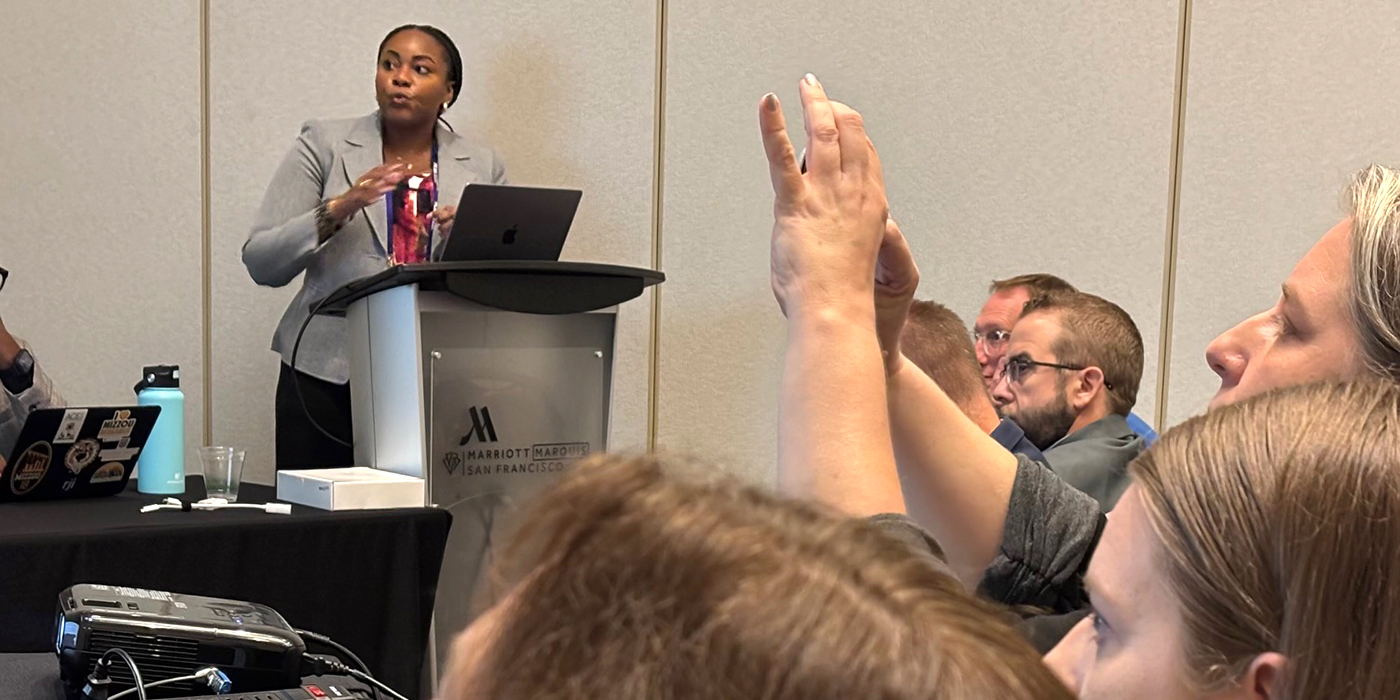
Several members of the School of Communications traveled to San Francisco Aug. 6-10 to participate in the 108th Annual Association for Education in Journalism and Mass Communication (AEJMC) Conference.
Elon faculty took part in a variety of roles — presenting original research, leading panel discussions, moderating sessions, and collaborating with colleagues from across the globe. Among the highlights, two faculty members earned second-place faculty research awards.
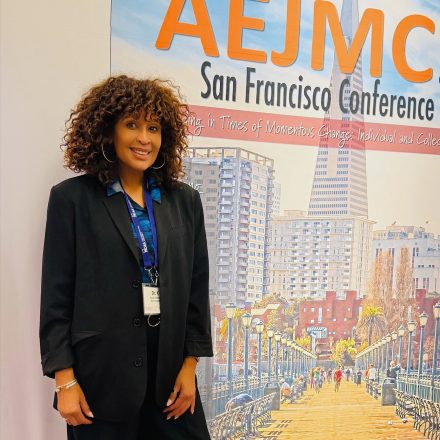
Shanetta Pendleton, assistant professor of strategic communications, was recognized by the Scholastic Journalism Division for her paper “Identity-Based Differences in Journalism and Communication Students’ Sense of Belonging Amid Attacks on University DEI,” co-authored with Rhonda Gibson of the University of North Carolina at Chapel Hill.
Vanessa Bravo, professor of strategic communications and assistant dean of the School of Communications, earned honors from the International Communication Division for her paper “Costa Rican Journalism at a Crossroads: Emerging Concerns Over Press Freedoms and Economic Precarity.” The paper was co-authored with Celeste González de Bustamante, Silvia DalBen Furtado, and Gustavo Fuchs of the University of Texas at Austin, and Jeannine E. Relly of the University of Arizona.
School faculty also contributed to conversations on mentorship, internships, emerging technologies, workplace well-being, and strategies for preparing the next generation of media professionals.
Presentations and panels
- Shannon Zenner, assistant professor of communication design, participated in four Visual Communication and Magazine Media Divisions panel sessions, titled “Benefits of Generative AI in Enhancing Media,” “Quick Multimedia Pivots that Fit Onto,” “Artificial Imagery, Real Consequences: How AI Disclosure Shapes News Credibility,” and “Empower Women: Female Representation in AI-Generated Images in Healthcare, Technology, Advertising, and Politics.” Additionally, Zenner also served as a judge for the 2026 AEJMC VISC New Orleans logo competition.
-
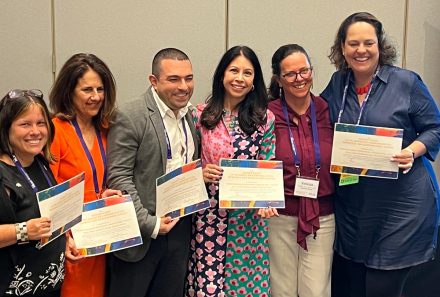
Vanessa Bravo (left), professor of strategic communications and assistant dean of the School of Communications, joins her research collaborators for a photograph during the AEJMC Conference. Lee Rainie, director of Imagining the Digital Future Center, joined Zenner on the “Artificial Imagery, Real Consequences” panel discussion.
- Hal Vincent, associate teaching professor of strategic communications, moderated a refereed research paper session, titled “Best Research Manuscripts of the Internships and Careers Interest Group,” as well as the group’s members’ meeting. He also joined the panel “It’s Really Not That Urgent: Slowing Down for Focus, Creativity, and Workplace Wellbeing,” exploring how intentional downtime can foster creativity and improve workplace culture.
- Karen Lindsey, assistant professor of strategic communications, participated in a Broadcast and Mobile Journalism and Newspaper and Online News Divisions panel, titled “Does X Still Mark the Spot? Teaching Aspiring Media Professionals How to Market Themselves in a World without #MediaTwitter.” The panel explored the role X plays in today’s personal branding strategy for aspiring media professionals.
- Qian Xu, professor of strategic communications, presented research with former Elon faculty member Cheng “Chris” Chen in a Communication Technology and Mass Communication and Society Division session. Their poster, “From Discourse to Perceptions: How AI Conversational Style and Anticipated AI Roles Influence User Interaction with AI,” explored how people engage with AI based on communication style and perceived function.
-
Shanetta Pendleton
Assistant Professor of Strategic Communications
-
Vanessa Bravo
Professor of Strategic Communications
-
Lee Rainie
Director of the Imagining the Digital Future Center
-
Hal Vincent
Associate Teaching Professor of Strategic Communications and Faculty Director of Live Oak
-
Karen Lindsey
Assistant Professor of Strategic Communications
-
Qian Xu
Professor of Strategic Communications, Media Analytics Program Dire ctor and AJ Fletcher Professor