


How imagination and hands-on learning built Elon’s School of Communications and will continue to shape its next 25 years
When Assistant Professor Ray Johnson arrived at Elon in 1984, he partnered with colleague Gerald Gibson to co-teach the university’s first television production class despite one rather significant obstacle — Elon didn’t have a studio.
“We just used a regular classroom on the second floor of the Mooney Building,” Johnson recalls. “I can still picture drawing the equipment on the blackboard, telling students, ‘If we had a studio camera, this is what it would look like.’”
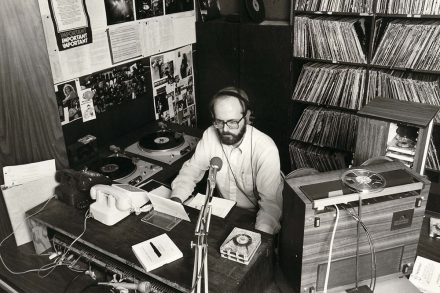
That chalkboard sketch became legend — a symbol of the imagination and determination that defined Elon’s early communications faculty. Johnson, Gibson and fellow faculty member Don Grady refused to let limited resources hinder instruction or creativity. Within a year, they transformed a small space on the first floor of Mooney into something that resembled a working studio, repurposing a room that student teachers once used to record lessons. The space was outfitted with donated gear from local cbs affiliate WFMY-TV, mostly aging broadcast cameras, switchers and audio equipment.
“We had this old equipment donated to us, and we didn’t know how to fix most of it,” Johnson says. “We were in there, sticking screwdrivers into the switcher — sparks flying — just to keep it running. It wasn’t glamorous, but it worked, and it gave students hands-on experience they couldn’t get anywhere else.”
What began with chalkboard sketches and hand-me-down cameras has grown into a nationally recognized school built on the same conviction: that creativity, not circumstance, defines success. As Elon’s School of Communications celebrates its 25th anniversary, that mindset lives on.
A Solid Foundation
Johnson often reminds others that the school’s founding in 2000 didn’t mark the start of communications education at Elon. Far from it. Long before then, the Department of Journalism and Communications was thriving with more than 600 students.
“We weren’t starting from scratch,” Johnson said during an interview marking the school’s founding. “We already had a strong department — great students, great faculty and growing recognition across campus. We had students with films at Sundance, graduates at Paramount Pictures, and alumni working in television and newspapers all up and down the East Coast. The year 2000 wasn’t the beginning. It was the culmination of 15 years of hard work.”
That strong foundation paved the way for the school’s birth, and the next stage of its growth. When Paul Parsons arrived in 2001 as the school’s founding dean, he stepped into an institution with momentum. His charge was to build a nationally respected school rooted in Elon’s hallmark experiential learning.
“When I arrived, it wasn’t about just managing what existed. Elon already had a well-established department,” Parsons says. “It was about creating the academic foundation, the facilities and the professional reputation that could sustain us for decades to come.”
Parsons’ first goal was to seek national accreditation from the Accrediting Council on Education in Journalism and Mass Communications (ACEJMC), a benchmark of credibility among top programs. “If we wanted to be taken seriously by our peers, we had to meet the same bar as the top programs in the country,” he says.
Faculty redesigned the curriculum, reduced class sizes and strengthened advising. Parsons introduced a full-time internship director position to ensure that every student gained professional experience before graduation.
“What made Elon different was how the faculty embraced innovation,” Parsons says. “We didn’t just chase technology. We asked, ‘How do we teach students to think, to tell stories and to adapt to technologies that don’t exist yet?’”
To achieve that, faculty focused on developing a strong curriculum. “We were constantly balancing writing, theory and practical skills, making sure students were grounded in the liberal arts, but ready to step into professional roles the day they graduated,” says Grady, who served as the school’s first department chair and later associate dean.
We just used a regular classroom on the second floor of the Mooney Building. I can still picture drawing the equipment on the blackboard, telling students, ‘If we had a studio camera, this is what it would look like.’ — Ray Johnson
That balance, Grady notes, became a blueprint for the school’s programs that followed, ensuring students could both think critically and create confidently.
Within five years of its launch, the school secured its first ACEJMC accreditation, marking a defining moment in its history. Since then, the school has been reaccredited three times, most recently in spring 2025, when ACEJMC praised Elon as an “all-star” in the field.
“Accreditation validated what we were already doing,” Parsons says. “It told the world that Elon’s program wasn’t just growing — it was excellent.”
Growing Success
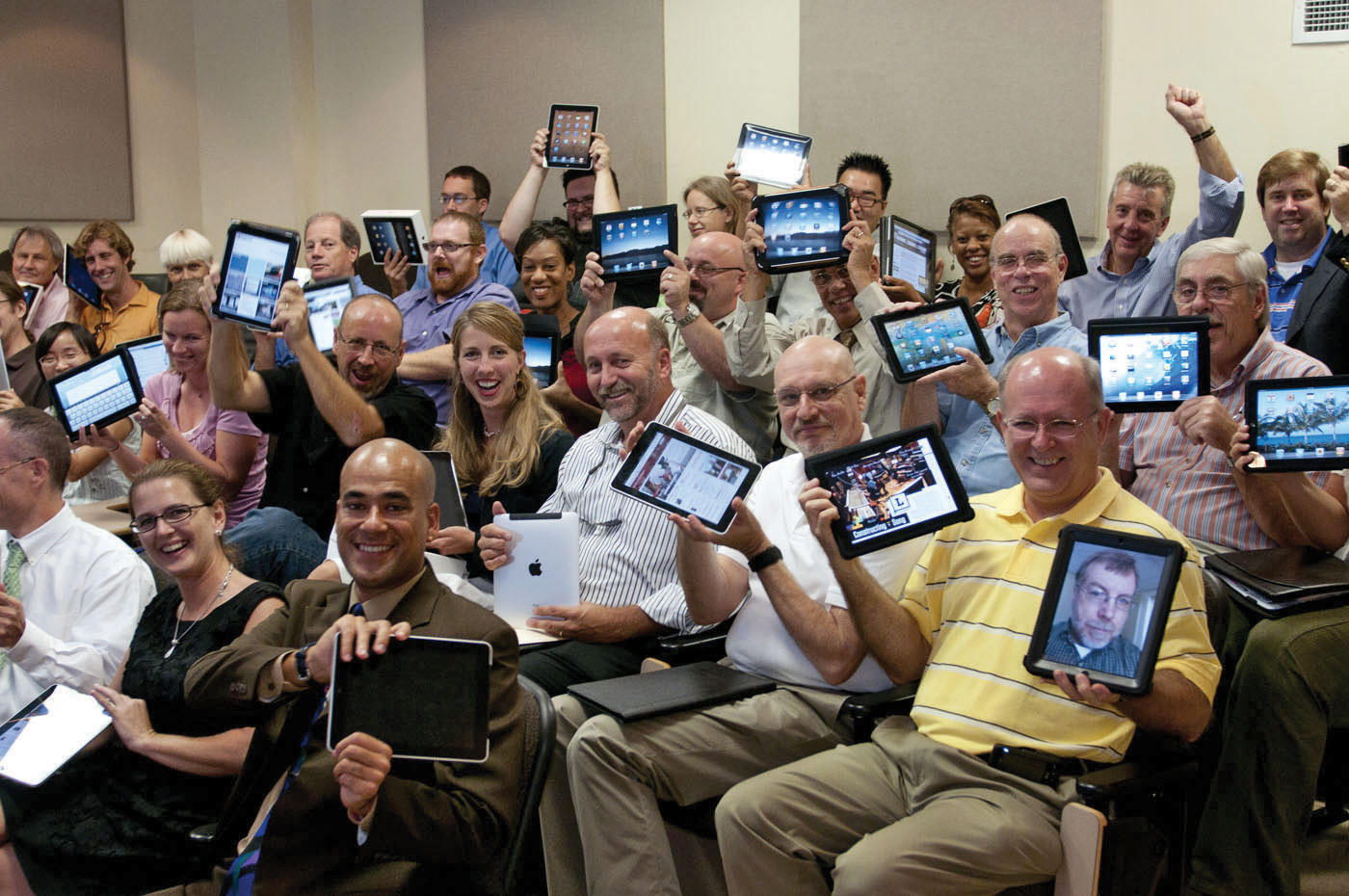
The 2000s marked a transformative era as the school began shaping both its home and its identity. What started in Mooney expanded into a communications complex anchored by the renovated McEwen Communications Building. That momentum continued with the addition of Dwight C. Schar Hall, Steers Pavilion and Long Building, completed or renovated between 2016 and 2018.
In its first decade, the school expanded its reach, launching the Elon in Los Angeles program, housing the Sunshine Center of the North Carolina Open Government Coalition, and welcoming what is now the Department of Sport Management. The last addition seemed unconventional at first but broadened the school’s footprint and connected students to media, business and sport.
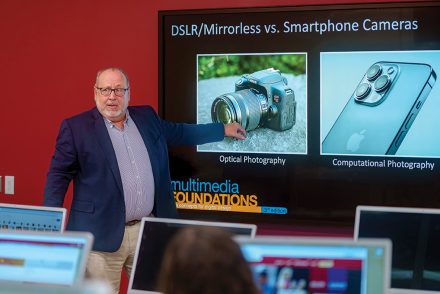
“From the beginning, we saw the world changing rapidly,” Parsons says. “The internet wasn’t just a new medium — it was transforming every field. We wanted our students to be ready and to anticipate where their industries were headed.”
Former journalism professor Janna Anderson, who joined Elon in 1999, was part of the small, tight-knit group of faculty who helped launch the school. She remembers those early years as an exhilarating time of growth, when a handful of faculty built a new school through collaboration and long hours. She notes that Elon’s leadership — President Leo M. Lambert, Provost Gerald L. Francis and Parsons — invested heavily in the school’s growth during the digital revolution.
“We would turn in huge budget requests for computers, software, TV gear and more with our fingers crossed, thinking we couldn’t possibly get all we needed,” she says. “And we generally got what we asked for.”
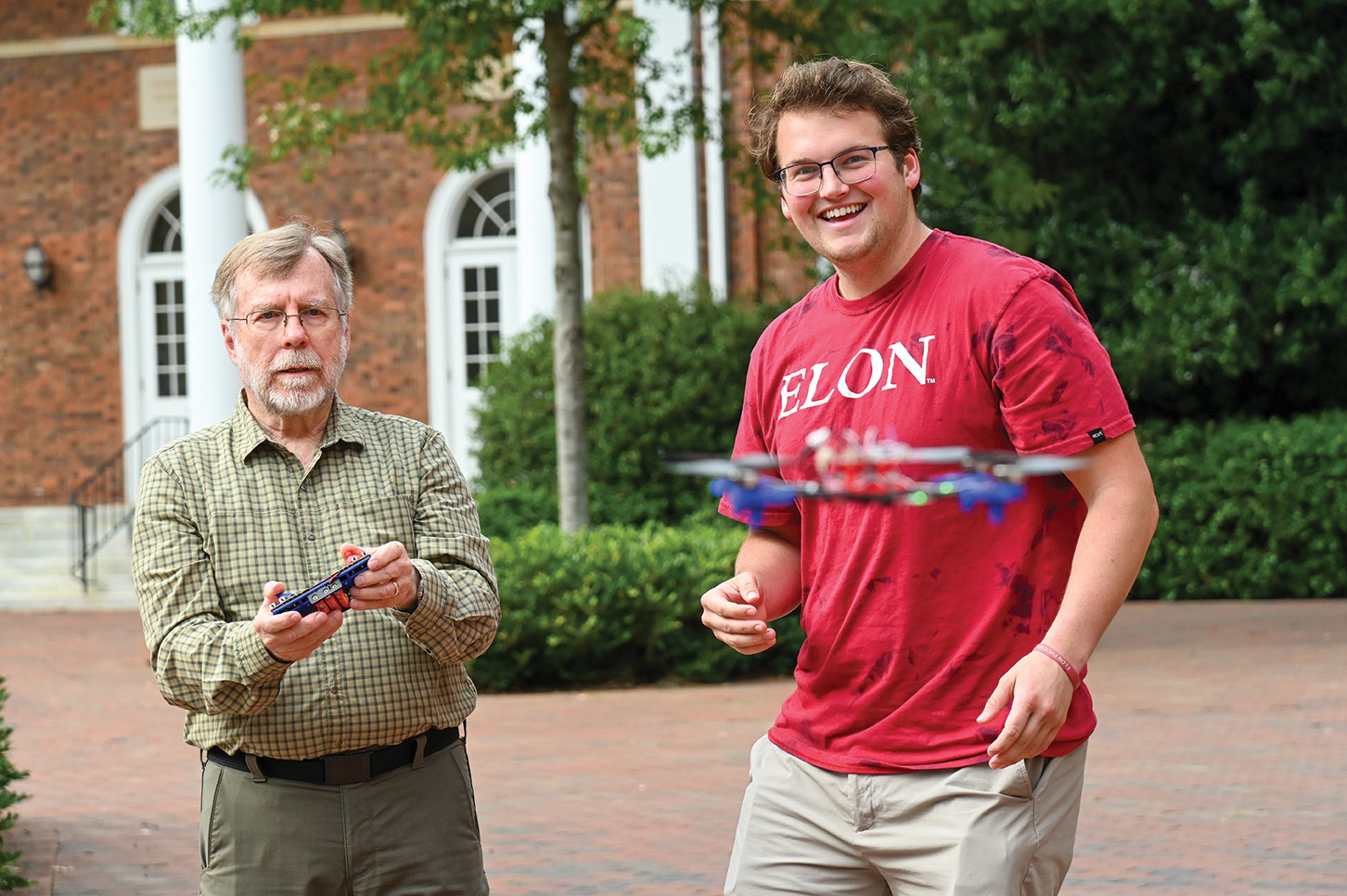
Anderson credits the faculty’s willingness to innovate, coupled with Elon’s culture of mentorship, for positioning the school at the forefront of communications education.
“Our deep desire to give faculty and students the tools they needed to excel kept us ahead of change,” she says.
Grady recalls that the school’s biggest leap forward came during the transition
from analog to digital production. “The quality of student work improved dramatically when we went digital,” he says. “It changed how quickly students could shoot, edit and produce — and for a while, our students were ahead of the local newsrooms where they interned.”
That momentum, he adds, reflected the university’s willingness to invest in cutting-edge tools, even before many professional organizations had adopted them.
Learning by Doing
From the beginning, Johnson says, Elon’s approach has been simple: Give students real experience from day one.
“Other universities told us it would be chaos if we let students direct a newscast,” he says. “But we always believed that if they were here to learn, they should do the work.”
Decades later, that philosophy still defines the Elon experience for alumni like Aurora Albi-Mercier ’16 and Ryan Buckley ’03, who turned those hands-on opportunities into successful careers.
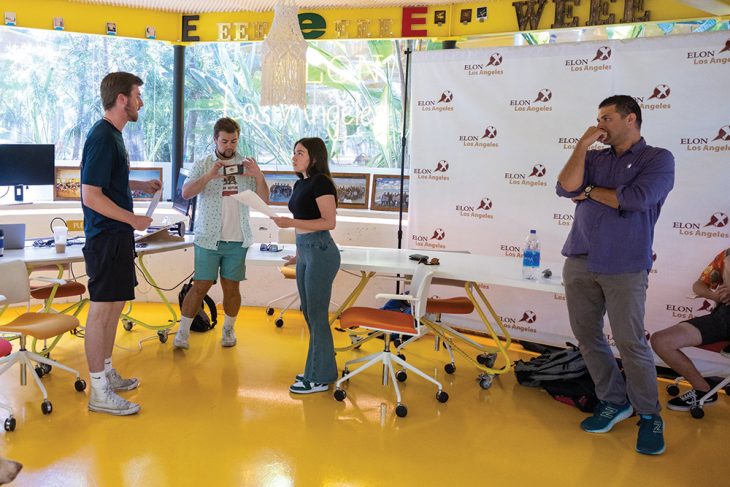
Albi-Mercier, now senior director of creative production operations management at Paramount+, says she chose Elon because it offered “a college experience that felt more personal and connected.”
“Elon stood out because it offered a rare mix of creativity, professionalism and mentorship,” the Los Angeles native says. “I loved that the school encouraged students to learn by doing — producing, collaborating, creating, not only sitting in class. It felt like a place that would both challenge and support me, and that proved to be true.”
While on campus, Albi-Mercier became station manager of Elon Student Television, calling it her “first entry into management within entertainment.”
“Running meetings, leading creative teams, coordinating Homecoming — those experiences taught me how to manage people and make creative decisions,” she says.
For Buckley, now a senior producer at CNN, the opportunities to learn and lead came early. He joined Elon Student Television as a first-year and was hooked.
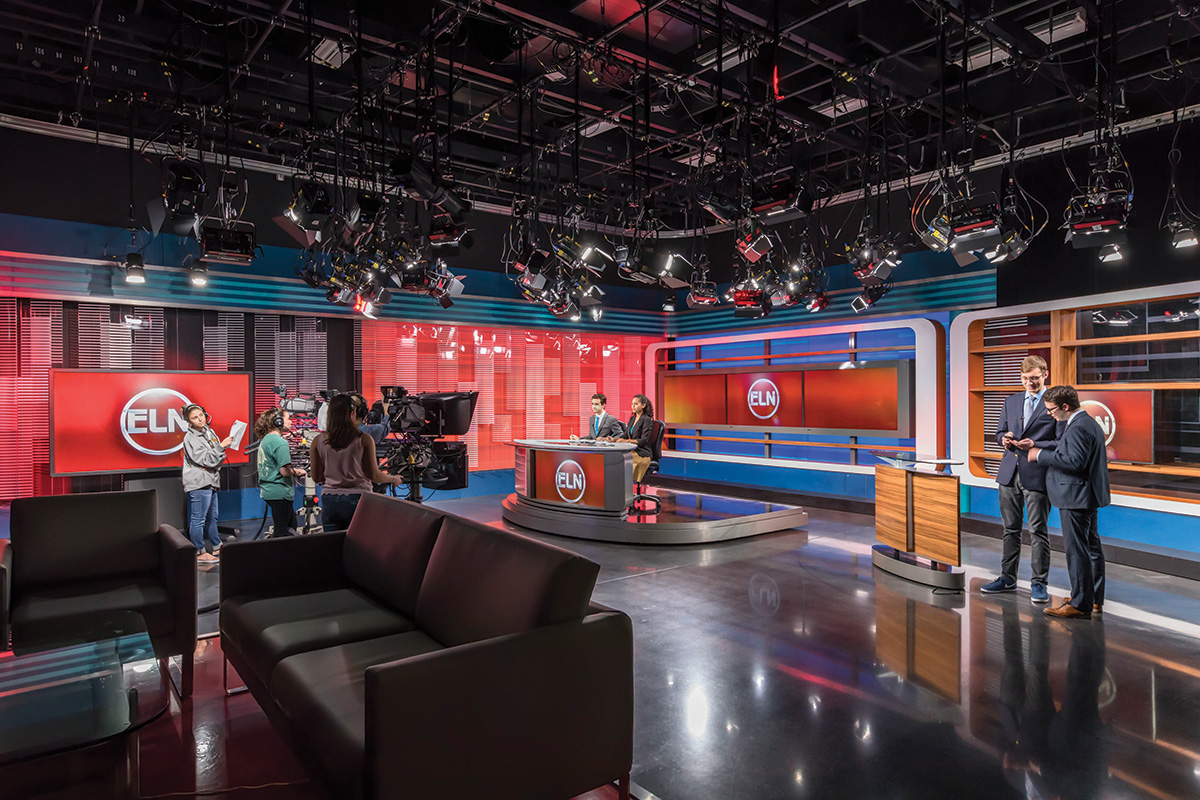
“I’ll never forget signing up for the Elon student news program as a freshman,” he says. “The news desk was an old Fox 8 set — to an 18-year-old, it felt incredible. I still remember the thrill of running tape during a live newscast.”
Elon taught me that creativity thrives in community. That mix of collaboration and accountability shaped how I work today. — Aurora Albi-Mercier ’16
Buckley also helped launch the long-running campus game show “Win Stuff,” created by classmates Michelle Niland ’03 and Michelle Galster ’03. The program continues to run today — a fact that made him nostalgic on a campus tour this fall. “We were essentially running PowerPoint on 12 laptops … hitting the space bar to advance the graphics,” Buckley says, laughing. “It was scrappy, but it worked — and that’s what Elon taught me: how to make ideas real with the tools you have.”
He credits much of his success to the professors and mentors who nurtured his passion for storytelling — including his academic adviser, Connie Ledoux Book, a former journalism professor turned university president.
“I know my career would not have been possible without my professors,” Buckley says.
For both alumni, Elon’s culture of experimentation and mentorship continues to guide their careers. “Elon taught me that creativity thrives in community,” Albi-Mercier says. “That mix of collaboration and accountability shaped how I work today.”
Innovation Endures
After Parsons’ 17-year tenure, the school entered a new era of growth and global awareness. When Rochelle Ford became dean in 2018, she championed inclusion, faculty diversity and industry collaboration, broadening the school’s perspective while deepening its professional reach. A year later, Elon was named PRWeek’s 2019 Outstanding Education Program.
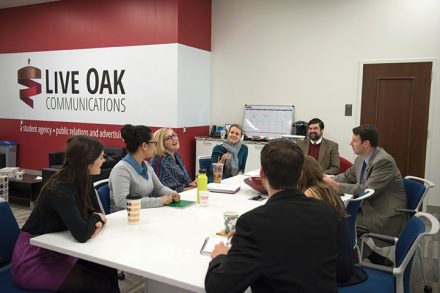
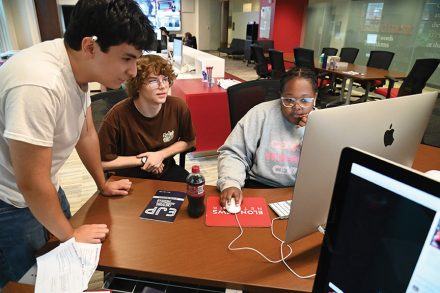
That same spirit of innovation extended beyond campus. In 2021, through a Scripps Howard Fund grant, the school launched the Emerging Journalists Program, introducing high school students to media and storytelling through virtual workshops and an immersive two-week summer experience. Now fully supported by Elon, EJP drew 170 applicants last spring; 35 program alumni are now Elon undergraduates.
Under Dean Kenn Gaither, the school continues to evolve while honoring the values that shaped its first 25 years. This fall, it launched its first new major in a decade — digital content management — and partnered with the Love School of Business to pilot an accelerated 3+1 program for students interested in the business of sport. Through a new partnership announced in October with Pistoia Basket, students will explore the intersection of sport, culture and education in Italy.
We were never the biggest school, but we were always ambitious. We created opportunities before anyone asked for them. … We built a school that thinks forward. — Paul Parsons
For Gaither, the next wave of progress depends on people as much as programs. “Our challenge is to continue hiring faculty who embody the ethos that Don Grady, Ray Johnson, Gerald Gibson and others established — the spirit of creativity, mentorship and excellence,” he says. “That’s how we carry the tradition forward.”
Decades after Johnson sketched a television camera in chalk, the school is still drawing its own future — fueled by curiosity, creativity and connection.
Gaither sees that future as a continuation of the legacy that began in Mooney: a community that values innovation yet remains grounded in its mission.
“It’s the community and culture that make Elon distinct,” he says. “The technology will change. The industry will change. But the way we teach — the personal connection, experiential learning and belief that students learn by doing — that’s what endures.”
That same sense of purpose has guided every era — from chalk-drawn cameras to a nationally recognized communications school.
“Elon’s strength has always been that we dream big but act personally,” Parsons says. “We were never the biggest school, but we were always ambitious. We created opportunities before anyone asked for them. We built a school that thinks forward.”
-
Kenn Gaither
Dean, School of Communications, and Professor of Strategic Communications
-
Connie Book
President
-
Ray Johnson
Assistant Professor of Cinema and Television Arts
-
Vic Costello
Associate Professor of Cinema and Television Arts and Director of Communications Core and Minor
-
Randy Piland
Teaching Professor of Communication Design