


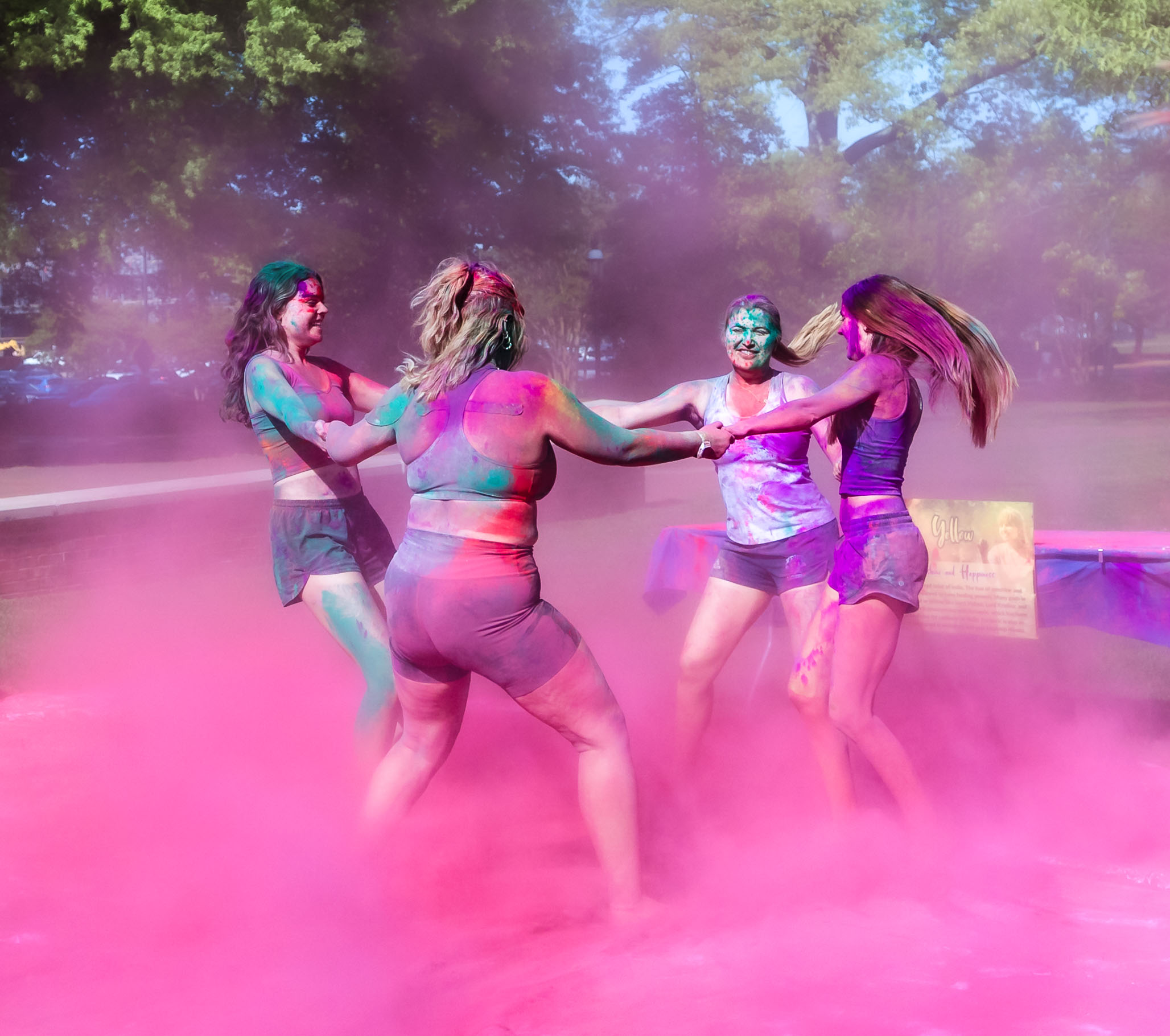
This year's Holi celebration moved to the Lambert Academic village to enhance the educational offerings
On April 10, a warm and sunny spring afternoon, nearly 200 students, faculty, and staff gathered on the lawn of the Lambert Academic Village to celebrate Holi, the Hindu Festival of Colors.
As Elon community members converged on the area, Bollywood music played, colorful kites leaned against the brick wall of PBK commons, and hundreds of cups of colored powder lined a white tarp stained with splotches of pink and blue color.
The event opened with an educational presentation, reflections and stories shared by students, and a performance by Surtal, Elon’s Bollywood dance team. After a collective countdown, attendees tossed handfuls of brightly colored powder into the air, marking the official start of the celebration.
This year marked the 14th anniversary of Holi at Elon, a tradition led by the Truitt Center for Religious and Spiritual Life. The center’s mission is to support and engage the Elon community with the wisdom of the world’s religious, spiritual, and ethical traditions, and hosting celebrations like Holi is one way the Truitt Center creates opportunities for celebration, learning, connection, and shared experience.
Students from across backgrounds and identities participated, coming together through music, movement and the shared ritual of color throwing.
Multifaith interns Addison Anderson and Taylor Polonsky played a central role in shaping the program. In preparation, they spent time studying the history of Holi, its cultural and religious significance, and the symbolism of the colors used in the celebration.
“Planning our campus’s Holi celebration was a wonderful challenge for us,” shared Anderson. “Holi is incredibly different than many of the other celebrations we do, and it was important to us to make it the perfect welcome for Spring. Through our time learning and planning the event, my co-coordinator and I learned about the importance of the holiday for over a billion people around the world.”
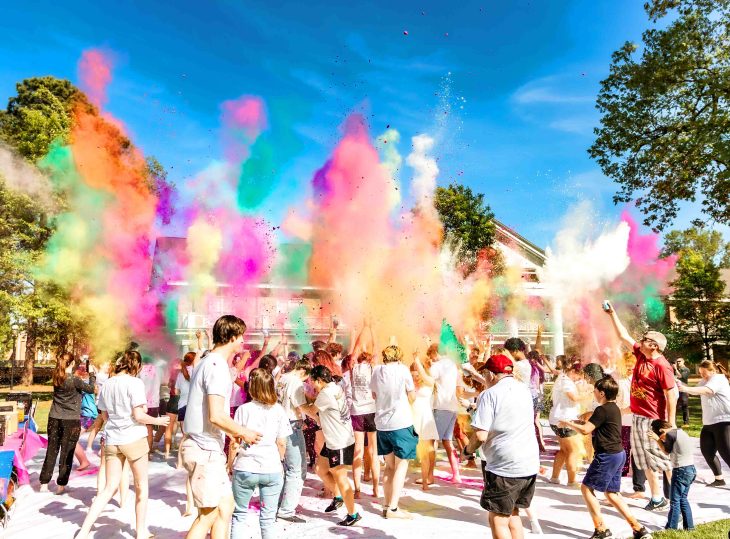
This year, the celebration began well before the official color toss. Guests arrived early to enjoy Bollywood music, sample Indian appetizers, savor traditional sweets, and participate in hands-on activities such as coloring mandalas, creating rangoli, and applying mehndi (henna). The early energy carried through the afternoon, with dancing starting organically as the crowd gathered.
For members of the campus South Asian community, festivals like Holi and Diwali create a sense of belonging, community, and visibility.
Second year Multifaith intern Ahron Frankel, who helped plan Holi in 2025, and introduced kite-flying to the campus Holi celebration, shared their journey as a South Asian student on campus.
“When I first came to Elon, one of the biggest hurdles to overcome was the lack of desi students,” said Frankel. “It was very hard to find people that I could connect with on this part of my identity, and there were never any set spaces for the few of us that were here. However, I soon found out that Holi is one of our biggest campus events, which made all the difference. For the past 3 years, I have had the joy of bringing my friends to this celebration while listening to Bollywood tunes and celebrating the coming of spring.”
The Truitt Center’s festival series invited the campus community to experience cultures, traditions, and holidays other than their own, in intentionally shaped spaces that are both educational and celebratory. Members of the cohort of Multifaith Interns plan the festivals alongside Hillary Zaken, director of Multifaith Programming and Engagement.
The exploration of diverse worldviews is an essential part of an Elon education and helps prepare students to respectfully engage in dialogue across difference. While the celebration of holidays like Holi are reflective of an authentic experience, they are also crafted as a means to teach about the values and practices of the Hindu community.
“Before you celebrate today, I want y’all to remember that this isn’t just about paint throwing,” explained Frankel to the crowd. “It holds deep cultural and religious significance for people across South Asia. In the diaspora, it’s a way to connect back home and ground ourselves in the culture we may rarely get to celebrate visibly.”
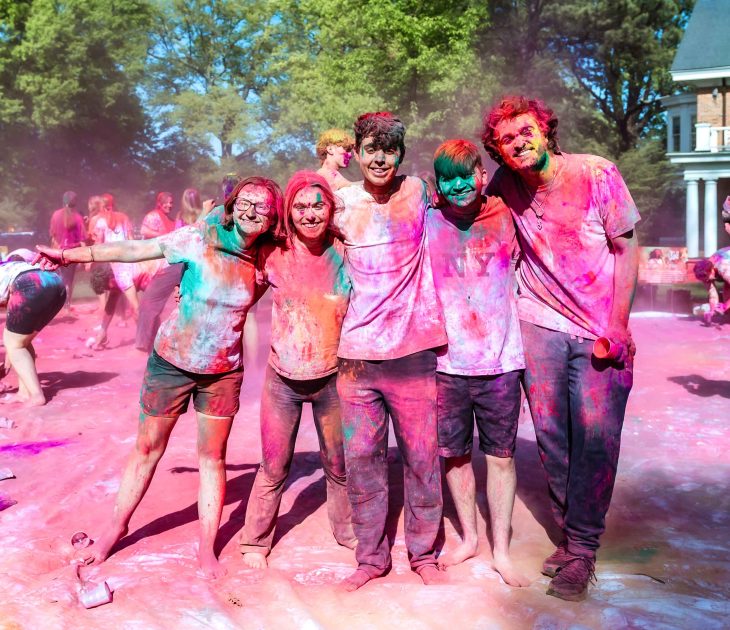
By the end of the event, participants left Speaker’s Corner covered in vibrant color, having engaged both the festive and educational dimensions of the holiday, and carrying that energy into the weekend ahead.
As Taylor Polonsky shared: “Holi is a reminder for everyone to take a moment and add some color and joy on your life during hard times, including impending exams or graduation.”