


The presentation demonstrated how the study of literature can contribute to wellness education while strengthening critical thinking and enhancing students’ analytical, cultural, and interpersonal skills.
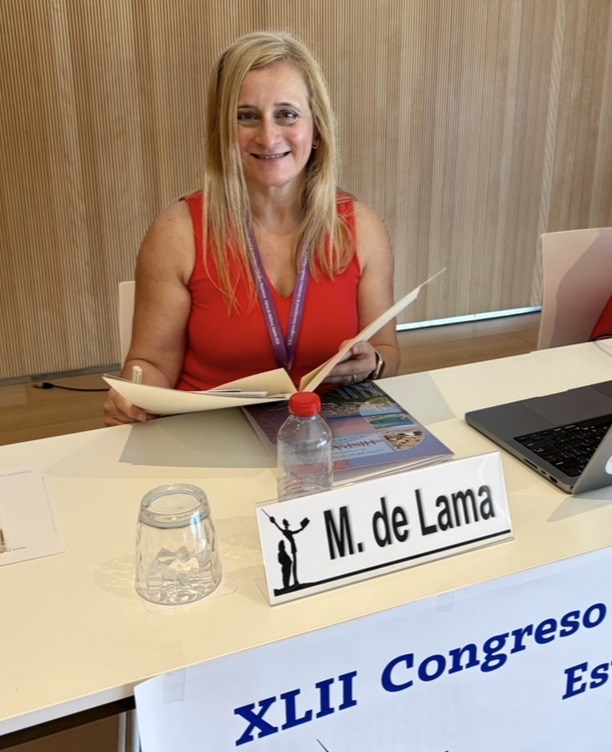
Associate Professor of Spanish Mayte de Lama explored how literature can serve as a powerful tool for raising awareness and fostering meaningful conversations about mental health, at the XLII Congreso Internacional de Literatura y Estudios Hispánicos in Spain.
Drawing on Claudia Piñeiro’s novel “Elena Knows,” de Lama presented a classroom project developed for her course Spanish 3200: Reading Texts, Reading Life. In the project, students analyzed one of the novel’s central characters, identifying signs of depression and other factors that contributed to her tragic fate. After completing a workshop on wellness developed and taught by the Center for Design Thinking at Elon University, de Lama’s students used the same framework to engaged in critical reflection, discussion, and collaborative problem-solving to explore steps and interventions that might have changed the character’s trajectory.
Moving beyond literary analysis, the project encouraged students to apply these insights to real-world contexts, helping them recognize warning signs, cultivate empathy and consider ways to support mental well-being within their communities, families, and circles of friendship. The presentation demonstrated how the study of literature can contribute to wellness education while strengthening critical thinking and enhancing students’ analytical, cultural, and interpersonal skills.
Through this interdisciplinary approach, de Lama highlighted the potential of literature classrooms to promote both academic engagement and student well-being, creating opportunities for meaningful learning that extends beyond the text and into students’ everyday lives and relationships.