


Gress will present his research at the Summer Undergraduate Research Experience (SURE) presentations on July 23 in the Snow Family Grand Atrium.
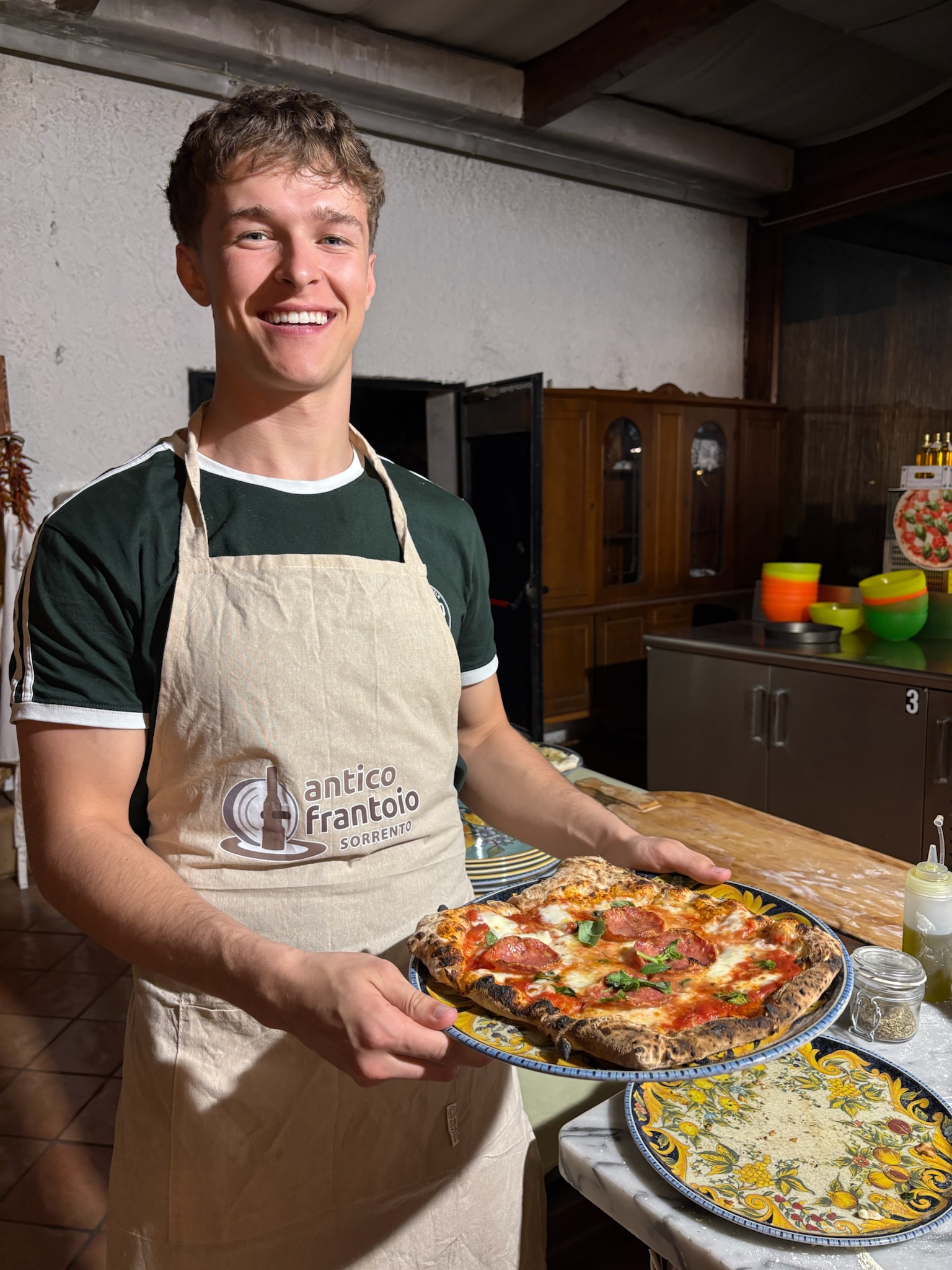
For his first undergraduate research project at Elon, Thomas Gress ’27 is looking to make an impact on people suffering from chronic fatigue syndrome, including his own brother.
“Before I started this, he’d been suffering for four years, and there seemed to be no end in sight,” said Gress, a biology major from Savannah, Georgia. “So, this was something small that I could do to be of use.”
According to the Centers for Disease Control and Prevention, Myalgic encephalomyelitis/chronic fatigue syndrome (ME/CFS) is a serious and often long-lasting illness that keeps people from doing their usual activities. It makes physical and mental exertion difficult, and symptoms include trouble thinking, severe tiredness and other symptoms.
“It’s a bit of an elusive chronic disease,” Gress said. “There are no pharmacotherapies available and there are no biomarkers for confirmed disease, so all we can do is experiment with lifestyle, and a big part of that is exercise.”
Exercise is the focus of Gress’ research, working with Professor of Exercise Science Eric Hall to design a four-week study to compare two different approaches to exercise. Before the study begins, each participant undergoes a walking test to determine their comfortable walking distance. Most participants are expected to walk between 10 and 20 minutes, although no one is expected to walk for more than 45 minutes.
Participants are then divided into two groups: graded exercise therapy and pacing therapy. The study focuses on the concept of an “energy envelope,” a term used to describe the amount of physical activity a person’s body can comfortably perform. One approach suggests that people may benefit from gradually pushing beyond their usual limits, while the other suggests that people should stay within their comfort zone and adjust activity levels based on how they feel.
During the study, participants use their baseline walking time to set weekly goals. In the first week, they are asked to walk for 80% of their baseline time. This increases to 90% in the second week, 100% in the third week and 110% in the fourth week. However, there is an important difference between the two groups. Participants in the graded exercise therapy group are required to follow this schedule exactly. Participants in the pacing therapy group are encouraged to follow the schedule but have the flexibility to adjust their activity based on their energy levels and personal needs.
Gress will present his research at the Summer Undergraduate Research Experience (SURE) presentations on July 23 in the Snow Family Grand Atrium. Students apply to the annual research symposium, which usually takes place during the summer before the junior or senior year. It is one of several opportunities for students to showcase undergraduate research, a cornerstone of the Elon education and one of the five Elon Experiences. Students are also able to present scholarly work at the Spring Undergraduate Research Forum.
Gress hopes this research will reveal which approach is more effective at helping participants stay committed to the program and whether either method leads to lower levels of fatigue, hopefully helping people with CFS.
“For all of these patients, there’s no other option,” Gress said. “There are no drugs available, only a few supplements with very little efficacy. So, it seems the best option is experimenting with lifestyle. And if not this, then there is nothing.”