


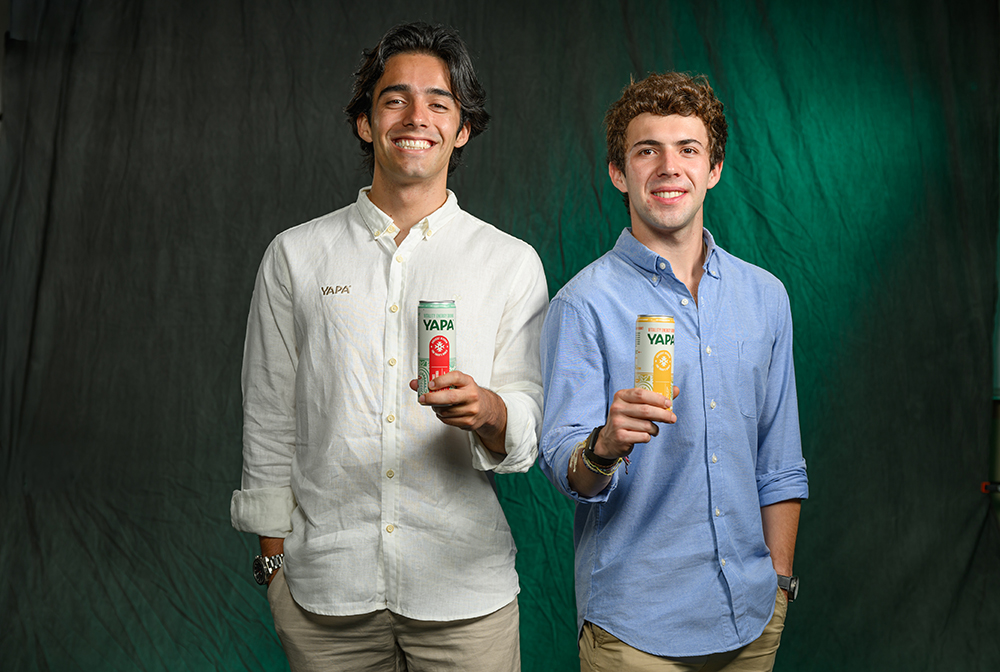
How friendship, curiosity and the Ecuadorian Amazon led Juan Daniel Chiriboga ’26 and Bernardo Vargas-Lopez ’26 to create their own energy drink before graduation.
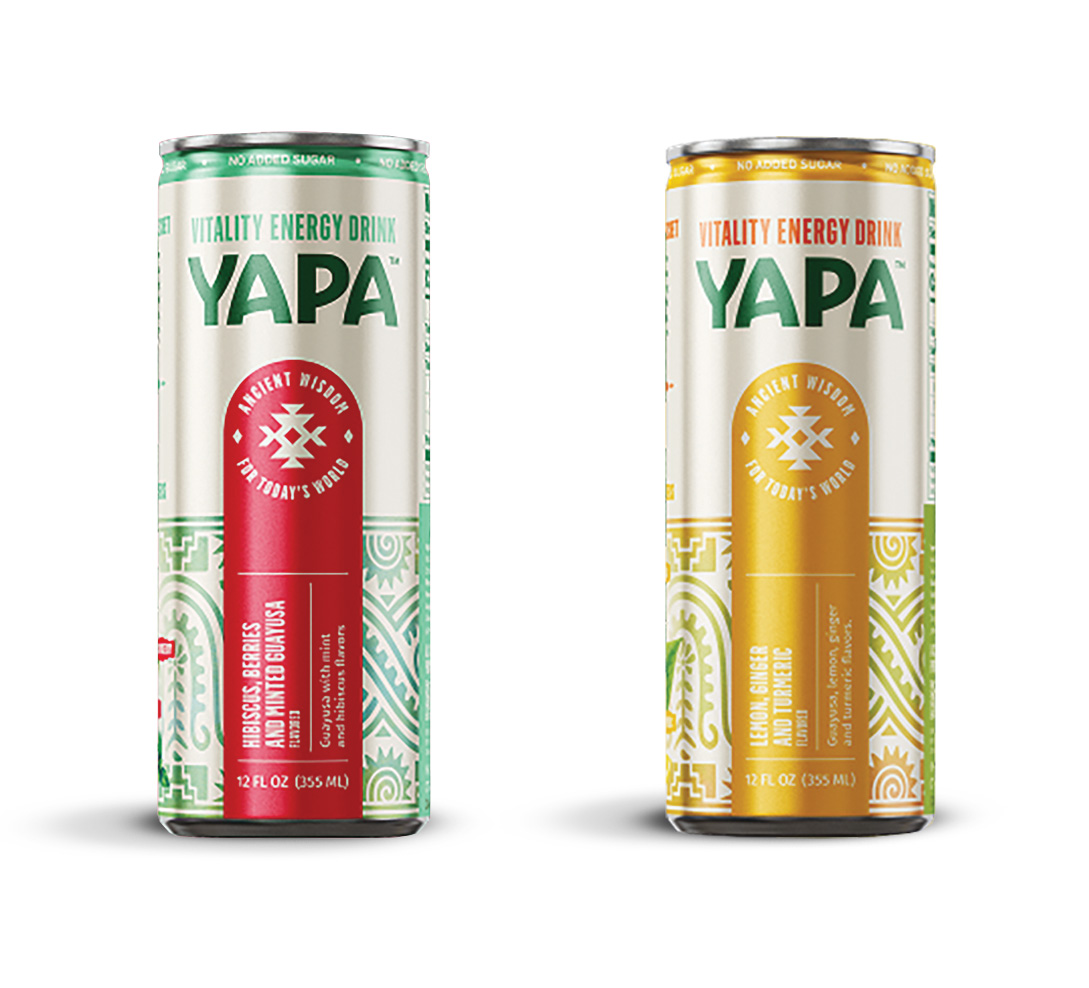 The first time Juan Daniel Chiriboga ’26 and Bernardo Vargas-Lopez ’26 held a finished can of YAPA, the idea was no longer just an idea.
It started as a conversation between friends. A memory from the Ecuadorian Amazon. A question asked after a trip that left them curious about guayusa, a leaf long consumed by Indigenous communities for focus and energy. It had become months of supplier calls, product tests, faculty feedback, formulation decisions and late nights spent figuring out how to turn a shared vision into something real.
Now, the plant-based energy drink they built together is ready for distribution and is being sold at The Oak House at Elon.
For Vargas-Lopez and Chiriboga, the milestone carries them back to McEwen Dining Hall on campus, where their friendship began during their first year at Elon in 2022.
Chiriboga, an entrepreneurship major from Quito, Ecuador, and Vargas-Lopez, a sport management major from Austin, Texas, quickly connected over language, culture, soccer and a shared curiosity about the world. They became close friends long before they became business partners.
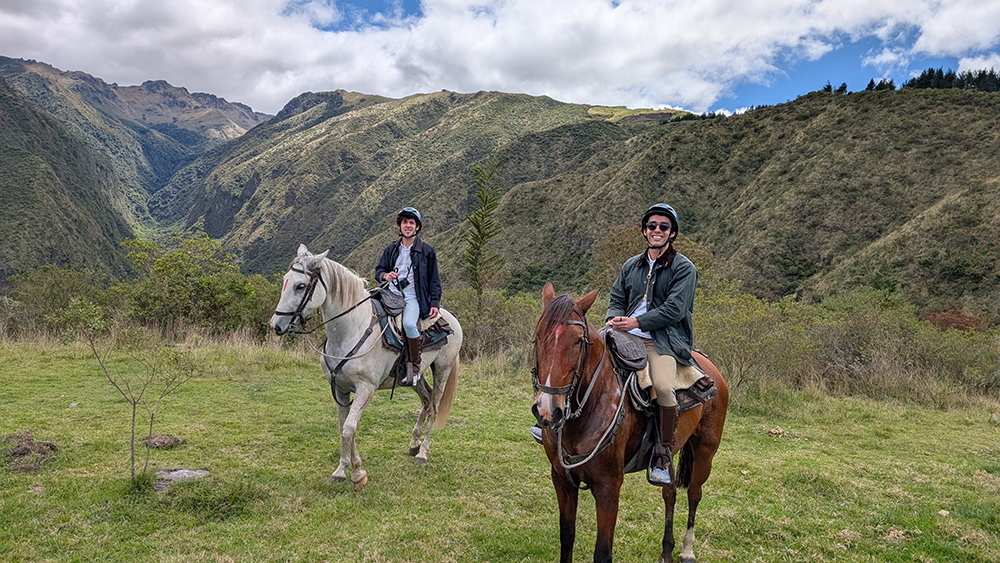
The idea for YAPA came later, after Chiriboga brought Vargas-Lopez to visit his home country during Thanksgiving break of their sophomore year. It was Vargas-Lopez’s first time in South America, and the trip included time in the Amazon rainforest, where the two were struck by what Chiriboga describes as the “immensity” of the Amazon, from its abundance of life to the plants that have long shaped daily living in the region.
“We came back from visiting the Amazon forest and were just talking through the trip,” Vargas-Lopez says. “That’s when the idea came out. What if we took one of those plants and built a drink around it?”
That question became YAPA, a plant-based energy drink made from guayusa and a larger idea of giving people something more than expected.
The company’s name comes from an Andean expression. In Ecuador, “yapa” refers to a small token added with generosity. At a market, it might be an extra piece of fruit. At a family table, it might be a little more food on someone’s plate.
“It’s a little extra you were not expecting,” Chiriboga says. “That is what we want the product to feel like.”
Building From the Ground Up
Once the idea took hold, Vargas-Lopez and Chiriboga began studying the beverage industry, talking with community members in Ecuador, seeking feedback from mentors and testing whether their concept could become a real business.
They were drawn to the growing interest in cleaner, more transparent beverage options.
“I think the issue we were looking at was the energy drink industry and what a lot of those products contain,” Chiriboga says. “We saw people looking more for clean-label, natural ingredients and more transparency in what they consume.”
That focus helped define YAPA’s direction. They describe the drink as plant-based and made without preservatives, with an emphasis on ingredient transparency, quality and sourcing. Its ingredients include guayusa along with hibiscus, turmeric, ginger, prebiotics and electrolytes, each chosen with a purpose.
For the founders, the product also carries a connection to the place that inspired it.
We came back from visiting the Amazon forest and were just talking through the trip. That’s when the idea came out. What if we took one of those plants and built a drink around it? — Bernardo Vargas-Lopez ’26
In the Amazon, Chiriboga says, guayusa is traditionally consumed in community. People gather early in the morning, drink together and share their dreams before beginning the day. The leaf is associated with focus and energy, but not the jittery rush often linked with conventional energy drinks.
“It gives you that mental clarity and that energy that you need without being hyper,” Chiriboga says.
Turning that inspiration into a company required more than enthusiasm. The two spent months working through sourcing, formulation, packaging, shipping, pricing and compliance while balancing college life.
They also made early decisions about where they would not compromise, even when higher standards meant harder financial choices.
“We decided there were a few strategic points where we would not go for lower quality,” Chiriboga says. “Starting from ingredients and sourcing, we were not going to sacrifice what the product stands for.”
Asking the Right Questions
Both founders say their experience in the Martha and Spencer Love School of Business gave them the confidence to approach YAPA not as a finished idea, but as something to test, refine and keep improving.
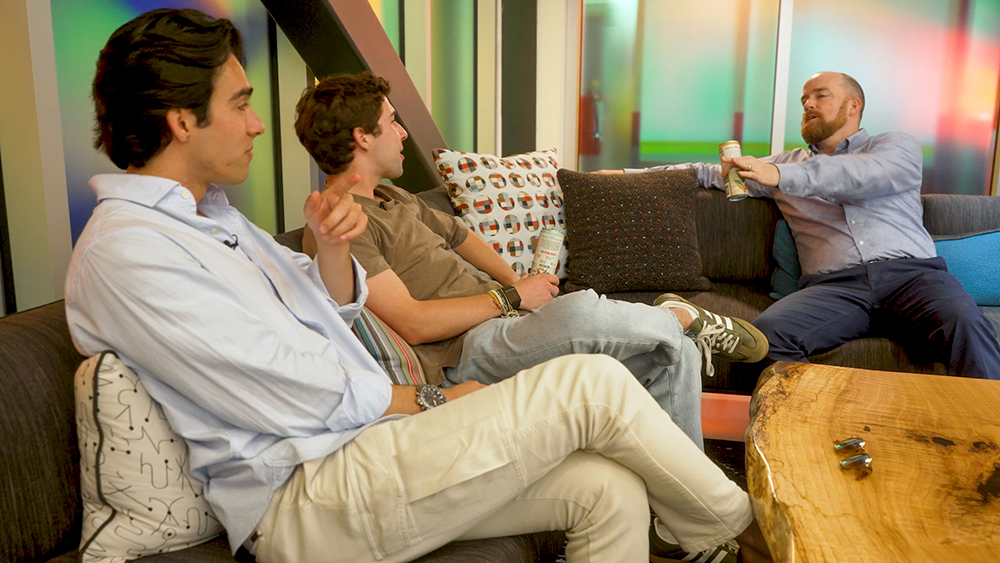
They turned to faculty members including Sean McMahon, professor of entrepreneurship; Elena Kennedy, associate professor of entrepreneurship; and Brittany Mercado, associate professor of management and chair of the Department of Management and Entrepreneurship.
“The ability to communicate clearly with people who know a lot more than we do has been huge,” Vargas-Lopez says. “The Love School of Business does an amazing job of making professors approachable.”
As YAPA developed, informal conversations became intentional. They stayed after class, brought specific questions to faculty and connected what they were learning in their courses to the choices they were making for the company. The feedback was not always easy, and that was part of its value.
“We don’t need people to just cheerlead,” Vargas-Lopez says. “We need people who will tell us what worked, what didn’t and how to improve. That’s what has really helped us move forward.”
Their time studying abroad also shaped the venture. Chiriboga was in Japan while
Vargas-Lopez was in Australia, making day-to-day operations difficult, so they used the distance to listen.
“We couldn’t really work on operations, so the only thing we could do was talk to people,” Chiriboga says.
They spoke with people in the Amazon, professionals at large companies and mentors in finance, gathering insight before returning to campus.
“We were sponges during that time,” Chiriboga says. “We just gathered as much information as we could.”
A Friendship First
Before they were co-founders, Vargas-Lopez and Chiriboga were friends. They built the kind of trust that later became essential to starting a company together. When one person could not take on a task, the other stepped in. When the work became overwhelming, the friendship helped steady them.
“If I cannot do something right now, I know Juan Daniel can do it, and vice versa,” Vargas-Lopez says. “That trust was built before the business.”
Living together strengthened that rhythm. It also taught them the importance of boundaries.
 “We’ve gotten really good at knowing when to talk business and when not to,” Chiriboga says. “If it’s not working time, we try to focus on being friends and being present with other people.”
For Vargas-Lopez, the partnership has been less about dividing every task evenly and more about sharing responsibility over time.
“It’s not always 50-50 all the time,” he says. “But we know we’re in this together, and that makes it easier to handle everything that comes up.”
For Chiriboga, building YAPA with his best friend has been one of the most meaningful parts of the experience.
“I couldn’t be more grateful that my best friend is also my business partner,” he says.
Now based in Austin, Vargas-Lopez and Chiriboga are carrying YAPA into its next stage. The venture that started as a conversation between friends has become something people can open, taste and share.
The process has changed how they think about risk, learning and what it means to build something from scratch. It has also reinforced the value of starting before everything feels certain.
“Don’t be afraid to start,” Chiriboga says. “If you don’t believe in yourself, no one else will.”
Vargas-Lopez says the venture has taught him to stay open to what others know and humble enough to keep asking questions.
“Use your resources,” he says. “Ask questions. Learn from every conversation. We haven’t had a single meeting where we didn’t learn something.”