


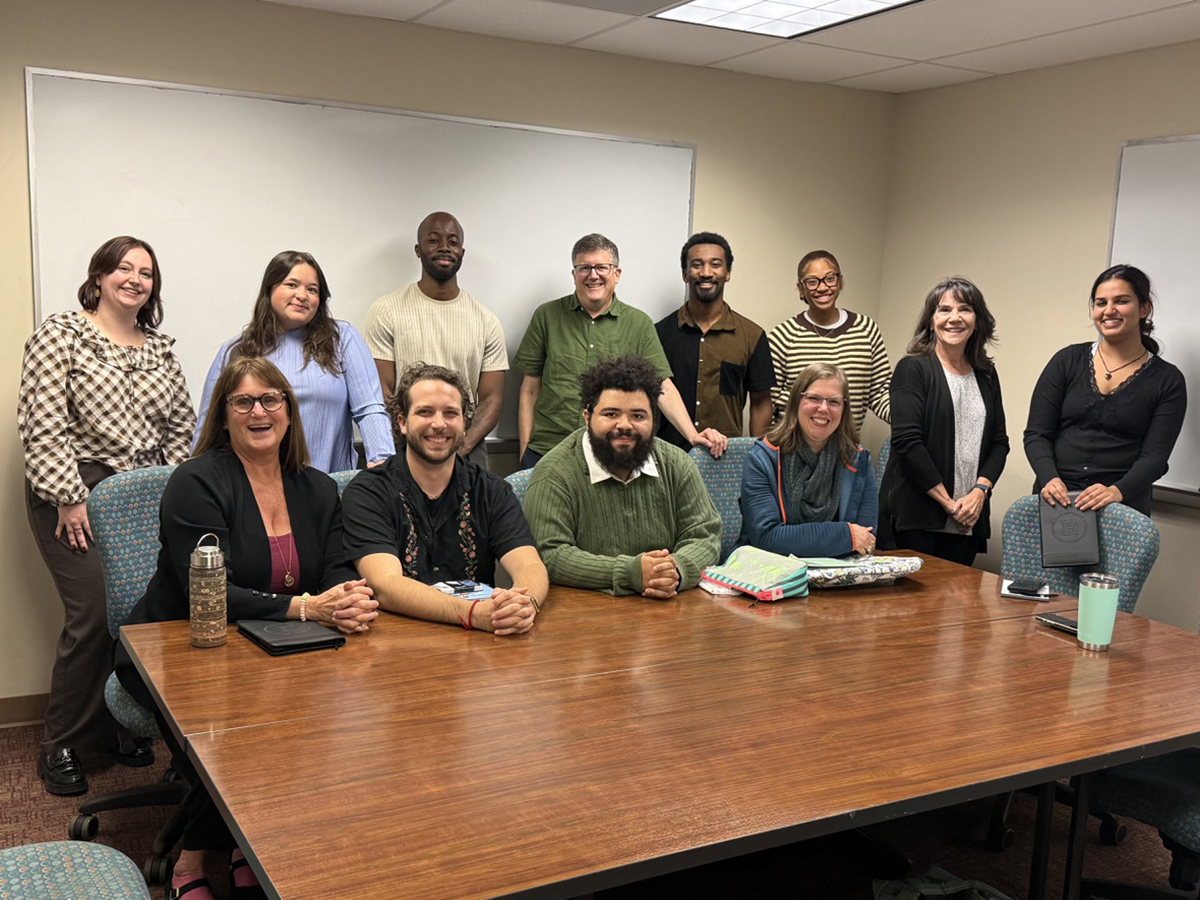
Students applied counseling theories and techniques while working through realistic client scenarios at Elon’s Interprofessional Simulation Center.
Members of Elon University’s first Clinical Mental Health Counseling (CMHC) cohort spent time working with simulated patients on Tuesday, Nov. 17. This marked the first time that Elon’s CMHC students worked with simulated patients.
Through the School of Health Sciences’ Interprofessional Simulation Center (IPSC), students at both the Elon and Charlotte campuses were able to work one-on-one with a simulated patient in an outpatient counseling setting. Each student had the opportunity to translate classroom theory into observable counseling behaviors while working through realistic client encounters.
“One of the most important aspects of preparing future counselors is helping them bridge the gap between learning counseling theories and putting them into practice,” said Suzan Wasik, associate professor for clinical mental health counseling. “From their very first semester in the program, we want our counselors-in-training to move beyond the textbook and practice what it means to sit across from another person, start building a therapeutic relationship, and intentionally apply counseling theories and techniques in real time.
During their 20-minute recorded counseling session, students were presented with client scenarios that were designed to provide the opportunity to recognize ambivalence, navigate emotional complexity and apply culturally responsive counseling approaches.
Throughout the experience, students focused on several key learning objectives, including:
• Therapeutic Presence and Counseling Microskills – to demonstrate that they could be completely present with the client and build foundational helping skills.
• Theory-Informed Interventions – to apply counseling theories and interventions with cultural and contextual responsiveness.
• Professional Boundaries – to maintain appropriate boundaries, session focus and collaborative closing.
• Self-Reflection and Evaluation – to critically evaluate their own clinical performance and identify ways in which to grow.
“These live experiences provide a safe, supportive environment to practice skills, self-evaluate, receive feedback, build confidence, and develop their professional identities before working with actual clients in the field,” added Wasik. “Experiential learning brings counseling theory to life, helping students develop the clinical skills, confidence, and professional judgment needed to become effective counselors.”