
Elon University Home

What good is a physics major ?

Physics is the training ground for the brightest, most inquisitive and best problem-solving people on Earth. An undergraduate physics degree builds your mind to respond to the unexpected, ask probing questions and, most importantly, build creative solutions to difficult problems. These skills are valued far beyond the bounds of science and technology and find application in every career. As a result, physics majors are sought out by recruiters for every job category and often claim higher salaries and better positions than graduates with pre-professional degrees. While many grads go on in science, engineering or technical fields, physics has long been a rich source of talent for businesses of all types, the financial and securities industries and computer-related fields. There is quite simply no other major that carries as much clout as physics and no major that opens more doors for a college grad.

For the student interested in physics as well as other fields, we have designed the major to allow for a maximum of experience in other fields. We encourage students to take liberal arts and pre-professional courses to broaden their experience and to sample the fascinating world of options while retaining their central connection to physics.

For students with a strong ambition to pursue research science, technical or engineering post-graduate study or management positions in the technology industries, we offer rich undergraduate research opportunities and many off-campus summer research placements. These provide a student with experience in the “real world” of science and technology and a strong resume item for their future career.

In an increasingly scientific and technological society, employers are most interested in graduates whose intellectual development enables them to address new challenges and analyze novel situations. There is no other field in which mathematical, computational and analytical training are combined like they are in physics. Having successfully completed a physics major at Elon, you will have technical and scientific knowledge and skills. But most importantly, you will be sought out as a problem-solver with a clear and incisive mind. Train with us and be as bright as you can be !

What can I do with a physics degree?
There are many employment categories open to physics graduates. In large part, the choice depends on how close you want to remain to the academic-research environment. If you want to stay in academics or in research, then you might want to look into the possibility of becoming a research scientist and/or an educator. If not, then the options are actually significantly more numerous, and are limited only by your imagination. Many physicists are enjoying "life after physics," meaning that they apply their physics training and skills to areas traditionally not associated with physics. It is fair to say that many physicists in these non-traditionally physics fields are successful and enjoy remuneration superior to their colleagues in academia.

The opportunities that you find will depend on your interests and degree (B.A. vs. B.Sc. vs. M.S. vs. Ph.D.). Some of the areas of possible employment include:

  • Education: middle/high school, community colleges, undergraduate colleges, universities with graduate programs
  • Research and development: industry, government labs, non-profit research institutes, universities and some colleges
  • Consulting: management consulting firms, investment banking, patent office
  • Administration: government, technology companies, educational institutions
  • Finance: quantitative financial analysis (which is performed by banks), investment houses, insurance companies, etc. This field requires strong organizational and analytical skills, which most physicists acquire.

The American Association of Physicists maintains a job listing. Take a look to see what's out there: http://www.aip.org/careersvc/

Why Physics at Elon?

Check out our Department Fact Sheet for additional information.

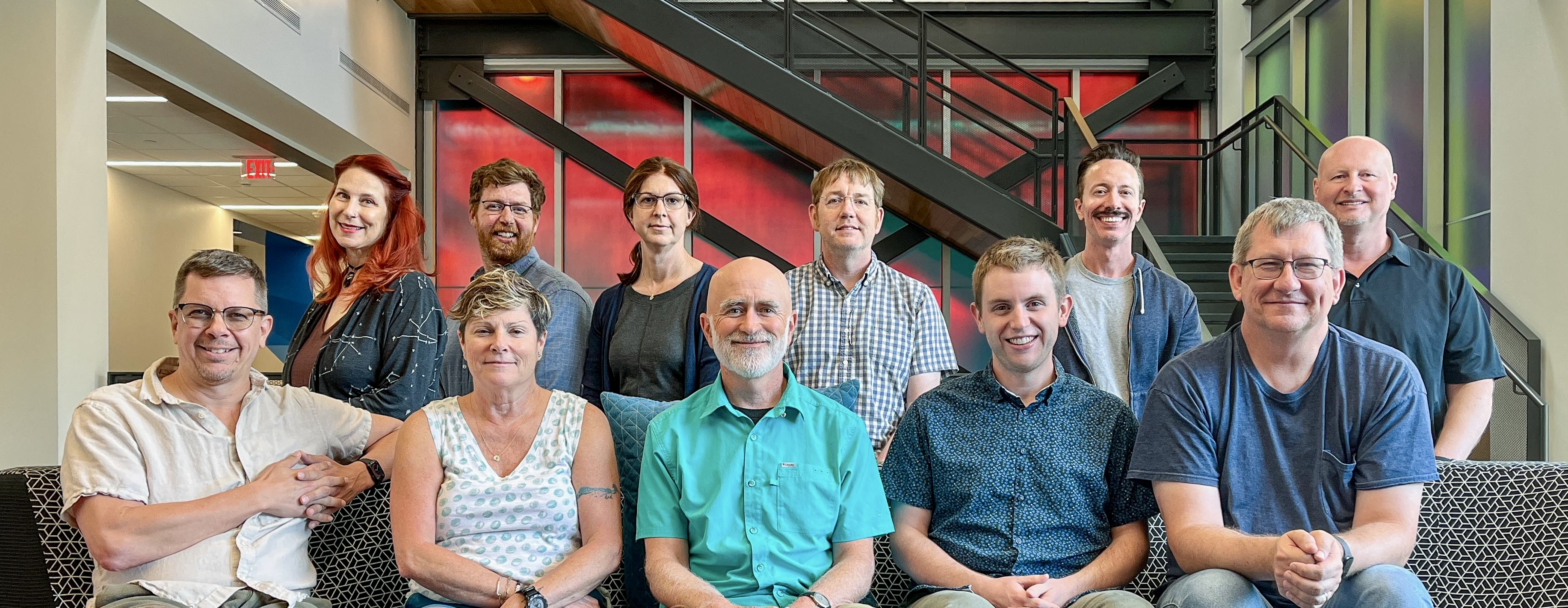
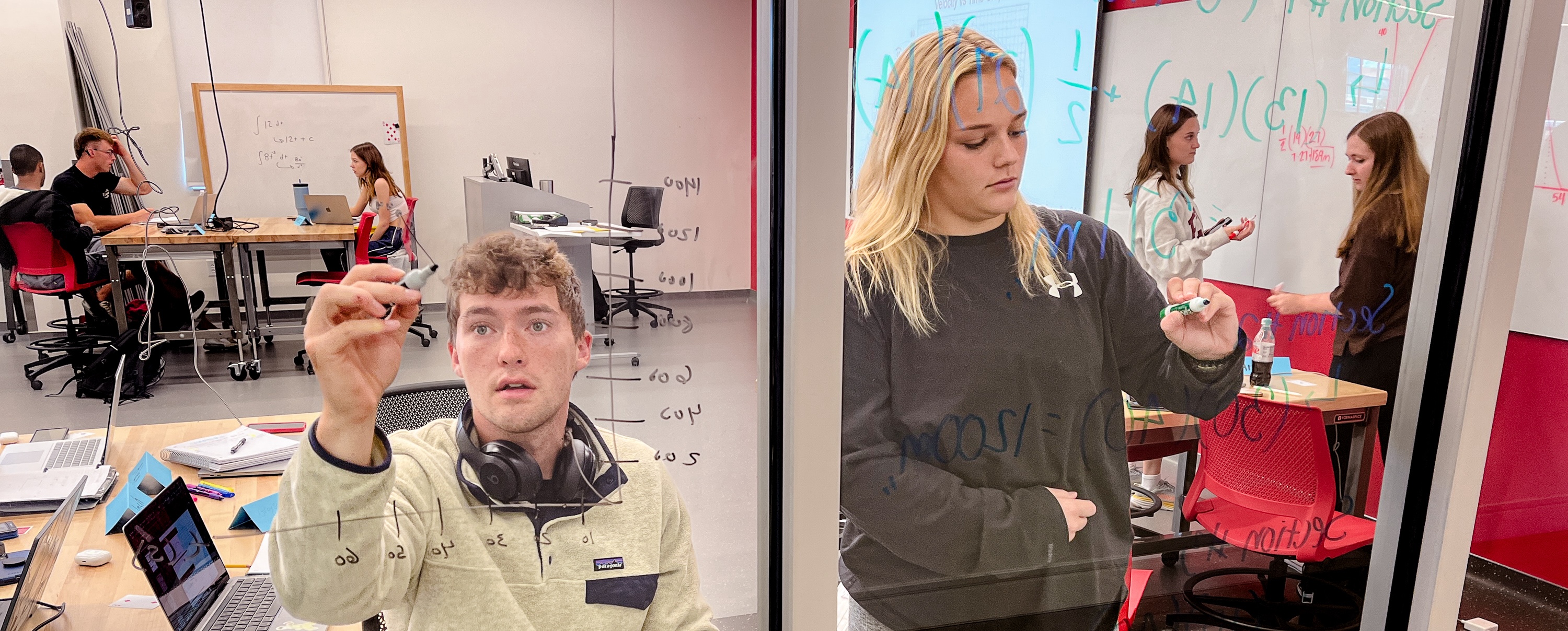
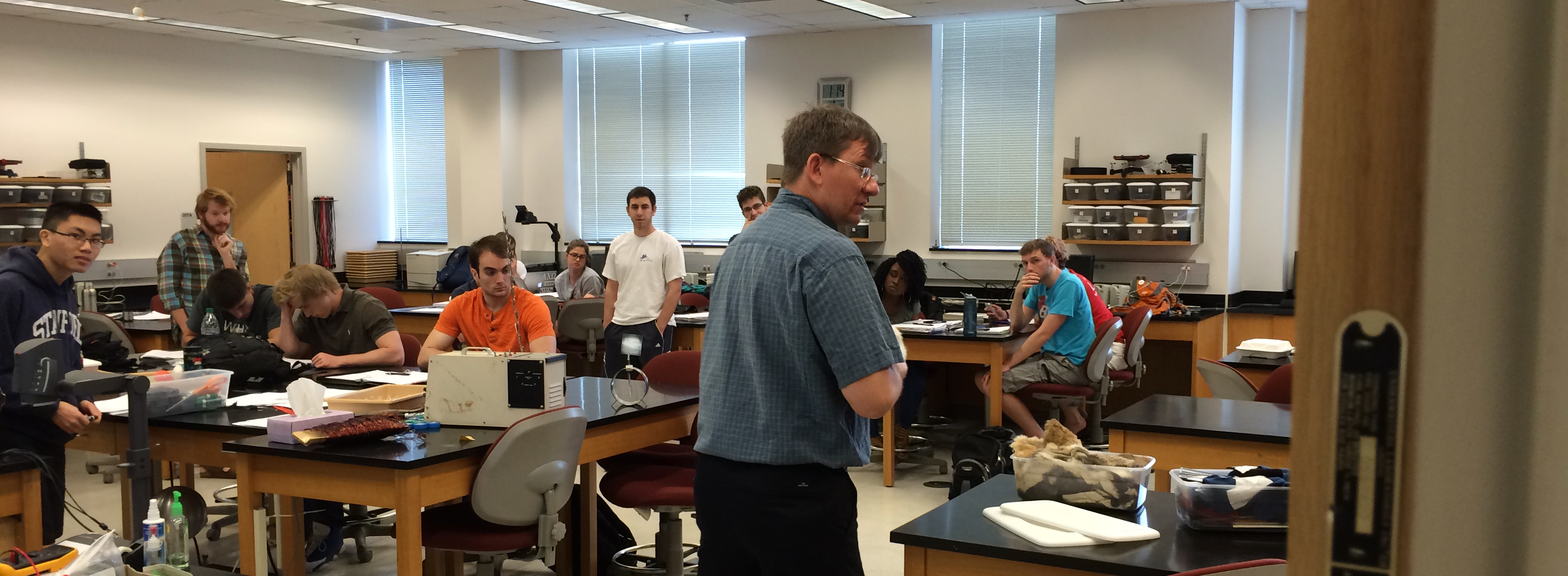
One of the great strengths of Elon's physics program is our close working relationship between faculty and students. All students are encouraged to be involved in research activities. Currently, these include a study of particle physics, the microscopic properties of crystals, simulation of mechanical and dynamical systems, the history and philosophy of science, and many other projects. We are an interdisciplinary department with experience in neuroscience, computational theory, engineering, astronomy, geology and environmental studies. Majors and minors can expect a diverse and interesting range of opportunities for course work and research, both within the traditional realm of physics and across disciplinary boundaries.

Our major course of study begins with a three-semester sequence that ranges from mechanics through electricity to basic nuclear physics and particle theory. Building on this base, we offer courses in the advanced theory of electromagnetic phenomena, the mysterious world of quantum mechanics and a wide range of other topical courses including classical mechanics, mathematical physics, circuit design, thermodynamics, field theory, statistical mechanics, etc.

Please don't hesitate to contact the Physics Department if you have questions. We will be happy to answer your queries or point you in the right direction.