Put Your Knowledge to Work

Experiential Learning is the foundation for how you learn. Internships are when you can put the skills and knowledge needed for what comes next into practice now.

An internship should be more than a line on your résumé. It gives you a chance to apply what you’re learning alongside people who do this work every day, see how they approach decisions and discover which responsibilities hold your attention.

The experience might connect closely to your major or take your skills into a field you hadn’t considered. You can bring new questions back to your courses and a clearer sense of what you want to try next.

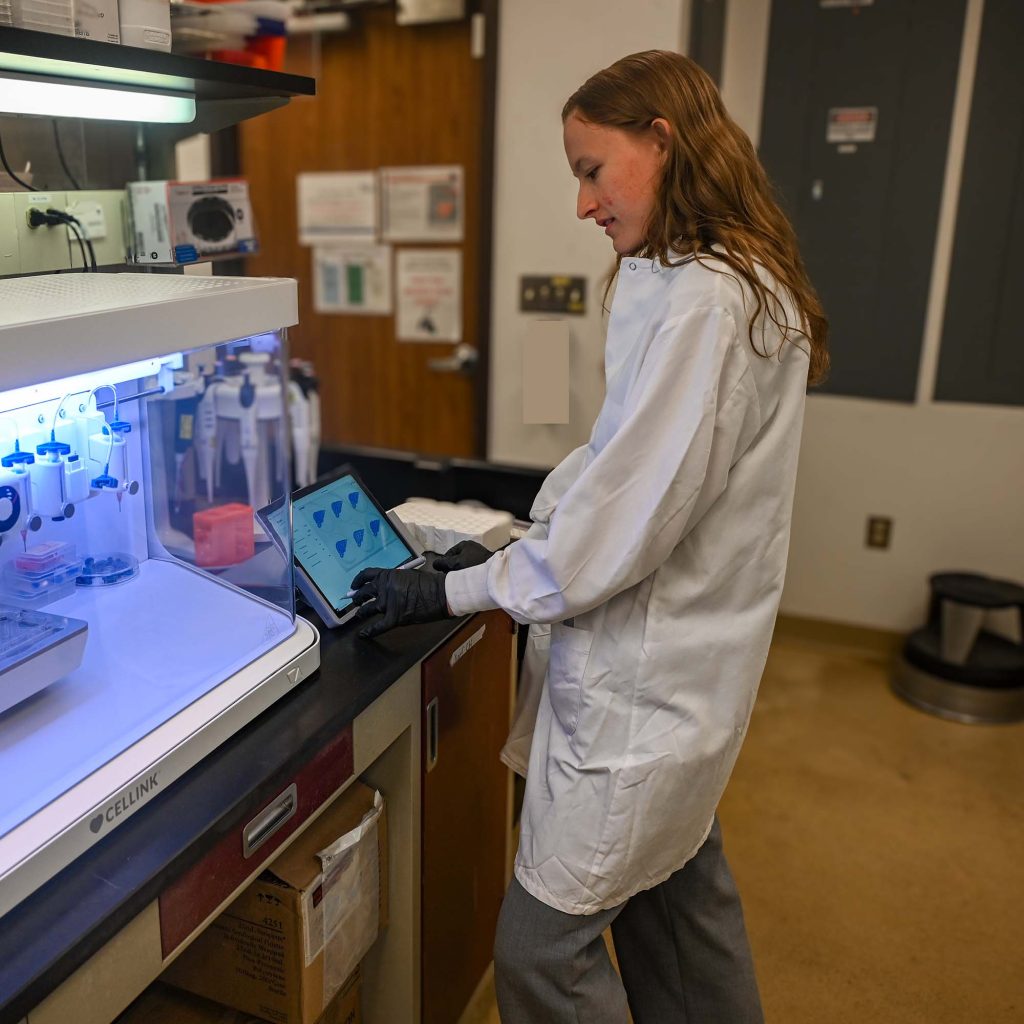
Elsa Eastment operates a BIO X6 bioprinter using a tablet in a laboratory.

See What Your Internship Could Look Like

Elsa Eastment ’27

Elsa brought her interests in engineering and biology together during a summer internship at the U.S. Army Medical Research Institute of Infectious Diseases. She used a 3D bioprinter to create living liver tissue and saw how researchers in different divisions contributed to one another’s projects. Back at Elon, the experience led her to seek more perspectives on her own research.

Read Elsa’s story

This opportunity inspired me to do more outreach and talk to people from different departments about my projects.


Find an Opportunity That Fits

Where Students Have Interned

From nearby organizations to national employers, Elon engineering and computing students have gained experience across a range of fields. These are some of the places that have hosted them.

Are you interested in sponsoring an intern?

An internship gives your organization a chance to work with an engineering or computing student on a problem that matters to you. You’ll see how they approach the work and collaborate with your team, while they gain experience and guidance. That relationship may continue beyond graduation.

Student Experience

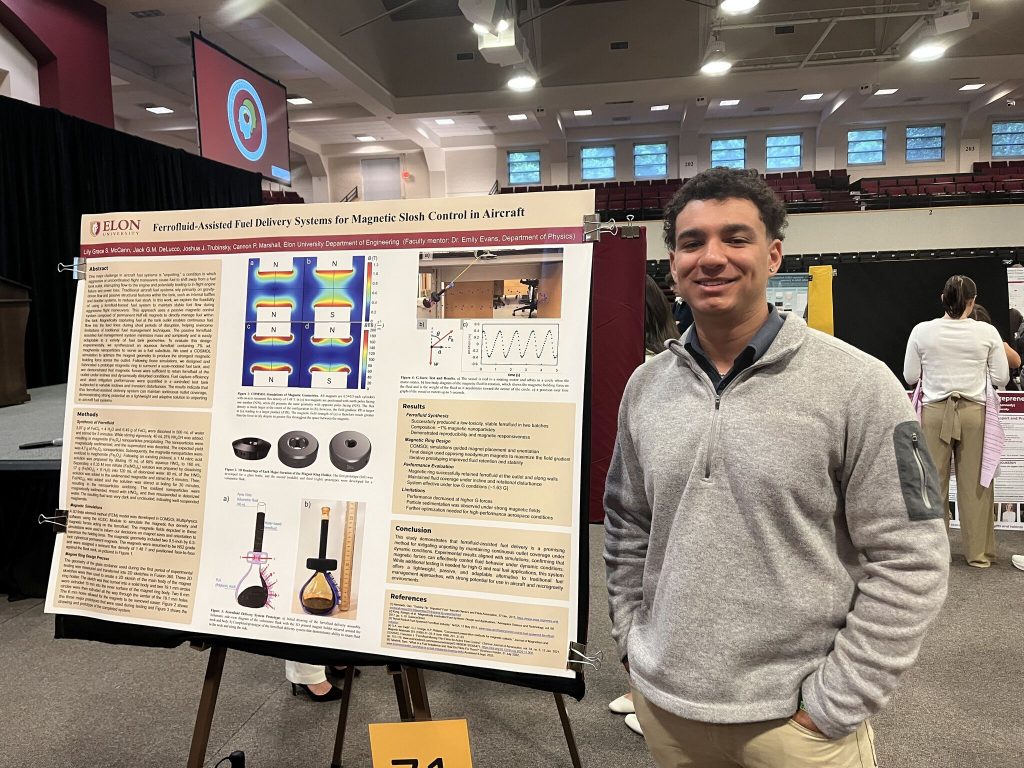
Cannon MArshall stands in front of his presentation poster.

Finding His Direction Through the Work

Cannon Marshall ’27

Engineering major Cannon Marshall worked with three classmates and faculty mentor Emily Evans on a yearlong research project exploring fuel delivery in aircraft. The team drew on chemistry, magnetism and fluid dynamics, then presented its work at Elon’s Spring Undergraduate Research Forum.

That summer, Cannon joined L3Harris Technologies’ Space and Sensors division as a manufacturing engineering intern. He learned about engineering processes, Six Sigma and data visualization while working with mentors and a fellow intern. Cannon has since accepted an offer to join Raytheon as a mechanical engineer after graduation.

I leave [the internship] with a renewed enthusiasm for engineering and a clear sense of purpose moving forward.