

What makes a community worth belonging to?
Belonging grows when people feel recognized, respected and connected through shared purpose and meaningful relationships.
Elon builds belonging through intentional structures that help students connect across differences and deepen their understanding of identity, purpose and community.
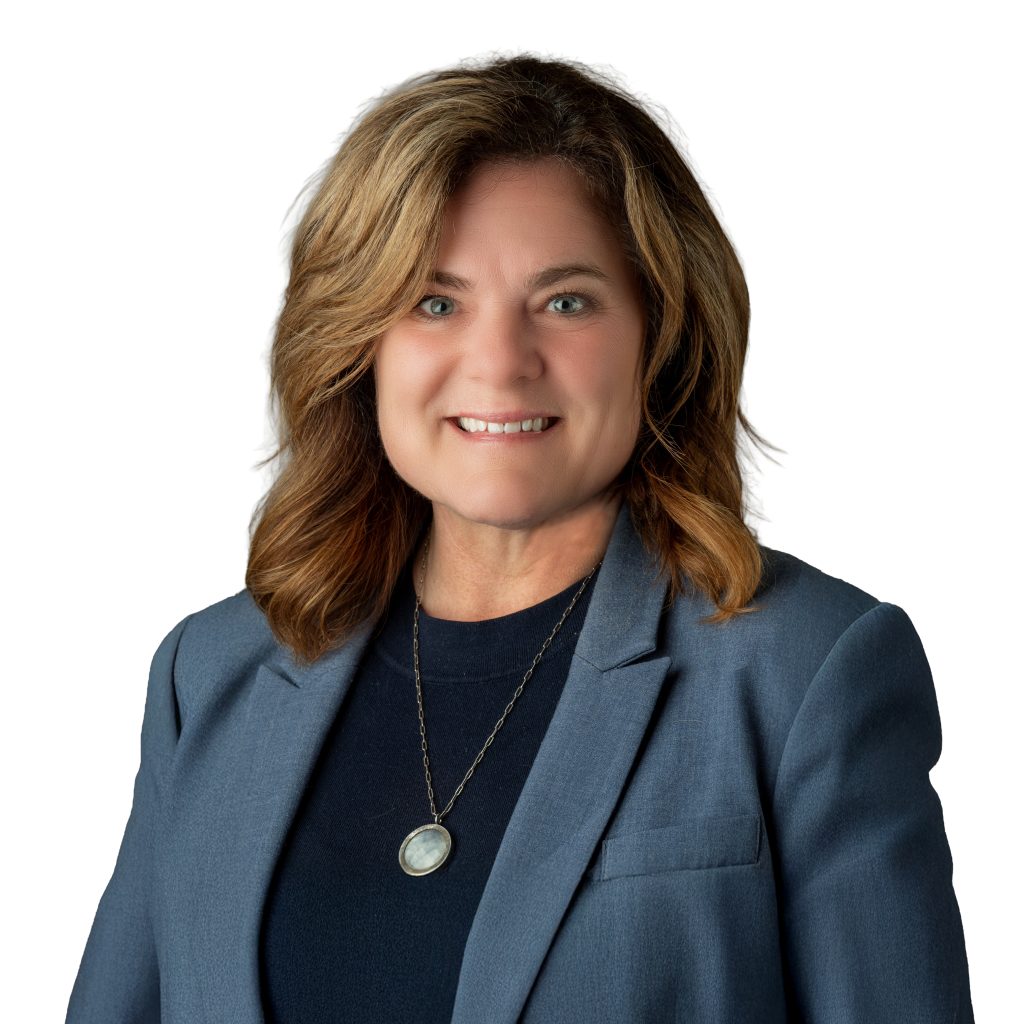
Eleanor Finger ’90, assistant vice president for student life and dean of campus life
Guided by the university’s Multifaith Strategic Plan, this work brings together academic inquiry, co-curricular learning and community dialogue. Through the Center for the Study of Religion, Culture and Society, faculty and students examine how belief systems, cultural traditions and social identities shape communities and public life, while the Truitt Center for Religious and Spiritual Life creates spaces for interfaith engagement, reflection and relationship-building. Together, these efforts affirm religious, spiritual and secular worldviews and promote mutual respect, ethical reflection and shared responsibility across campus.
These efforts are reinforced through Living and Learning at Elon, which connects students’ academic experiences, co-curricular involvement and daily life beyond the classroom. Through a combination of living-learning communities, mentoring relationships, leadership programs and Student Life initiatives, students build friendships and support networks around shared interests and values. Programs centered on civil discourse and dialogue across difference further strengthen these connections by teaching students how to listen generously, engage respectfully and navigate complex perspectives. These skills are essential for sustaining inclusive, vibrant communities.
Belonging takes intention. It’s created through everyday acts of connection.
FACULTY PERSPECTIVE
Belonging in Divided Societies
Associate Professor Sandy Marshall studies how identity, memory and place shape belonging in communities marked by political division and displacement. His research examines how people create meaning in contested landscapes, whether it is a region facing conflict or a neighborhood undergoing rapid change. In his courses, Marshall teaches students to analyze the geographic and cultural forces that strengthen or fracture social connection, pairing spatial analysis with fieldwork and case studies. He helps students understand that belonging is not static — it’s something people negotiate, create and sustain together.
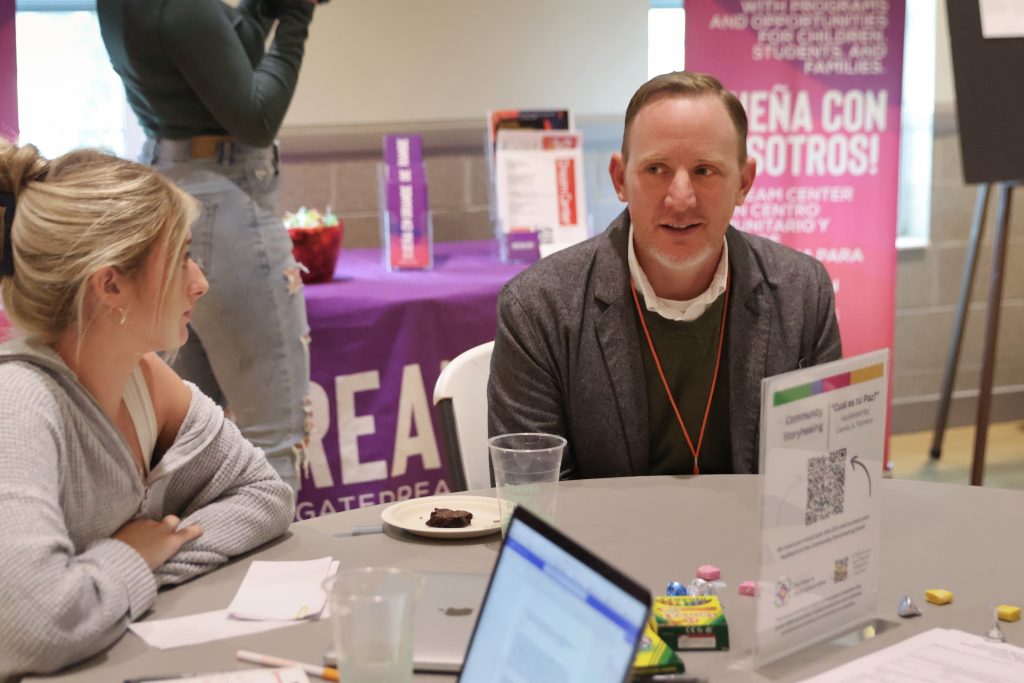
Sandy Marshall, associate professor of geography, at a Power + Place Collaborative community event
Belonging is shaped not only by where we live, but by the stories we share.
ALUMNI IN ACTION
Strengthening the Local Community
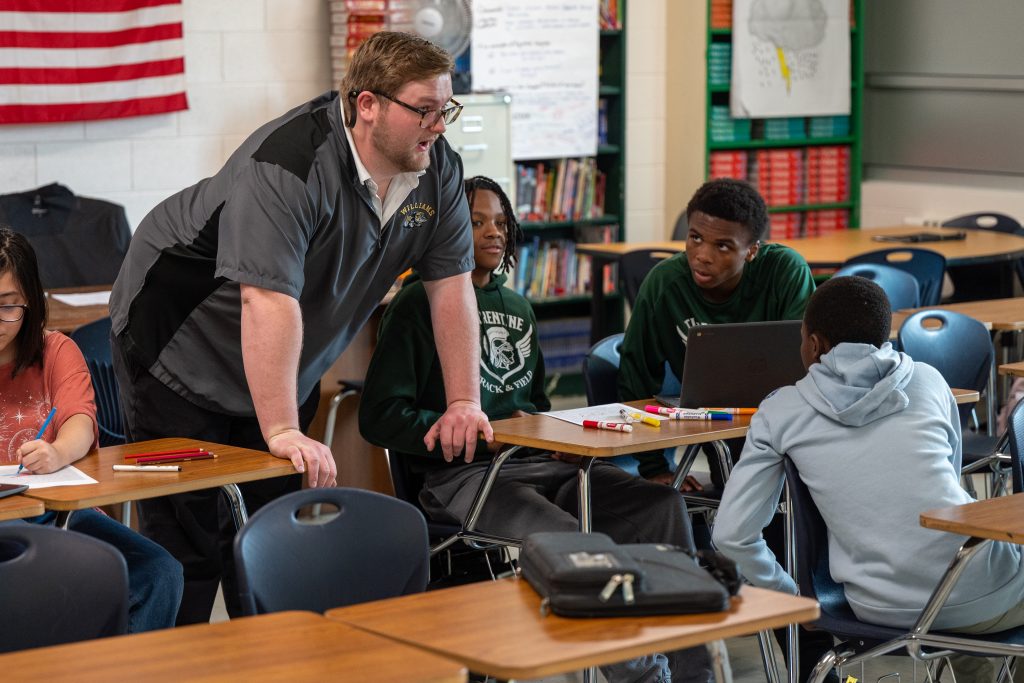
Matt Trez ’23 G’25 worked with middle schoolers as part of Elon’s Teach for Alamance program
Through Teach for Alamance, an initiative that embeds teachers in local schools, Matt Trez ’23 G’25 helped expand educational opportunities while strengthening the local community. As a social studies teacher in the Alamance-Burlington School System, the former Phoenix offensive lineman supported students academically and socially, building classrooms where every child feels valued and capable. Now teaching in Boston and pursuing an additional advanced degree, Trez continues the work of serving students and growing as an educator, a path shaped by his Elon experience.
STUDENT SPOTLIGHT
Planting Seeds of Connection
Emily Ecker ’26 builds belonging through deep, community-centered partnerships. Working with the Morrowtown Community Group, and under the guidance of her Elon mentor, she co-developed programs that strengthen the historically Black Burlington neighborhood’s community garden, support local families and create gathering spaces for youth. Guided by community voices and grounded in collaboration, Ecker’s work models what it means to build trust across difference. “Meaningful change happens when we show up together,” she says.
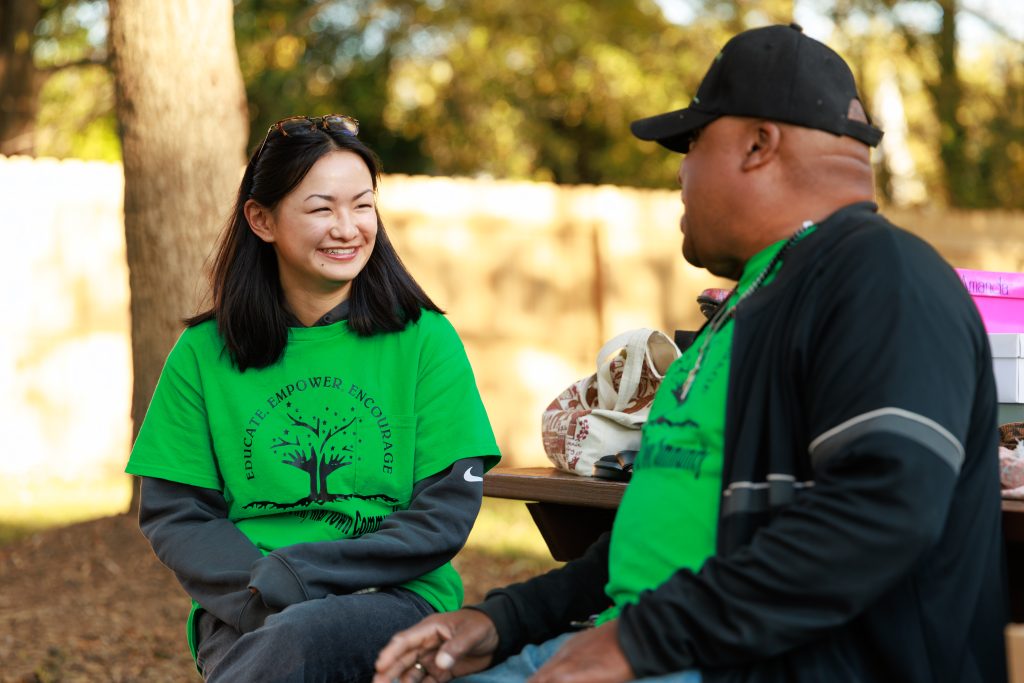
Emily Ecker ’26 with a member of the Morrowtown Community Group