


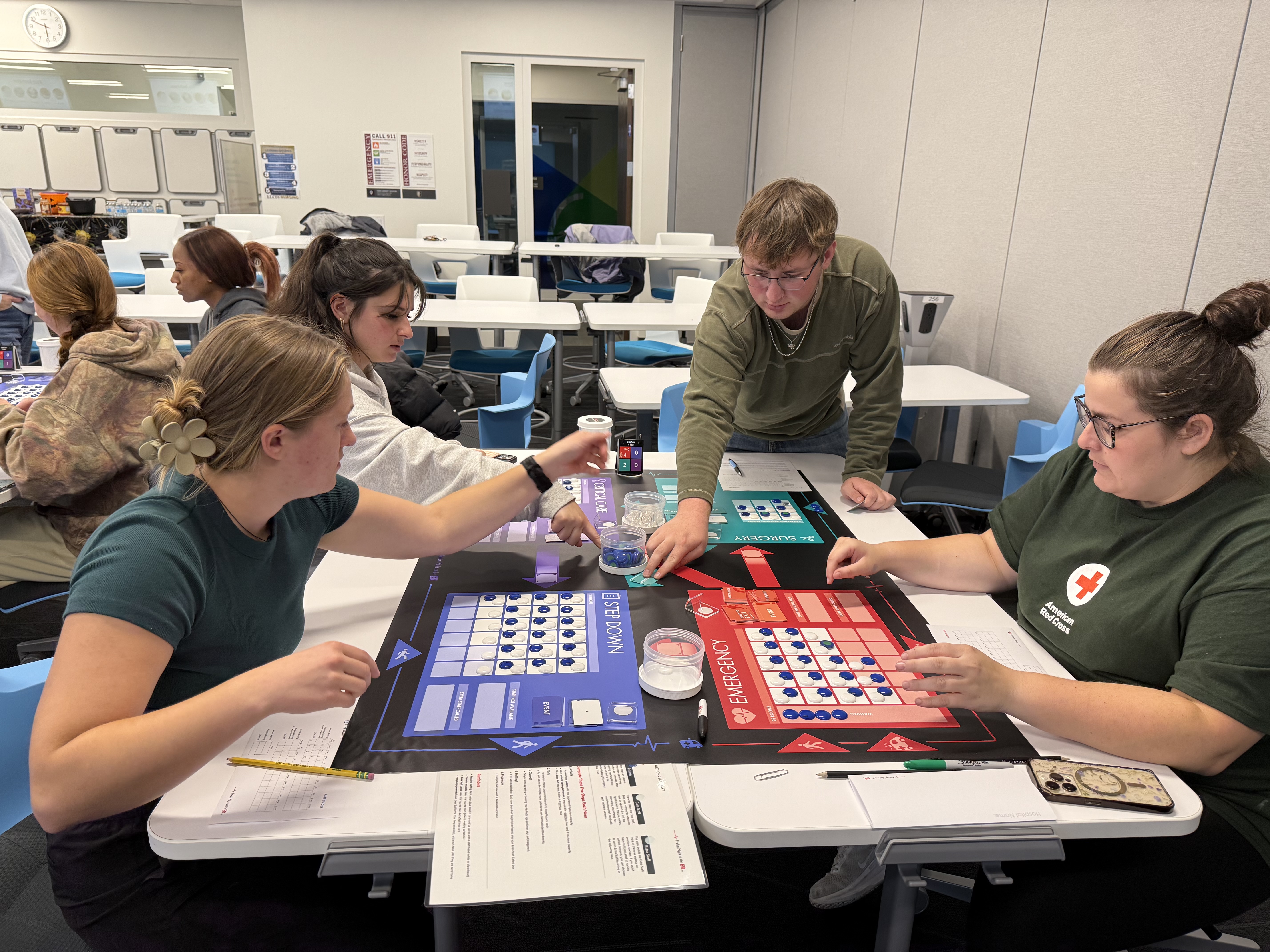
The grant paid for the "Friday Night at the ER" game that simulated the real-world tasks of managing human and physical resources in a hospital setting.
Through an Elon Innovation Grant, Elon University’s Department of Nursing spent Friday night at the emergency room, but not for an emergency.
The grant allowed the Interprofessional Education (IPE) Committee in the School of Health Sciences to purchase the simulation game titled “Friday Night at the ER” to promote the power of collaboration and increase students’ innovative thinking.
“The flow of the hospital can be stressful,” said Rachel Keslar, assistant professor of nursing. “So, I thought this was a very fun and interactive game to promote thinking outside the box and engaging with other student disciplines.”
Prior to the game, Keslar and Bethany Fearnow, simulation coordinator for the Interprofessional Simulation Center, completed online facilitator training provided by the “Friday Night at the ER” manufacturer. This ensured the facilitators’ support throughout the simulation experience across the varying academic programs. On Oct. 29, 14 senior-level Nursing Fellows and four physical therapy students played the game in the Francis Center.
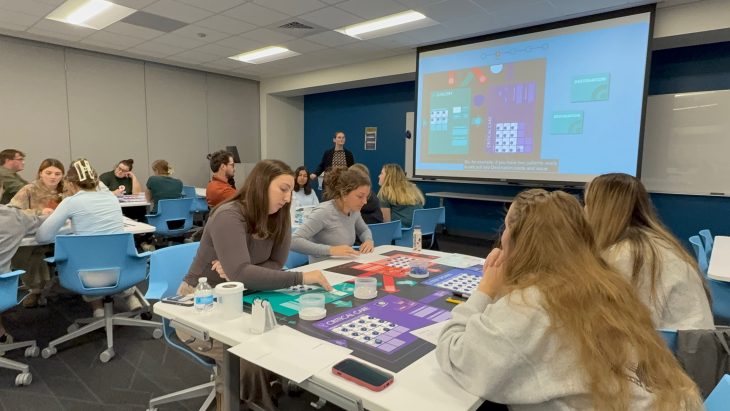
“Some of the challenges in the game included overcrowding, staffing management, bottlenecks in patient flow and other barriers to care that felt very real to me and some of the nursing students who also had experience working in an emergency department setting,” said Keslar.
In her grant application, Lori Hubbard, assistant professor of nursing and co-chair of the IPE Committee, emphasized the need for interdisciplinary education for students, noting that these games have been shown to promote the socialization and readiness of students to function in professional positions in the healthcare field.
Hubbard wrote that the education Elon students receive, specifically in the School of Health Sciences, focuses on becoming leaders in their field. The game helps expose them to the true management it takes to be a leading healthcare figure.
“Students in the School of Health Sciences at Elon University are educated not just to become excellent professionals, but also to become leaders in their field,” Hubbard said. “Especially for our Nursing Fellows, this will help them get comfortable problem-solving and increase their awareness about tensions between quality and cost efficiency of care in today’s healthcare environment.”
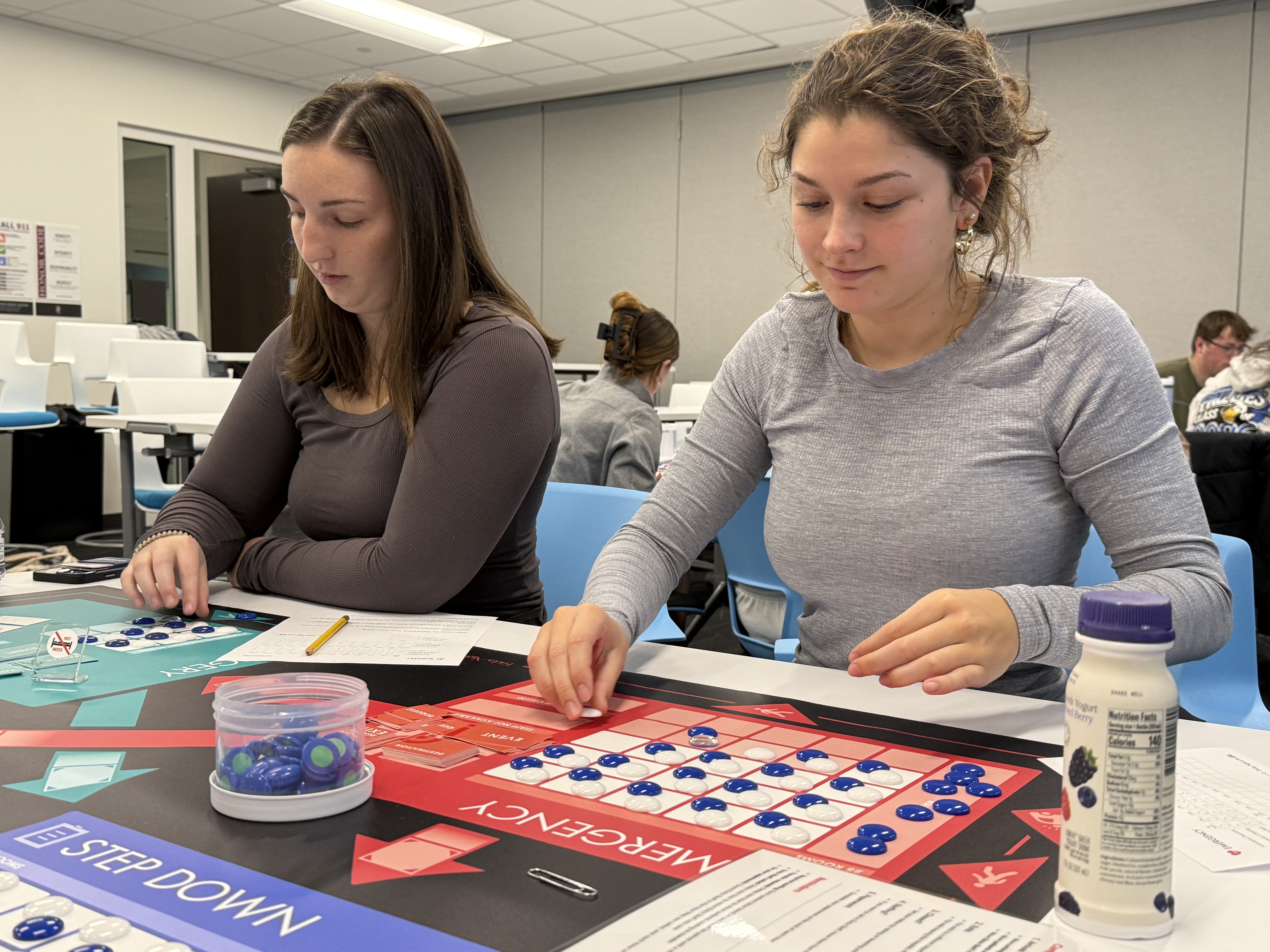
The game’s benefits for nursing students are also backed by research on effective healthcare teams.
“The research literature supports this contention that healthcare coordinated between disciplines through systems thinking can lead to better outcomes for patients,” Hubbard explained in her application.
The game is part of a larger effort by the Interprofessional Education Committee, in collaboration with the Interprofessional Simulation Center (IPSC), to expand collaborative educational opportunities for students. Located in the Francis Center, the IPSC was designed to provide healthcare students with a realistic clinical environment, bringing their medical textbooks to life without ever leaving campus.
“Though any group can play ‘Friday Night at the ER’, this simulation experience seemed to be a natural fit for bringing nursing, physical therapy and physician assistant students together to work collaboratively through scenarios realistically encountered in the US healthcare system,” Hubbard said.
Visit the “Friday Night at the ER” game information.