


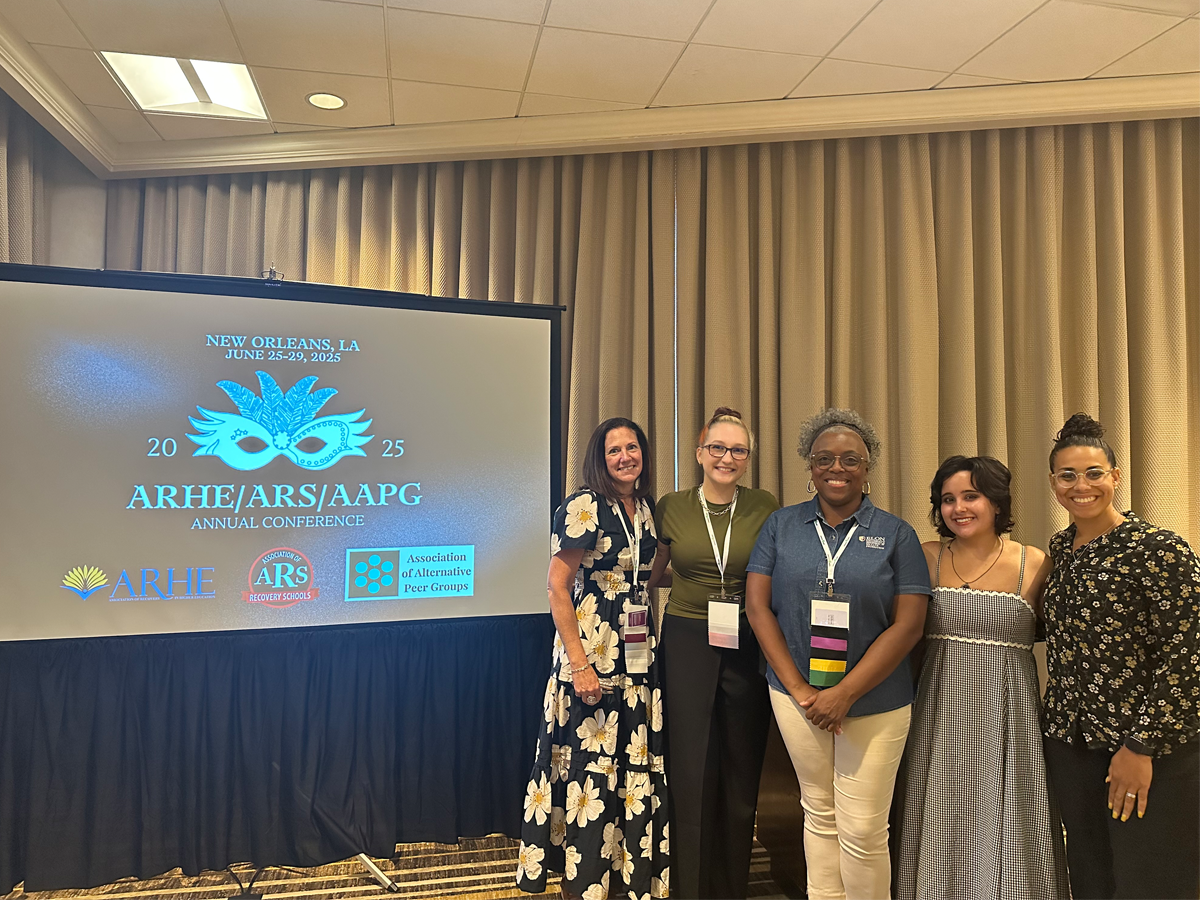
Students, faculty and staff represented Elon at the national Association for Recovery in Higher Education conference, highlighting the university’s holistic well-being model and expanded opportunities for leadership, recovery support and community connection.
When Elon University students Ben Krasnow ‘27 and Claire Moorhead ‘28 boarded their flight to New Orleans this summer to attend the Association for Recovery in Higher Education (ARHE) national conference, it marked the first step towards new experiences and a deeper understanding that recovery takes many forms.
Traveling with staff from the Department of Health Promotion and faculty from the Department of Public Health Studies, the students joined professionals, researchers and advocates from across the country to explore how campuses support students in recovery. The experience offered a unique perspective on what recovery looks like in higher education and what it means to belong within that community.
Growth and belonging through shared experiences
For Krasnow and Moorhead, attending the conference was more than a professional opportunity—it became a chance to grow personally and represent Phoenix Free, Elon’s collegiate recovery program.
“I really wanted to show up for Phoenix Free,” Moorhead said. “Even though I’m not in recovery from substance use, I wanted to better understand that part of our community and bring back what I learned.”
Reflecting a shared sentiment, Kransnow saw that the conference was both a leadership milestone and a reminder of the power of community.
“I’m the new president of Phoenix Free, which I’m super excited about,” he said. “It was really important to me to learn everything I could about how to be the best leader I could be, to talk with as many people as possible and to learn as much as possible.”
At the conference, Krasnow and Moorhead, attended sessions on topics such as the life cycle of grief and trauma, harm reduction, and the intersection of recovery and culture. Each student found that particular sessions left a lasting impression.
Moorhead was moved by the sessions on trauma, grief and harm reduction, expressing that she gained a deeper appreciation for how complex recovery can be.
“One speaker talked about how trauma stacks on top of itself, and that really resonated,” she said. “It taught me to have more empathy and understanding for people whose reactions might look different from mine.”
One of Krasnow’s favorite sessions was on hosting sober, substance-free events, something he said felt immediately applicable to campus life.
“Having sober events is really important for the organization as a whole and for anybody who wants to explore sobriety,” he said. “Listening to experts talk about ways to throw a party on a budget is something really manageable, and it could go a long way for students at Elon.”
Redefining student well-being
After witnessing the vastness of the collegiate recovery community they encountered during the conference, both students realized the importance of community. This realization has ultimately reshaped their views on student well-being.
“It definitely taught me that there are a lot more people who go through what many of the students within Phoenix Free go through than I would have thought, and it’s more prevalent on college campuses,” Moorhead said. She continued emphasizing the importance of having recovery groups on college campuses. “If people aren’t attending these groups, there’s a good chance they’ll feel incredibly alone and isolated,” she said. “It’s wonderful to be comforted by the knowledge that there are others around you with similar experiences.”
Krasnow expanded on the idea of community. “I very much view well-being through a community lens now,” he said. “It’s inspiring to see how many people are putting their weight behind student well-being and Phoenix Free.”
Growing as leaders
As the students viewed the conference as an opportunity for personal growth, Charlotte Williams, director of Health Promotion, saw it not only a catalyst for growth but also as a reflection of the intersection between student development, academic partnership and professional excellence.
“Bringing students to a national conference wasn’t just about exposure, it was about leveling up expectations,” she said. “They learned what it means to represent Elon as future professionals, to present at a national level, and to see themselves as leaders who can shape campus culture.”
Moorhead also emphasized the importance of student development, noting that attending the national conference opened the door to new experiences.
“It was the first time I’d ever flown alone, and that was humbling,” she shared. “But it taught me a lot about independence and what I’m capable of.”
Krasnow agreed, adding that the experience helped him see the importance of community in leadership. “It helps us know that we have value and a voice,” he said. “We’re part of something bigger, a community that wants to see each other thrive.”
Building a collaborative future
The conference also showcased the collaborative strength of Elon’s approach to well-being through a joint session led by Elon faculty, staff, and students. Titled “Living in Tune: One Institution’s Journey of Building Allyship between Substance-Free Living & Learning Community and Collegiate Recovery Program for Student Success,” the session explored how Collegiate Recovery Programs and Living & Learning Communities can partner to reduce stigma, foster belonging, and build peer support for students living substance-free. Drawing on the Social Ecological Model, the team shared strategies for creating recovery-ready campuses that prioritize holistic student success.
The presentation highlighted the collaboration among Phoenix Free, the SPARKS peer education program and the Health Promotion team — a model Williams says exemplifies Elon’s integrated approach to wellness.
“That synergy is what makes our model unique,” Williams said. “We’re not siloed. Peer educators, recovery advocates and faculty all work together toward the same goal, enhancing the holistic well-being of students.”
That same collaboration and the ability to give students transformative experiences like ARHE are made possible by a state grant that has strengthened Elon’s collegiate recovery infrastructure.
A foundation of support
Initially awarded in 2022, the North Carolina Department of Health and Human Services grant was renewed this year to fund two full-time assistant director roles and three student positions within Phoenix Free, expanding Elon’s capacity for collegiate recovery and peer education initiatives.
“The initial grant was $257,000, and through the renewal, we were able to secure $316,000,” said Callie Kelly, assistant director for substance use prevention. “The bulk of that funding goes directly toward staffing. C.J. Bugna, who serves as assistant director of collegiate recovery, brings a wealth of knowledge and experience to this role. Having a dedicated team makes an incredible difference, and has strengthened community and belonging for students in or seeking recovery.”
Kelly explained that the Department of Health Promotion’s work is guided by four core goals: cultivating a recovery-affirming campus, strengthening recovery infrastructure, expanding prevention education and engagement opportunities, and deepening campus and community partnerships. Using an “all recovery” model – a collegiate recovery model that incorporates other elements of recovery, such as self-harm, gambling and eating disorders – the department stressed that the collegiate recovery program is a lifeline for students in recovery.
“It’s not just about operations, it’s about retention,” Kelly said. “When students find community and connection, they’re more likely to stay, grow, and thrive academically.”
Echoing Kelly’s sentiments, Williams expanded on the discussion of retention.
“It’s a huge retention conversation for students who are in recovery,” she said. “Without that bridge or plan for connection, students can struggle academically, socially and within the campus community.”
Investing in the future of recovery
The conference experience and grant renewal underscore Elon’s growing role as a model for holistic student well-being in higher education. Through programs like Phoenix Free and campus partnerships, the university continues to champion initiatives that normalize recovery and empower students to lead.
“When you invest in recovery, you’re investing in generations,” Williams said. “You’re helping students build lives of purpose, resilience and care—not just for themselves, but for their communities.”