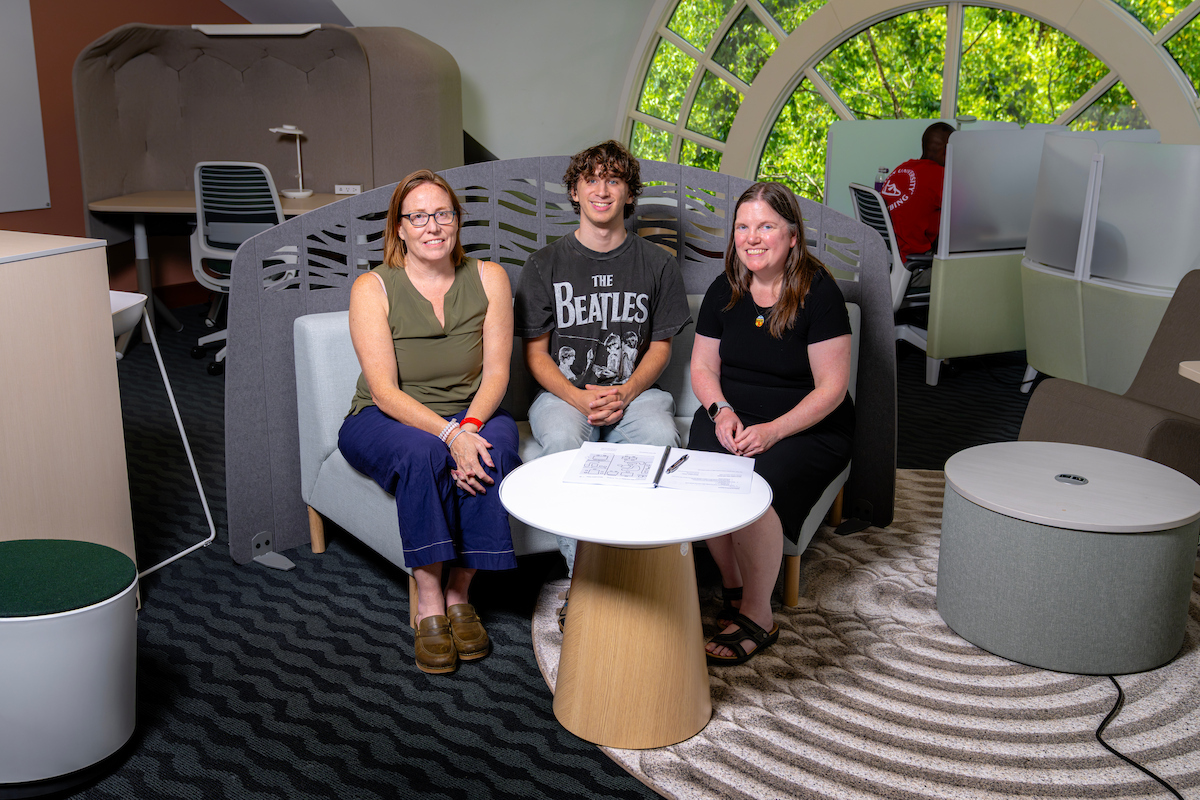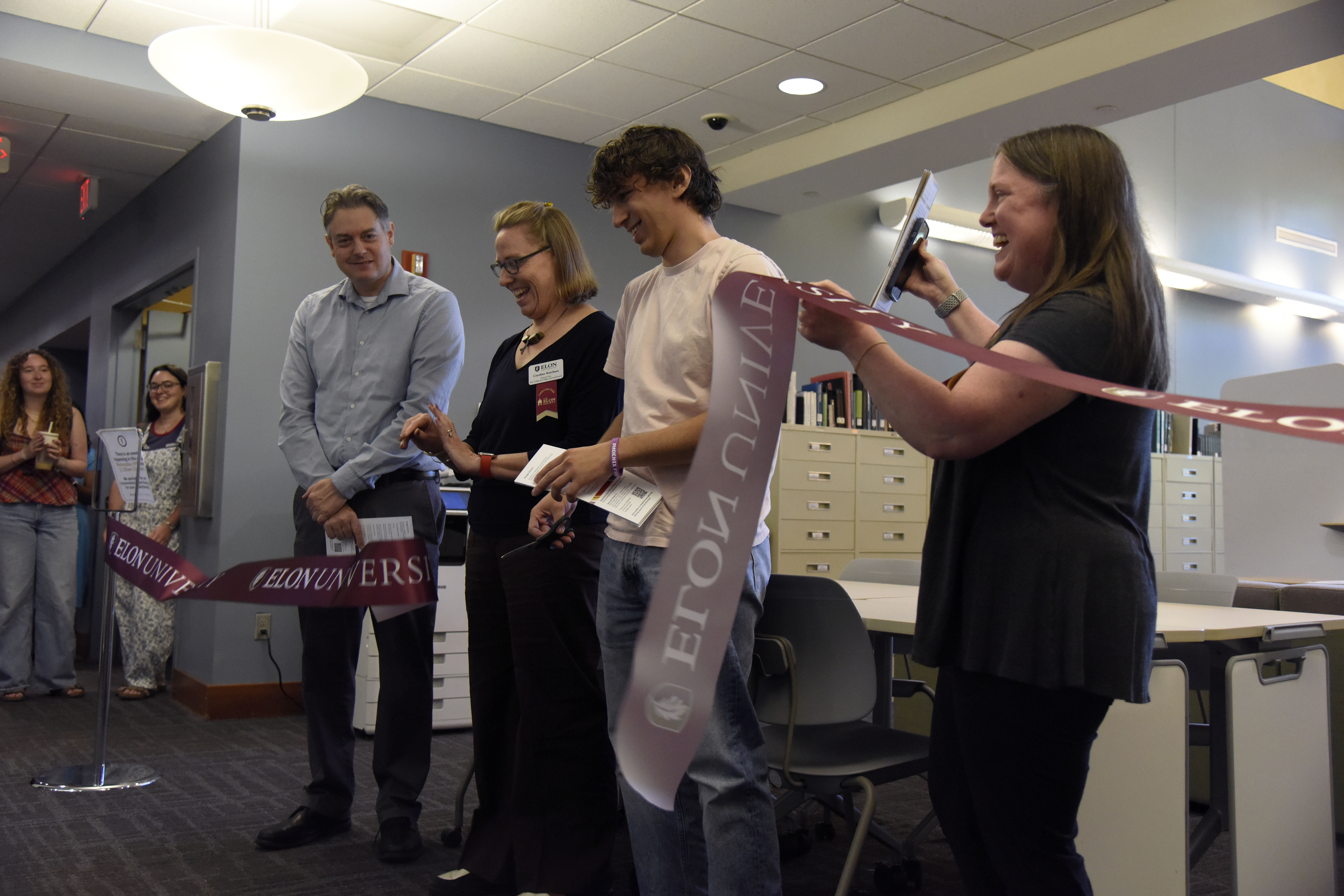
Elon University hosted a ribbon-cutting ceremony on Sept. 9, 2026, for study spaces featuring adjustable sensory inputs made possible through a grant from the furniture manufacturer Steelcase.
Two newly redesigned spaces in Elon University’s Carol Grotnes Belk Library will help researchers explore how physical environments can better support neurodivergent students while giving all students more choices in how and where they study.
The spaces, redesigned over the past several months through a grant from office furniture manufacturer Steelcase, were celebrated on Sept. 9, 2026, with a ribbon-cutting led by the Elon University administrative and student team that helped bring the vision to life.
“It’s really an amazing opportunity for our team, our students, and our campus, and we hope that the things that we learn from this space will carry into other learning spaces across campus,” said Professor Jessie Moore, director of the Center for Engaged Learning at Elon University and a co-leader of the initiative.
The project began early this year with a design session that brought together undergraduate and graduate students, faculty and staff. About two-thirds of participating students identified as neurodivergent, while others were interested in supporting neurodivergent peers.
Participants reviewed existing research on neuroaffirming spaces and identified characteristics that could make learning environments more inclusive. Students used library floor plans to sketch how those principles could be incorporated into the spaces.
Priorities included psychological safety, greater control over lighting and surroundings, different sensory experiences and separate zones for collaboration and quiet individual work.
Steelcase worked with Elon’s Office of Planning, Design, and Construction Management to translate those ideas into potential designs. Students provided feedback on furniture, colors, seating arrangements and other features. Several additional rounds of feedback followed before furniture installed over the summer.
The redesign focused on two areas of Belk Library.
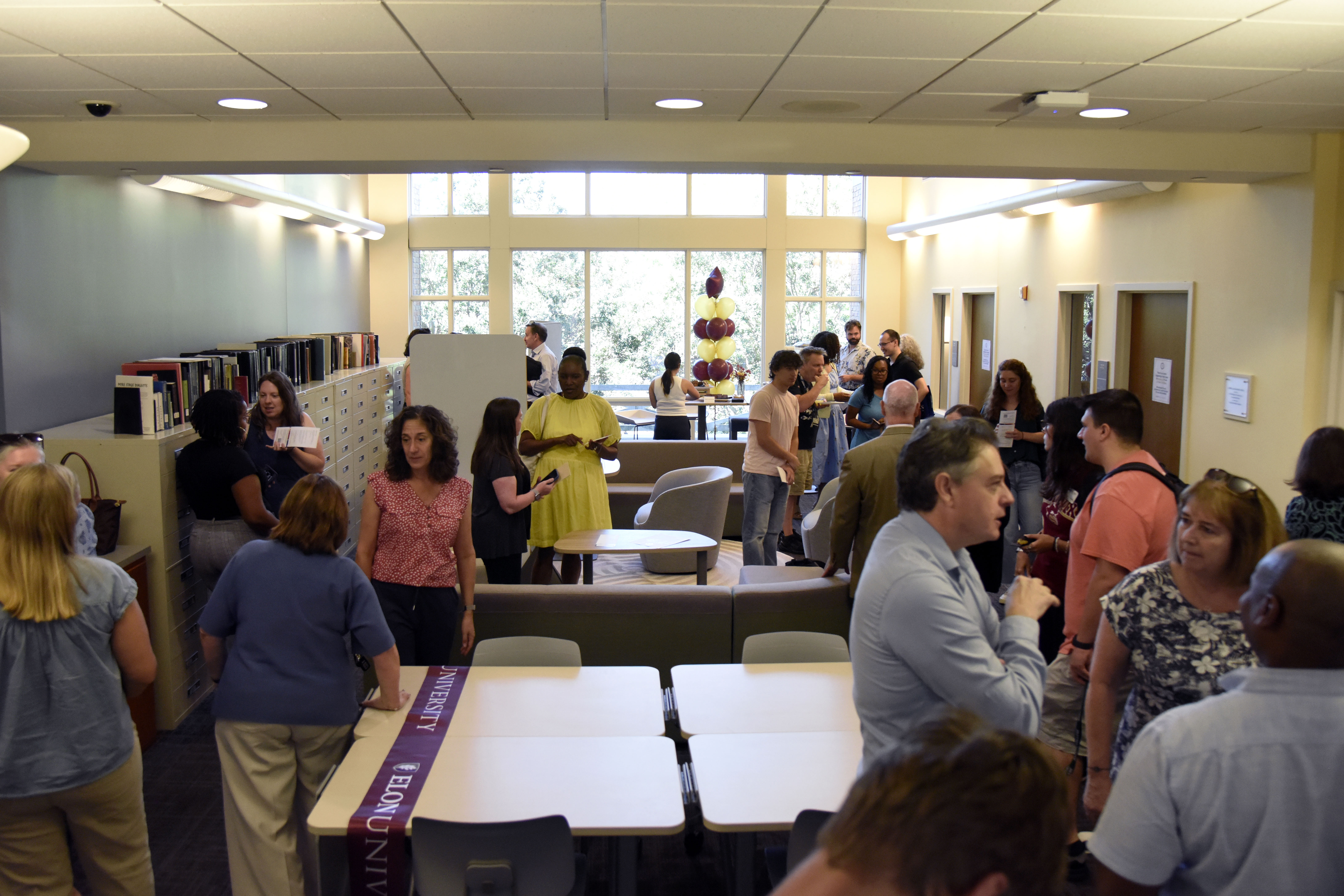
On the second floor, a lounge and three adjoining study rooms were redesigned, with each study room offering a different configuration. Features include varied seating and dimmable floor lamps that provide alternatives to overhead lighting.
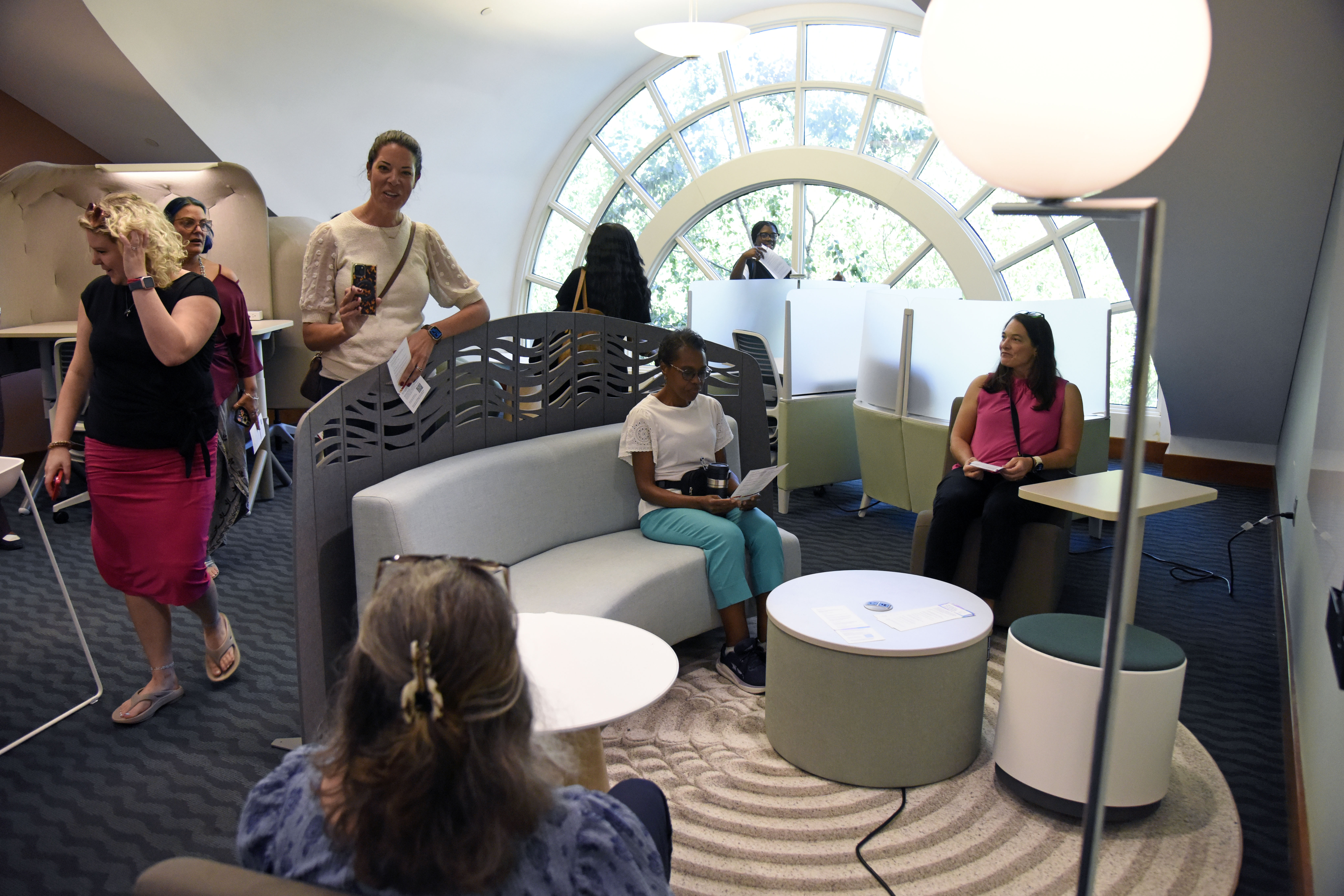
On the third floor, an area known as “The Treehouse” offers a different experience. Overlooking trees and green space facing the Inman Admissions Welcome Center, the quieter area uses earth tones, creams and fabrics intended to connect with the natural environment. The redesign replaced large study carrels with a wider variety of seating styles and textures while increasing the area’s overall seating capacity.
“I’ve long supported neurodivergent students through accessible space design,” said Professor Caroline Ketcham, associate dean of Elon College, the College of Arts and Sciences, and a co-leader of the project with Moore. “It’s exciting to create spaces where textures, lighting and desk heights can be adjusted to meet individuals’ needs. This work makes it possible for people to thrive in environments they can use in ways that work best for them.”
It’s exciting to create spaces where textures, lighting and desk heights can be adjusted to meet individuals’ needs. This work makes it possible for people to thrive in environments they can use in ways that work best for them.
– Professor Caroline Ketcham, associate dean of Elon College, the College of Arts and Sciences
Marisa Sergnese, an applied research and learning consultant at Steelcase Learning, attended the ribbon-cutting and praised the Elon team that helped bring about the redesigned library spaces.
“At Steelcase, we use a human-centered design approach,” Sergnese said. “Observation, research, prototyping, and the iterative process allows us to collect insights so that we can learn what we need to respond to emerging forces in education. That’s the core of everything that we do, and to do that, it was really important for us to find a partner that was as interested in this topic as we are.”
With installation complete, the project now moves into its research phase.
Faculty and student researchers will observe how people use and rearrange the spaces and gather feedback through surveys, interviews and focus groups. Because some furniture can be easily moved, researchers said they are particularly interested in whether students modify the original configurations to better meet their needs.
The team is also developing tools to assess how successfully learning environments incorporate the neuroaffirming design principles identified during the project. Findings will be shared with Steelcase and could help inform future spaces at Elon and elsewhere.
Steelcase has offered to support student co-researchers in presenting findings at conferences.
Ben Krasnow and Kaz Kelly, both members of the Class of 2027, will continue working on the research during the coming academic year. They and Kira Campagna, a 2026 graduate, participated as Center for Engaged Learning Student Scholars studying neuroaffirming engaged learning.