


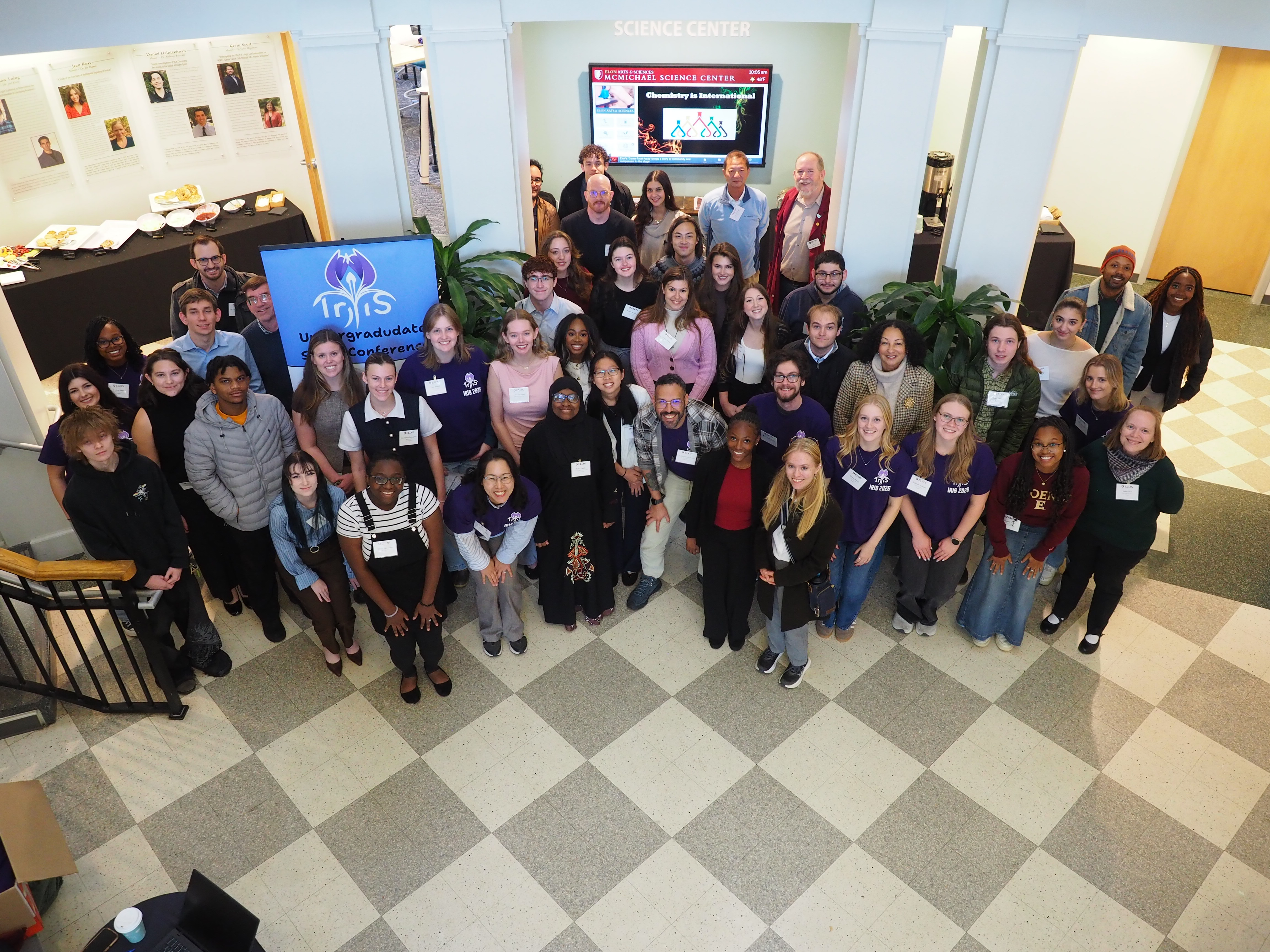
The regional STEM conference for undergraduate students, called Integrating Research in Science (IRIS), brings together undergraduate STEM researchers for a day of discovery, collaboration and networking.
Nearly 80 undergraduate students and faculty approximately 10 regional colleges and universities, representing a wide range of STEM disciplines gathered at Elon University on Nov. 14 for the 2026 Integrating Research in Science (IRIS) conference, held in the McMichael Science Building and Innovation Hall.
IRIS is an innovative, student-led regional conference that celebrates interdisciplinary research and fosters connections among undergraduate researchers, faculty, and STEM professionals. Through research presentations, professional networking and expert panel discussions, the one-day conference provides students with opportunities to share their work, explore research beyond their own disciplines and prepare for future academic and professional careers.
By bringing together students and faculty from different STEM fields and institutions, IRIS promotes interdisciplinary collaboration while building a supportive undergraduate research community.
Student leadership at the heart of IRIS
A defining feature of IRIS is its emphasis on student leadership. Undergraduate students take an active role in planning and organizing the conference, gaining hands-on experience in event coordination, teamwork, communication and professional development.
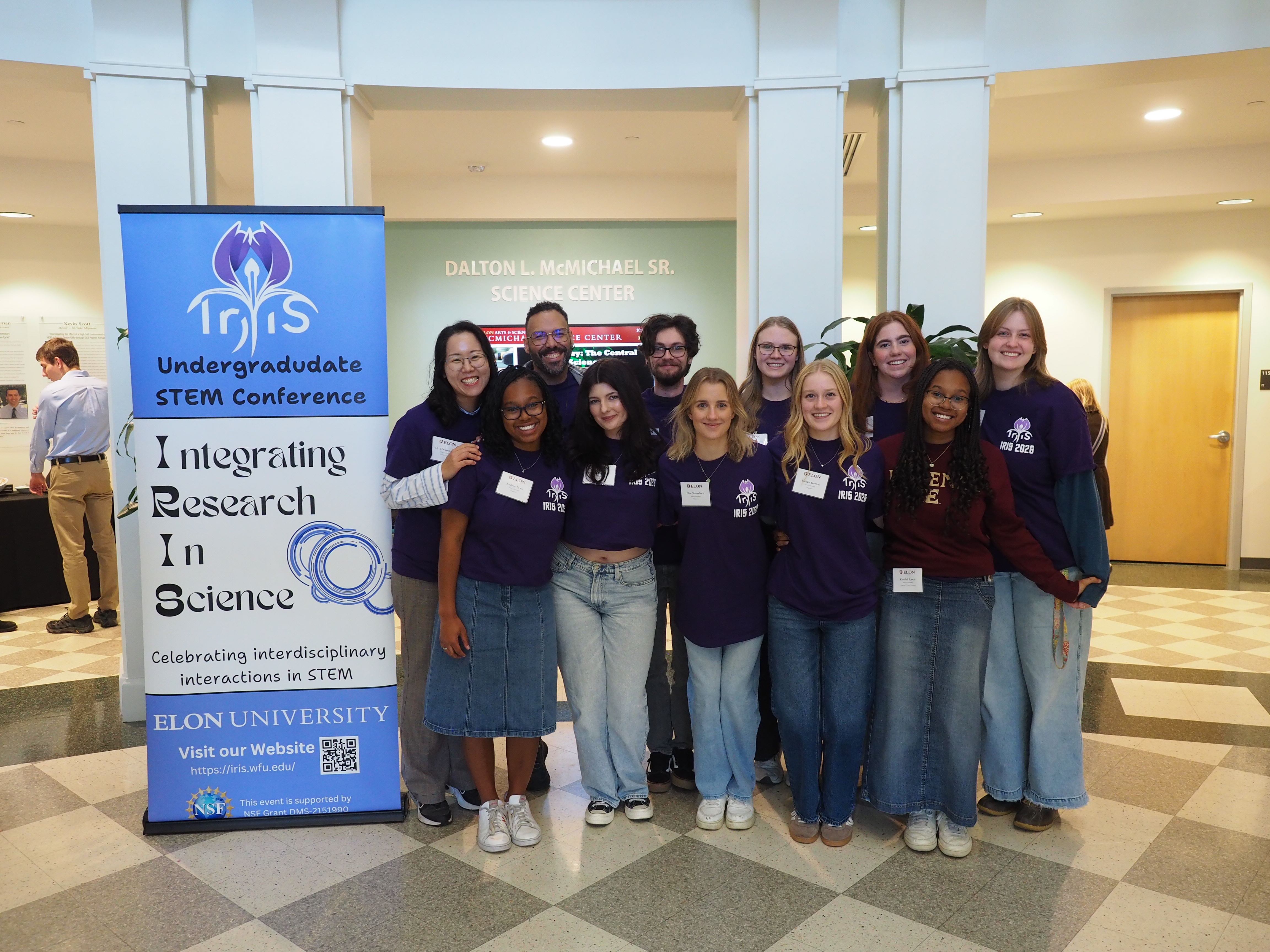
“Our student organizing committee did an outstanding job bringing this conference to life through teamwork, dedication, and the unique strengths and interests of each member,” said Hwayeon Ryu, associate professor of mathematics and lead faculty organizer for IRIS. “Their hard work and commitment were instrumental in making this event a success. It was especially rewarding to see such enthusiastic participation, with well-attended presentations, engaging discussions, and meaningful interactions among students, faculty, and other attendees throughout the conference.”
Originally established in 2017, IRIS was first hosted by Elon in Spring 2023. The 2026 conference marked the university’s third time hosting the event.
The student organizing committee included Elise Butterbach ’27 (leader; biomedical engineering), Alana Denby ’27 (biology), Maria Skiedziel ’28 (biochemistry), Katherine Johnson ’28 (biochemistry), Zoe Kinnard ’28 (chemistry), Lauren Horton ’28 (biochemistry), Jordyne Lewis ’28 (economic consulting and data analytics), Lane Merrill ’27 (statistics and data Analytics), Ryan Papaioannou ’28 (statistics and applied Mathematics) and Kendall Lewis ’28 (biochemistry and mathematics), under the guidance of Elon faculty members Ryu and Efraín Rivera-Serrano, assistant professor of biology.
“I am so proud of all that this committee has accomplished. Successes in life never happen in a vacuum; it takes a supportive community to inspire and assist you in building whatever you have your heart set on. For this conference, my community was my committee, and I hope all attendees of IRIS got to see how warm, collaborative, and supportive the undergraduate research community at Elon can be,” said Elise Butterbach, a leader of the student organizing team.
Kendall Lewis ’28 reflected on the professional skills gained through organizing the conference.
“Working as a student organizer for IRIS has allowed me to gain valuable skills, such as leadership, collaboration, and communication. This experience has strengthened my confidence as a leader and has given me the opportunity to contribute to a conference celebrating undergraduate research and achievement,” Lewis said.
Celebrating undergraduate research across STEM disciplines
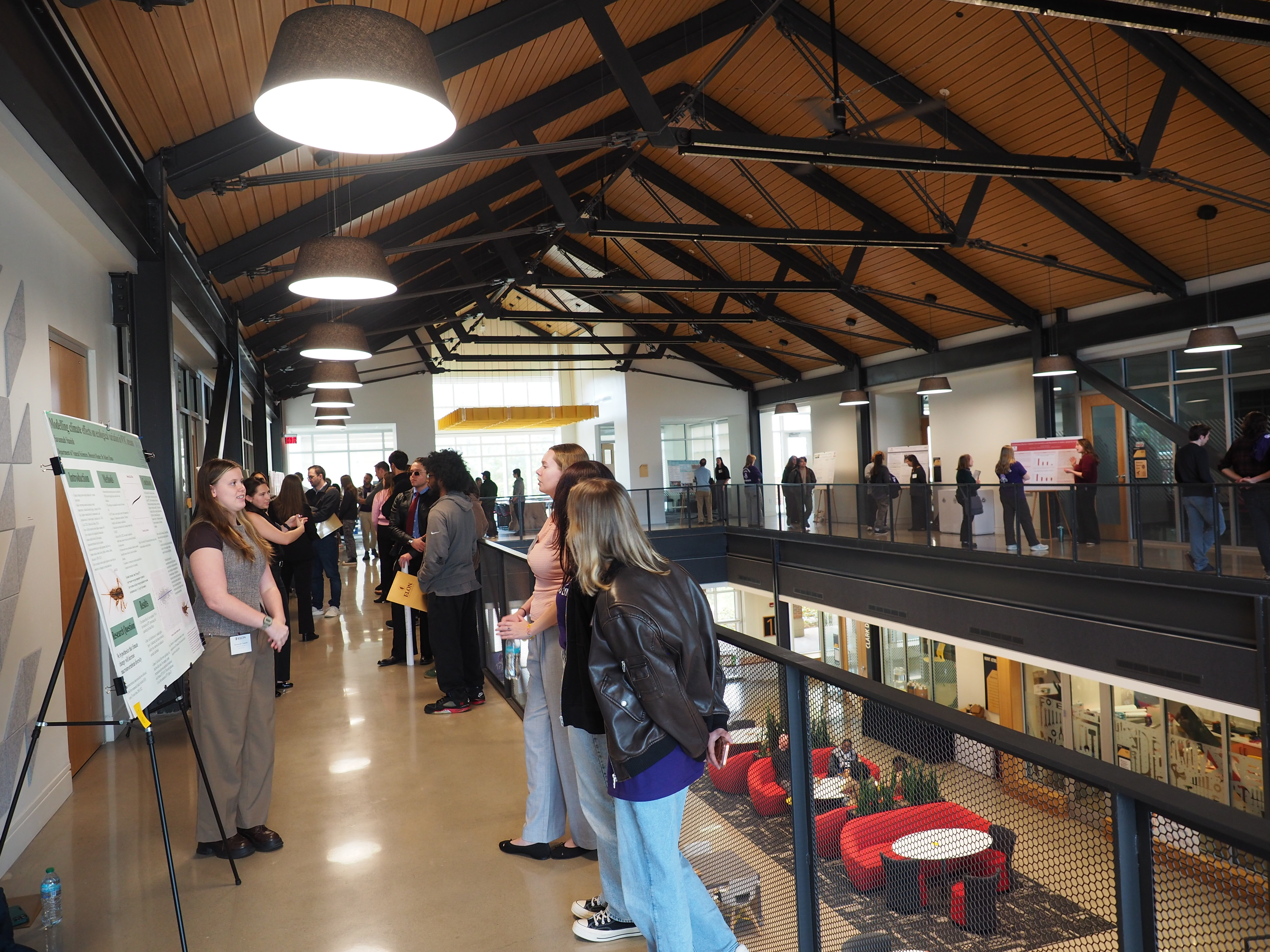
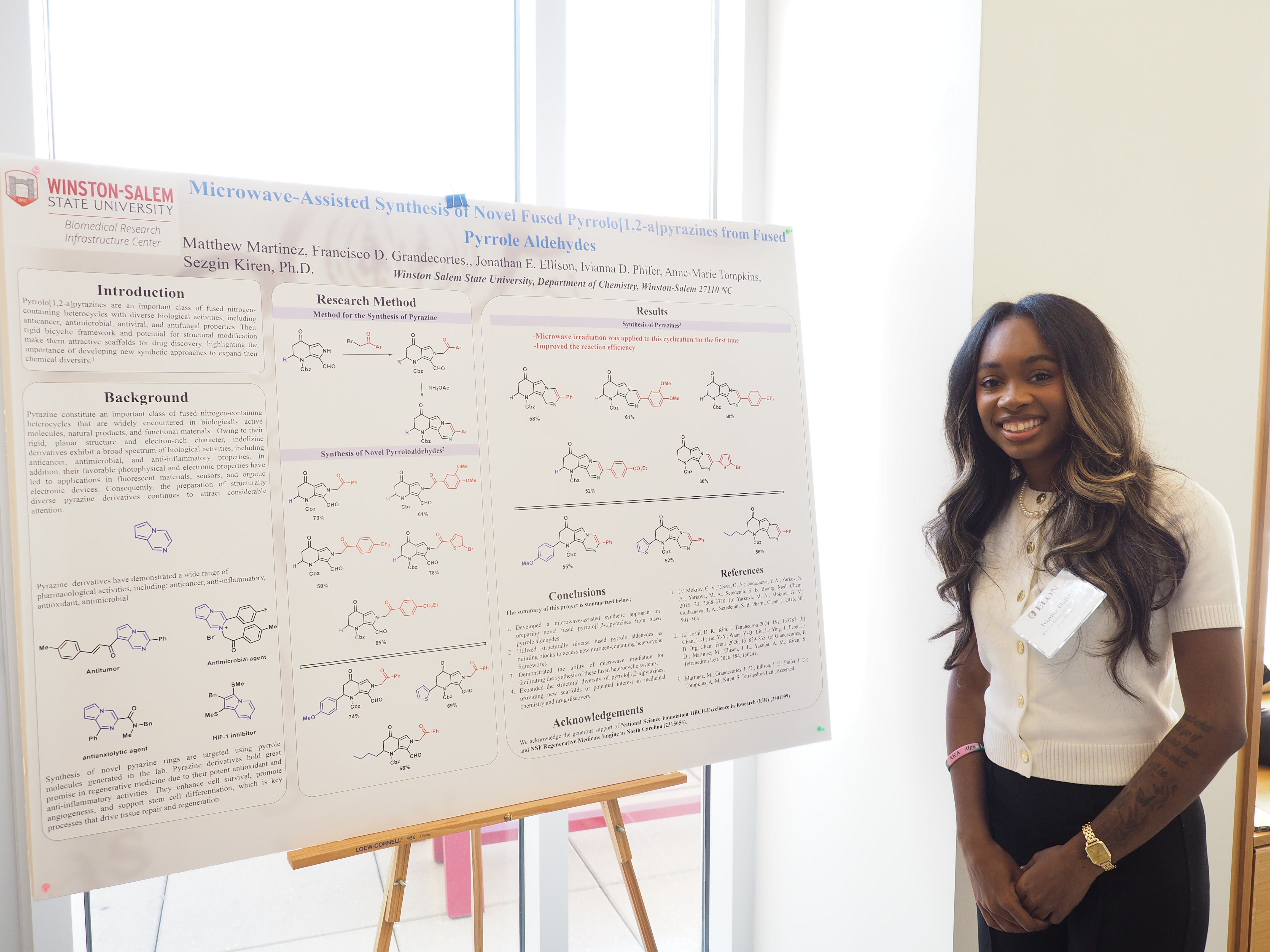
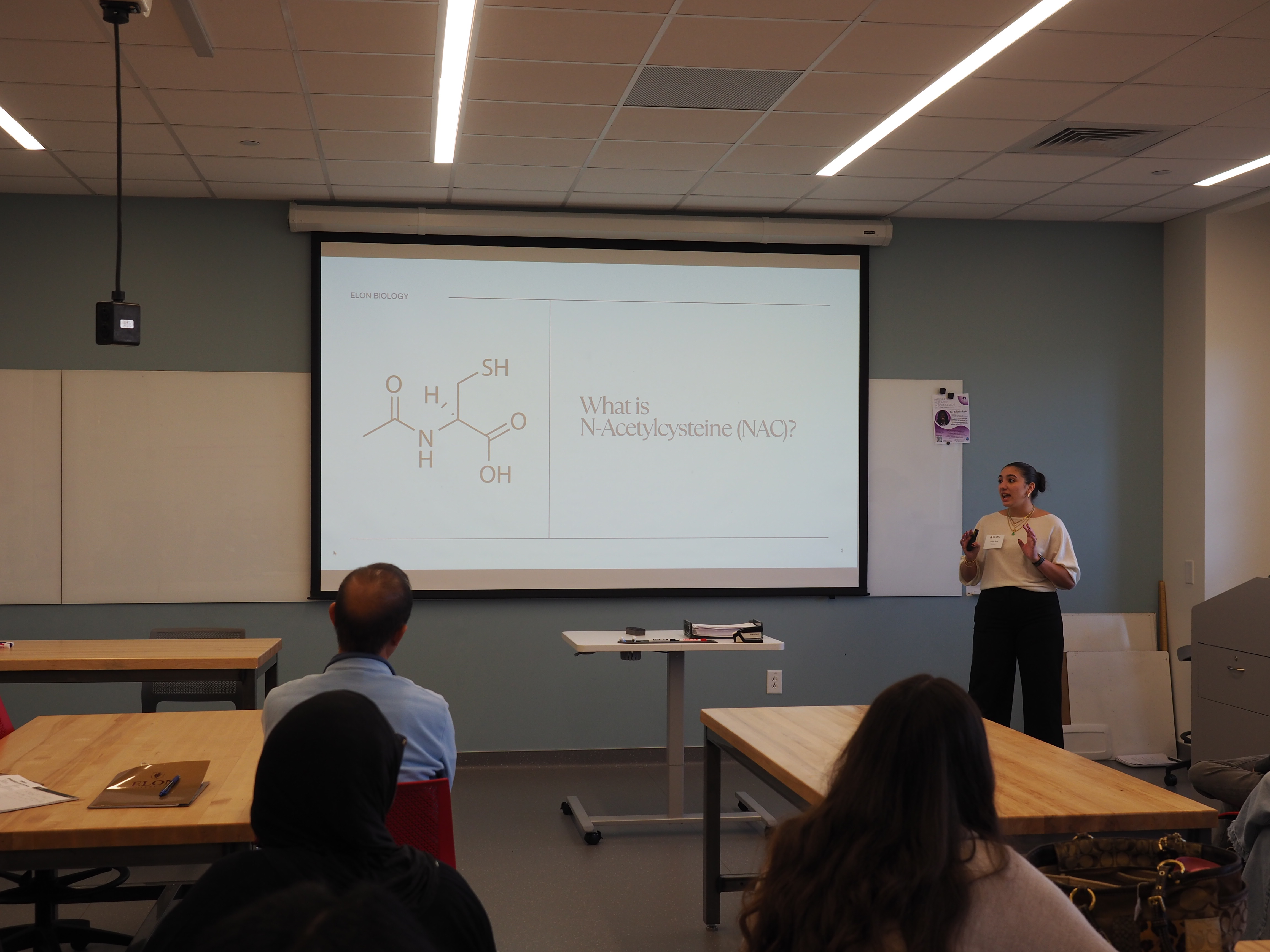
The conference featured more than 25 oral and poster presentations representing a variety of STEM disciplines. These sessions gave students opportunities to communicate their research findings, receive feedback and connect with researchers from other fields.
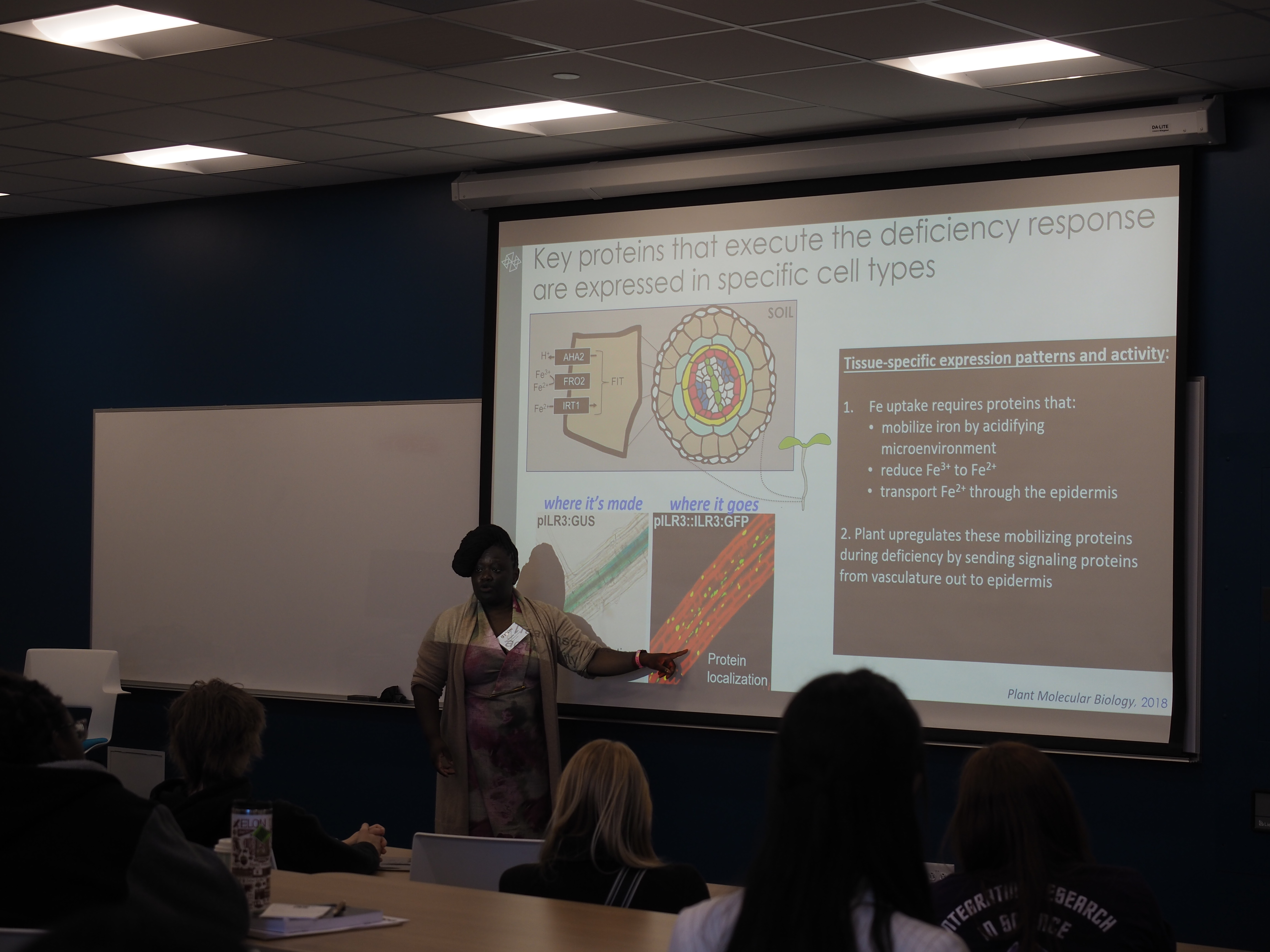
The keynote presentation, “You know more than you think you do: Hunting for quantitative answers in scarce and qualitative data,” was delivered by Belinda Apka, professor of chemical engineering at the University of Illinois at Chicago. The keynote encouraged students to consider how quantitative reasoning and creative approaches can help address scientific questions even when available data are limited.
Following the keynote, students participated in oral and poster presentations, and the conference concluded with a panel discussion featuring professionals from academia and industry. Panelists shared experiences and advice about graduate education, career pathways, professional development and navigating opportunities in STEM.
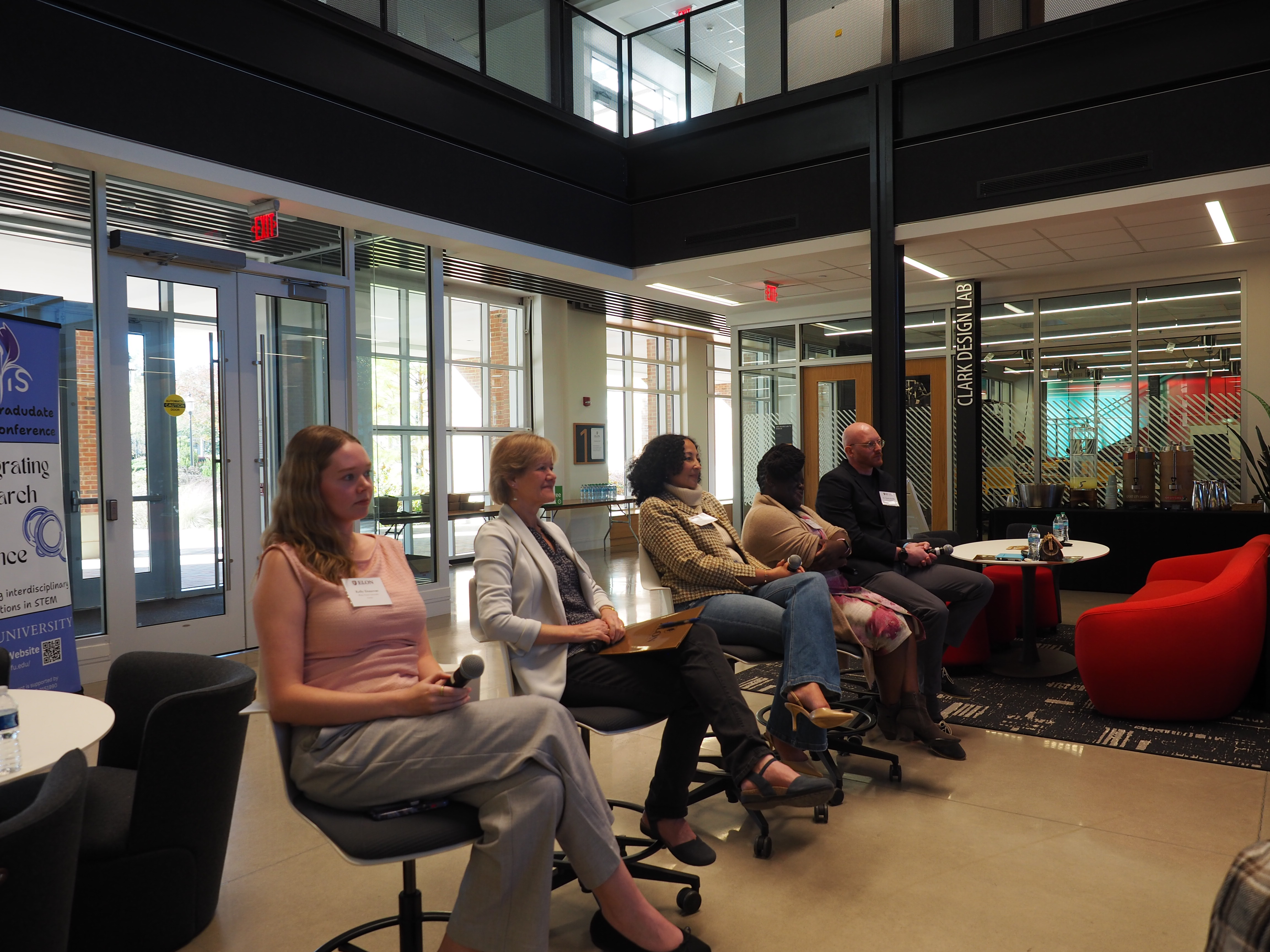
“I was so excited to be able to talk to students who were in the same position as me last year. Being able to give advice and encouragement for those applying to grad school was incredibly rewarding,” said Kelly Donovan ’26, who served as a co-leader of the IRIS organizing committee in Spring 2025 and participated as a panelist this year.
Maria Walden, a panelist from Lenovo, emphasized the importance of giving back to the next generation of STEM professionals.
“I consider it both an honor and a responsibility to give back. My career journey has been shaped not only by my own determination and drive, but also by the many people who believed in me, supported me and helped me along the way,” Walden said. “Giving back is how I honor them, express my gratitude, and help open doors for those coming behind me. Participating as a panelist in the IRIS conference gave me that opportunity.
Faculty judges for the oral and poster presentations included Mike Kingston, professor of biology and environmental studies; Kathryn Matera, professor of chemistry; Todd Lee, professor of mathematics; Nic Bussberg, associate professor of statistics; and Efraín Rivera-Serrano.
Looking ahead to IRIS 2027
The IRIS conference continues to provide opportunities for undergraduate researchers from Elon and neighboring institutions to share their work, develop professional connections and strengthen the regional STEM community.
Elon plans to host IRIS every fall, continuing its commitment to interdisciplinary undergraduate research, student leadership and collaboration across institutions.
The IRIS 2026 conference was supported by National Science Foundation grants DMS-2151990 and DMS-2602053.