


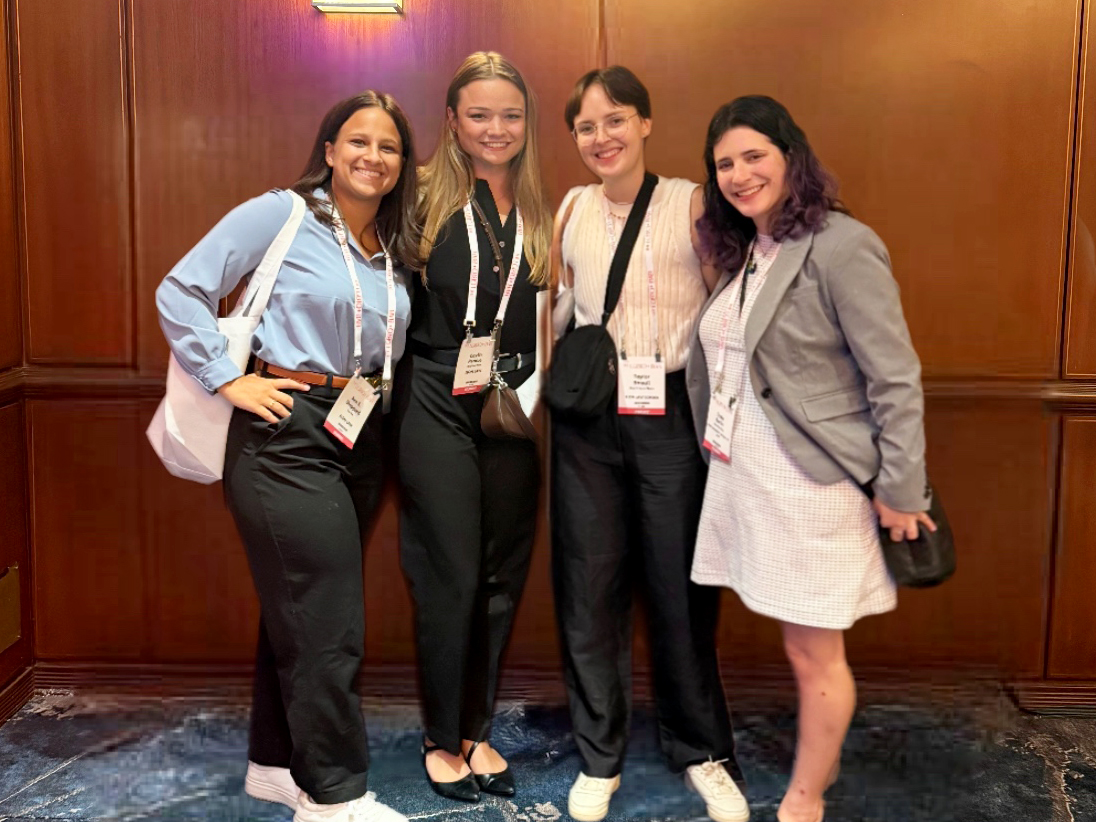
Five members of Elon Law’s OUTLaw organization traveled to New York City for the Lavender Law Conference and Career Fair this summer, aided by an endowment to Elon’s Gender & LBGTQIA Center for students’ professional development.
This summer, five Elon Law students traveled to New York City to attend the annual Lavender Law Conference and Career Fair — making connections and taking deep dives into current legal issues affecting the LGBTQIA+ community.
Held July 28–30, the conference is the nation’s largest gathering of queer and allied legal professionals, bringing together more than 2,000 lawyers, judges, students and leaders for panel discussions, networking and the largest career fair of its kind.
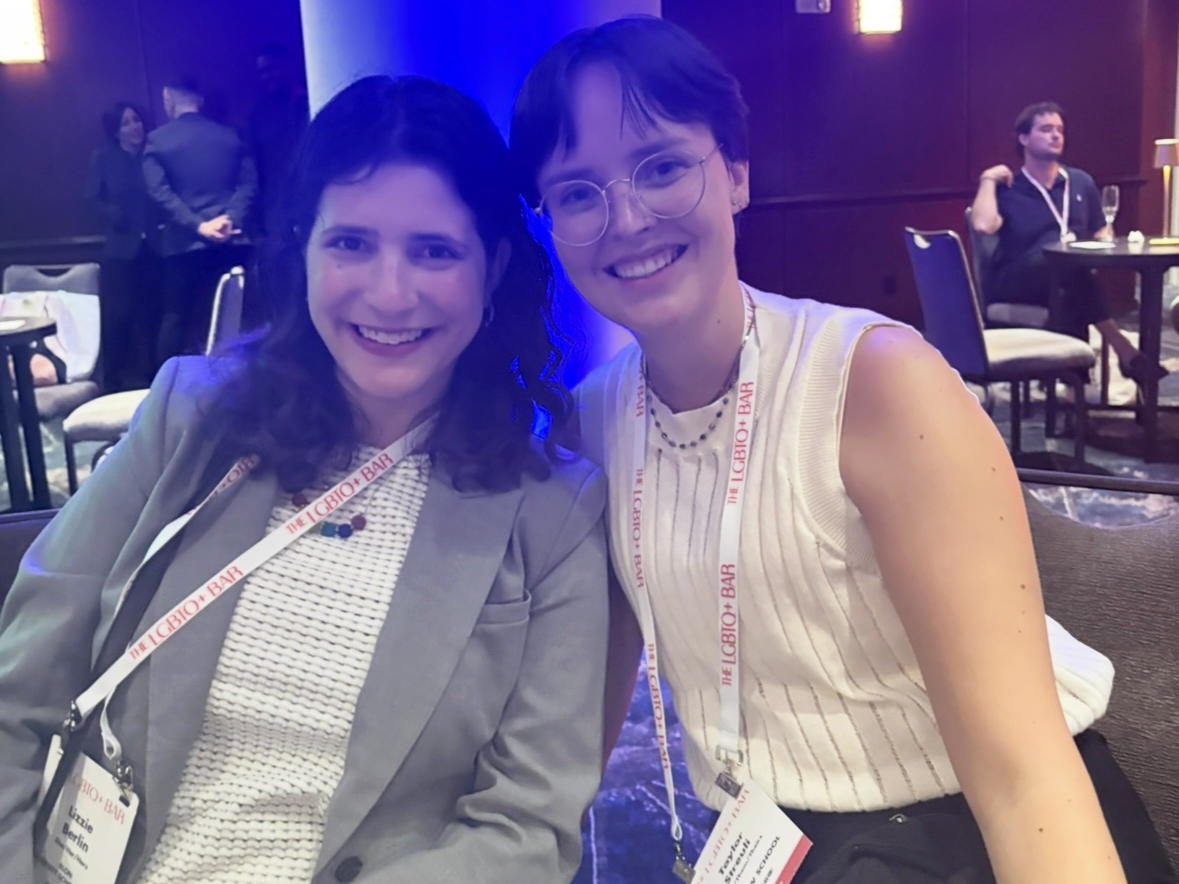
“It was incredible to be around a community of people who are like you,” said Taylor Streuli L’25, executive director of OUTLaw, Elon Law’s student organization for the LGBTQIA+ community. “People have a perception of lawyers, that they’re cookie-cutter and all alike. But seeing lawyers who look like you and live like you, and are powerful lawyers, is empowering. It was one of the best trips I’ve ever taken.”
Lavender Law is widely regarded as the foremost professional gathering for LGBTQIA+ legal minds — a space that blends mentorship, career advancement and community in a powerful way. It features over 70 panels, CLE programs and a bustling career fair geared toward connecting students and young lawyers with welcoming employers.
Strueli, who plans a career in criminal law, attended last year’s conference in Washington, D.C., with the previous OUTLaw director Nic Parsons L’24. She knew she wanted other members to share and learn from the experience.
“The career fair was one of the main reasons I wanted to attend: To find like-minded individuals and potential employers,” said Ann Sheppard L’25, who plans to pursue corporate and commercial litigation. “I made a connection with an attorney for Amazon, and the panel discussions around legal topics and AI were illuminating. I felt like I was part of this legal community.”
This year’s participation was made possible through the hard work of OUTLaw membership and the generosity of the Elon and Greensboro communities.
OUTLaw’s annual silent auction fundraiser has become a highlight of the academic year. Faculty donate their time for lunches, dinners and unique experiences with students, like fly fishing with Professor Eric Fink, drag bingo with Associate Professor Bob Mincarcin, or mimosas with Professor Enrique Armijo. Local businesses contribute gift baskets for raffles that boost fundraising. Last spring’s event raised $2,150.
“We were blown away by that,” Streuli said. “It speaks to the generosity of students and how much Elon Law students love the faculty here.”
They were further supported through a generous endowment to Elon’s Gender and LGBTQIA Center by Don Chaplin and Andy Hunt, of Burlington. The endowment supports students’ professional development and high-impact learning opportunities. Without the endowment, fewer Elon Law students would have attended.
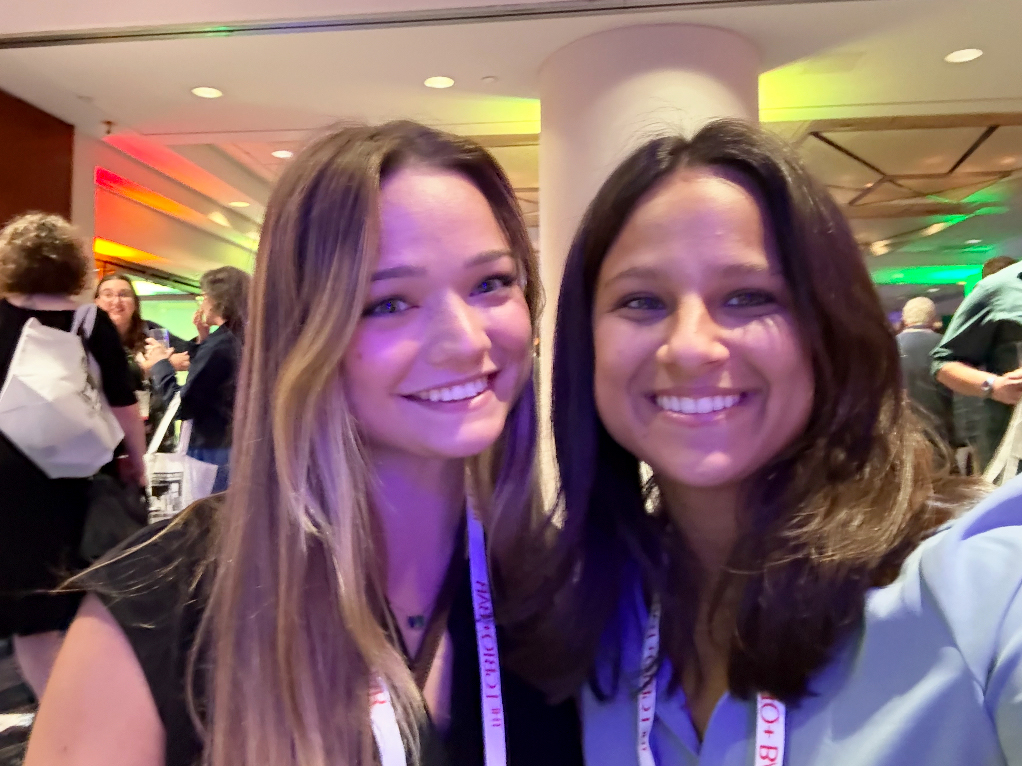
“We were glad to support these students in attending the Lavender Law Conference, meeting the mission of the Don Chaplin and Andy Hunt Endowment for LGBTQIA Students and Programs,” said Luis Garay, director of the Gender and LGBTQIA Center. “Hearing from OUTLaw students what the participation in this conference means for them and their future careers, and knowing the endowment supports this endeavor, is rewarding. I’m excited to see how attending this conference will continue to be impactful for the organization’s members.”
Lizzie Berlin L’26, OUTLaw’s director of finance, was struck by the honesty of conversations about the legal challenges facing those who identify as part of the community, and by their courage in finding ways to support one another.
“It was very powerful to see such a group of diverse lawyers who aren’t afraid to be themselves in a profession that is so often constraining,” said Berlin, who is preparing for a criminal law career. She highlighted panels on bail reform and pretrial incarceration, as well as strategies for advocating on campuses and in communities.
“At a time when people’s rights are under more scrutiny than they have been before, it’s important to learn how to have these difficult conversations.”