


The assistant professor of journalism helped shed new light on screen representation and North Carolina civil rights history.
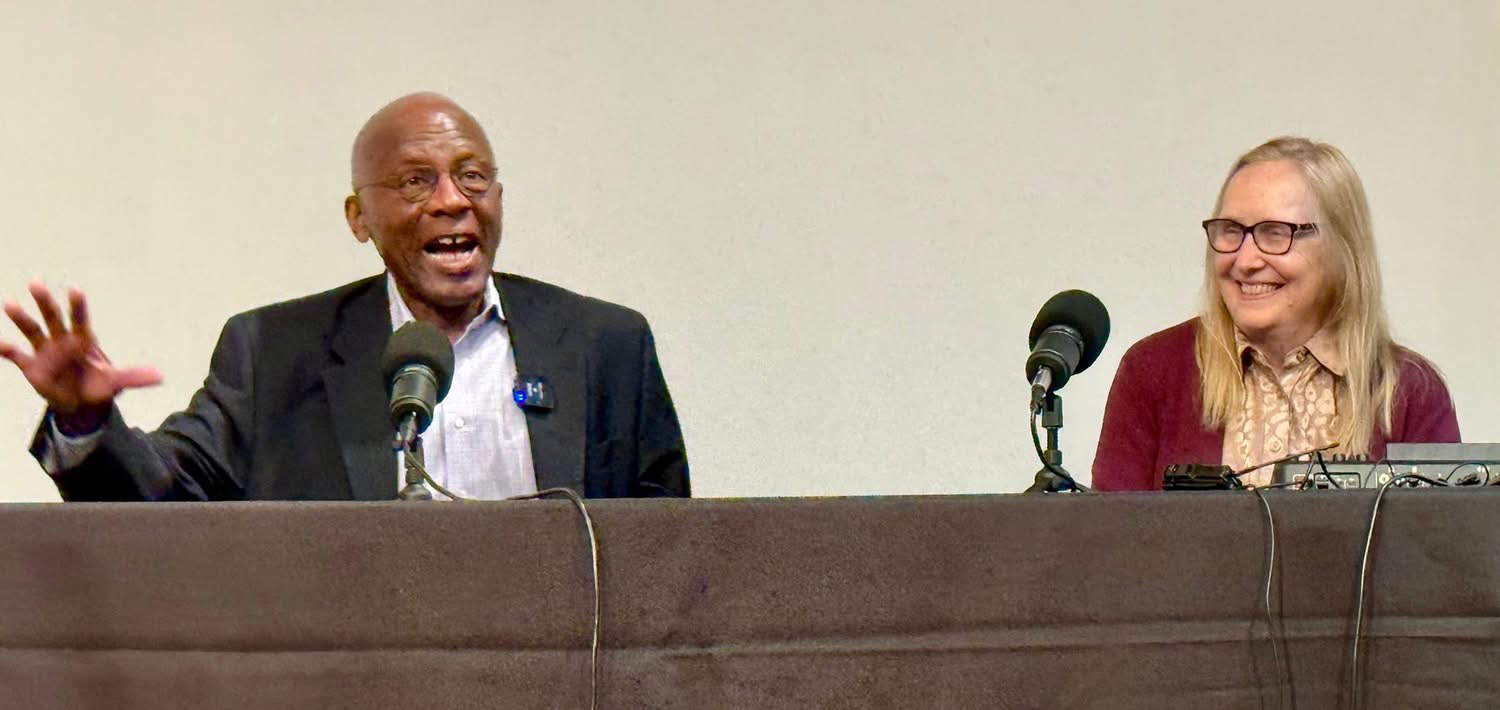
The little-known history of Greensboro, North Carolina’s 1938 movie theater boycott protesting Jim Crow censorship was the topic of a March 6 public talk by Assistant Professor of Journalism Lorraine Ahearn at the city’s International Civil Rights Center & Museum.
The event at the museum, site of the pivotal Woolworth sit-in protests of 1960, also featured a presentation on North Carolina’s first commercially produced movie, 1948’s “Pitch a Boogie Woogie.” Veteran Associated Press reporter Skip Foreman talked about the once-lost featurette and the role his father, Tom Foreman, Sr., played in the all-Black cast.
 “These two events expand our understanding of film history and the long journey of screen representation of African Americans,” Ahearn said. “They reveal Black people in North Carolina both resisting and negotiating Jim Crow conventions during two decades not often emphasized in this struggle.”
In 1938, students at Greensboro’s Bennett College for Women, an HBCU, organized a community boycott of white movie theaters. The students discovered that white exhibitors in the South were censoring out scenes casting Black performers on an equal social footing with whites, violating Jim Crow-era typecasting that relegated Black actors to subservient or comic stereotypes. The Black press was instrumental in covering the months-long boycott.
Ahearn first wrote about the forgotten incident as a newspaper reporter, then extended the research as a chapter in a scholarly anthology edited by Naeemah Clark, Elon’s Associate Provost for Academic Inclusive Excellence.
“The ‘38 boycott is noteworthy on a couple of counts,” Ahearn said. “For one, it comes a whole generation before Woolworth’s, lengthening the timeline of direct action initiated — once again — by college students. Equally important, the movie boycott turned not on the issue of where Black people were physically allowed to sit or eat, but on how Black people were allowed to be depicted to white audiences in the most powerful new medium of the time, Hollywood movies.”
A decade later, “Pitch a Boogie Woogie,” captured the disappearing genre of tented Black vaudeville and traveling minstrel shows in a complex post-war era of social and musical evolution. Black actors, musicians and dancers played all the parts in the short movie a white Greenville producer made exclusively for Black audiences and scored by the popular Greensboro band The Rhythm Vets. The band members were veterans of the World War II-era US Navy B-1 Band, among the first African Americans to hold Navy ranks above that of mess officer.