



The Rivera-Serrano Lab’s latest student-led publication, published in Viral Immunology, examines how genetically distinct reoviruses behave across different epithelial cancer cell models.
Elon undergraduate student Ryder Hutchinson ’28, high school student Owen Carter, Elon alumna Charlotte Dagli ’25 and Efraín Rivera-Serrano, assistant professor in the Department of Biology, have co-authored an article published in the journal Viral Immunology.
The article, “Reovirus reassortants reveal context-dependent oncolytic phenotypes across epithelial cancer cell lines,” continues the Rivera-Serrano Lab’s work exploring the potential of reoviruses as cancer-targeting agents. The study examined a panel of genetically distinct reoviruses across three epithelial cancer cell models. The work found that different reovirus strains showed cell line-dependent patterns of infectivity and cancer cell killing, with some reassortant viruses showing enhanced activity compared with parental strains. The findings suggest that the effectiveness of reovirus-based cancer-targeting approaches may depend not only on viral genetics, but also on the specific cancer cell context.

Reoviruses are being studied as potential oncolytic agents, or viruses that preferentially infect and kill cancer cells. While much of the field has focused on one prototype strain, the Elon study highlights the importance of exploring broader reovirus genetic diversity. Because reoviruses contain segmented genomes, different strains can exchange genome segments through a process known as reassortment, generating viruses with new combinations of traits that may influence infection, replication and cytotoxicity.
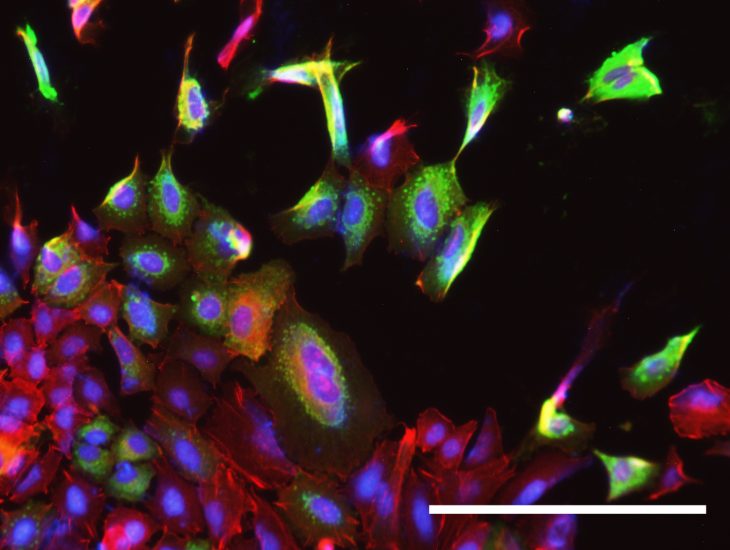
The article reinforces the value of comparative screens in cancer virotherapy research. The study found that viral infectivity and cancer cell killing did not always fully overlap, suggesting that efficient infection alone does not necessarily predict how strongly a virus will reduce cancer cell viability. Instead, the findings point to a more complex relationship among viral entry, replication, antiviral responses and cell death pathways.
The project builds on ongoing research in Rivera-Serrano’s laboratory, where undergraduate students use cell biology, virology and immunology approaches to understand how viral genetics influence cancer cell susceptibility. Hutchinson, the article’s first author and Nursing major, contributed to experimental work and data analysis as part of his mentored research experience in the lab for three semesters and participation in Elon’s 2025 Summer Undergraduate Research Experience.
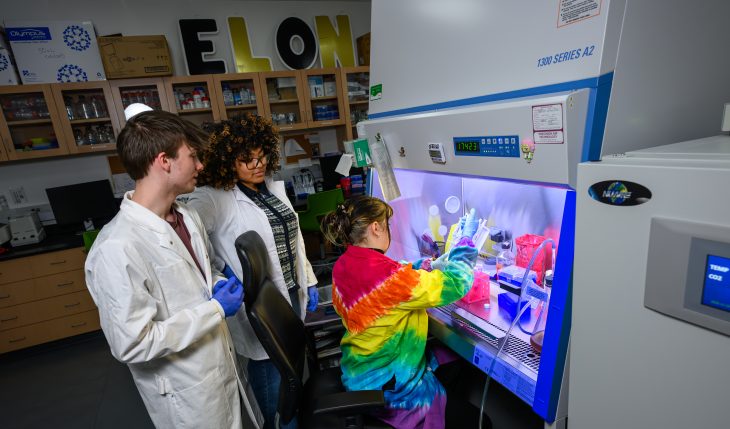
Carter, who performed research as a visiting high school student in the summer of 2025, contributed to data analysis, highlighting the lab’s broader commitment to expanding access to biomedical research experiences beyond the undergraduate level. Dagli, who recently co-authored a related study in Virus Genes on reovirus reassortants with enhanced activity against fibrosarcoma cells, also contributed to the current work as part of the lab’s continuing effort to evaluate how viral genetic diversity shapes oncolytic potential.