


More than 60 educational developers, faculty, administrators and staff took part in a CATL session built on Marna K. Winter's Arrive–Explore–Reflect framework. The approach uses short, structured play to help learners become ready to learn through self-regulation.
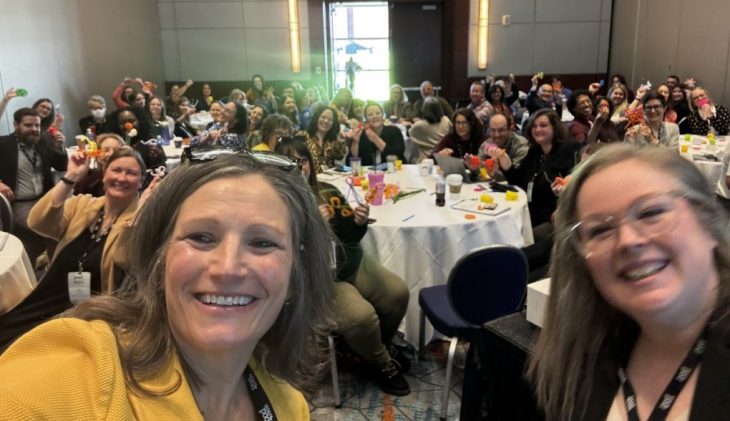
At the POD Network’s annual conference in Baltimore this November, more than 60 academics joined a session led by Elon’s Center for the Advancement of Teaching and Learning (CATL) faculty. At its heart was the Arrive–Explore–Reflect, a joy-centered framework developed by Professor Winter, associate director of CATL and teaching professor of education.
Winter’s framework starts from a simple observation from her classroom – students rarely walk into a learning space ready to learn and engage. Students and faculty arrive tired, stressed or distracted, carrying the cognitive and emotional load of the rest of their day and factors beyond the class. Arrive–Explore–Reflect treats engagement not as an outcome to hope for, but as process that faculty can intentionally design to impact the student experience.
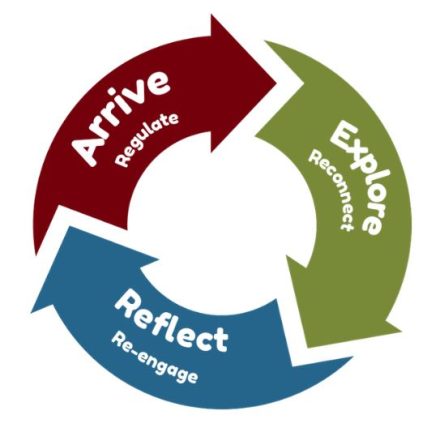
The framework uses “mini-play” sessions of 5 to 10 minutes at the start of a class (or in the case of CATL, at the beginning of a faculty development workshop):
- Arrive: participants pause, settle and become present.
- Explore: they engage in an activity that is low-barrier and uses creative materials, such as clay or building blocks, often alongside a peer.
- Reflect: they make meaning of the experience and turn toward the learning ahead.
Experiencing the framework firsthand
Participants at POD didn’t just hear about the framework – they lived it! The session opened with a two- or three-word check-in on how everyone was feeling. Attendees then created something representing a joyful moment from their week at the conference and shared it with one another. A second check-in showed how the room had shifted after a short play exercise where they engaged in self-creativity and reflection with peers.
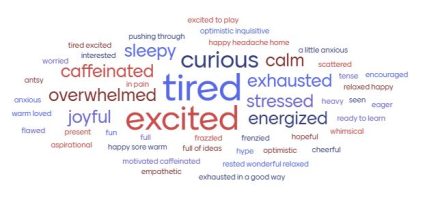
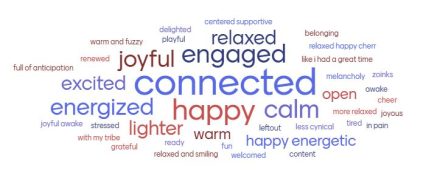
Winter then shared findings from her scholarship of teaching and learning research, which began in undergraduate courses and expanded to faculty development. Students described arriving tired and stressed, and leaving calmer, more focused and more prepared to learn (similar to the POD conference attendees).
In her work, 88% of faculty and 79% of students said mini-play supported connection, and 93% reported high focus afterward. Early data suggest the approach travels across disciplines, from teacher education to physiology and economics. In each setting, participants’ self-reported emotional state rose by about one point on a five-point scale. Winter’s first study appeared in “Teaching and Learning Inquiry” in 2025, and a second article, “Designing for Readiness,” is in press with the same journal.
A workshop in a box
The session was designed as a “workshop in a box” that participants could lead at their own institutions. Winter co-facilitated with Jill McSweeney, assistant director of CATL, and assistant professor of wellness. Using a planning worksheet, attendees designed a mini-play for their own programs, then worked with a partner on how to measure its impact and build buy-in among colleagues. Participants stayed engaged and active throughout. One attendee shared, “I can’t wait to take this home to my institution and share with faculty.”
Bring Arrive–Explore–Reflect to your classroom
Faculty interested in using the framework in their own courses can read Winter’s work on Elon Collect where you’ll find the framework and tangible ways to integrated it into your teaching. To talk through how to adapt the framework for a course or program, contact Marna Winter at mwinter2@elon.edu, or reach out to CATL.